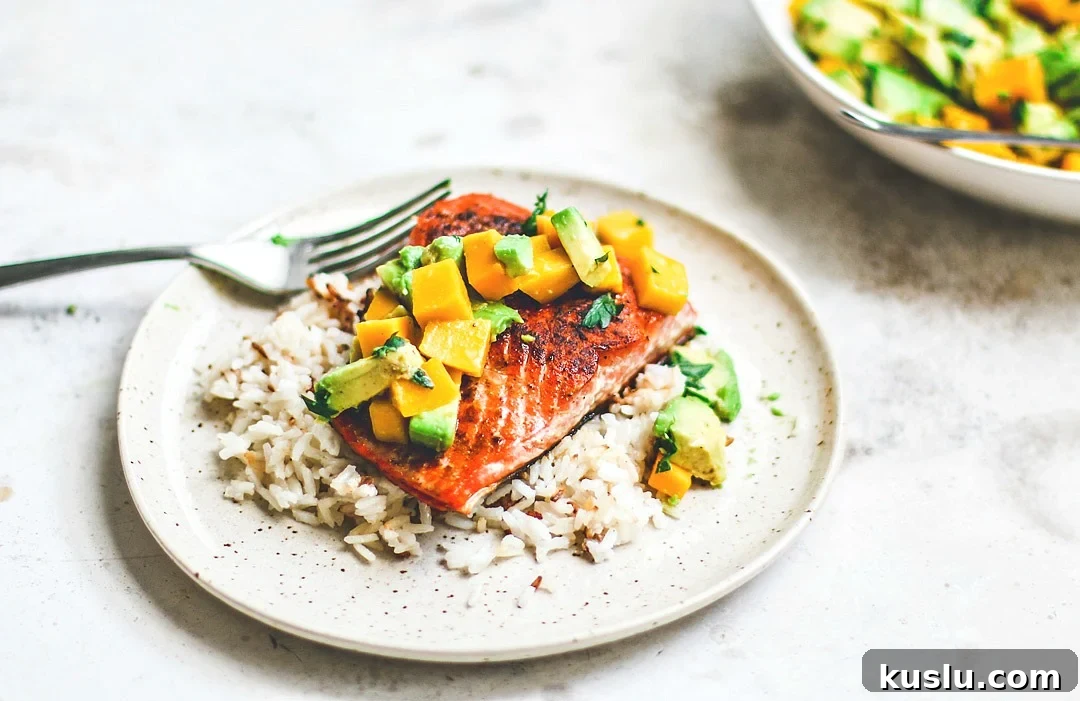
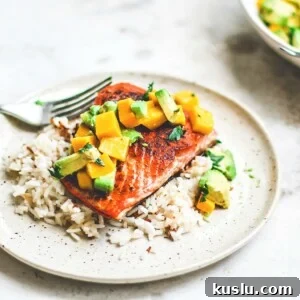
Fresh, simple ingredients come together in this crispy-skinned pan-seared salmon topped with a creamy, tangy avocado and mango salsa. It’s an ideal spring and summer dinner and a great fish option during pregnancy.
This recipe is sponsored by Orca Bay Foods | Thanks for supporting the brands I love and trust.
Three things in life are certain: death, taxes, and unsolicited advice when you’re pregnant.
“Should you be eating that?” is a familiar, judgmental question. People often assume they know more than a careful, research-minded expectant parent. Fish is one of those foods that draws particular concern during pregnancy, along with coffee and deli meats.
I’ve partnered with Orca Bay Foods to help clear up confusion and share a safe, delicious fish recipe that’s pregnancy-friendly.
Is eating fish during pregnancy safe?
Yes — eating fish during pregnancy is not only safe but recommended. Most concern centers on mercury, which is a valid issue. However, not all species have high mercury levels. Eating moderate amounts of low-mercury seafood provides benefits for both mom and baby, including omega-3 fatty acids that support the baby’s visual and cognitive development and other positive effects during pregnancy.
The FDA provides guidance on which fish are best to eat during pregnancy; your prenatal care provider should share the same recommendations. Generally, aim for 2–3 servings per week from the “Best Choice” list. Fish like cod, flounder, haddock, and salmon are excellent, low-mercury options that let you enjoy variety and nutrition.
What should be avoided when eating fish during pregnancy?
A few species have high mercury levels and should be avoided during pregnancy. The list includes:
- King mackerel (different from smaller North Atlantic mackerel)
- Swordfish
- Shark
- Bigeye tuna
- Tilefish
- Marlin
- Orange roughy
Tuna can be confusing because certain types, like bigeye, are higher in mercury and common at sushi restaurants. Raw sushi also carries risks of foodborne illness and parasites, so it’s best to avoid raw fish during pregnancy. Cooked rolls with shrimp or crab are safer alternatives if you crave sushi flavors.
When questioned about your fish choices, you can confidently explain that most seafood is safe and beneficial when you choose low-mercury species and follow recommended serving guidelines.
Pan-Seared Salmon With Avocado and Mango Salsa
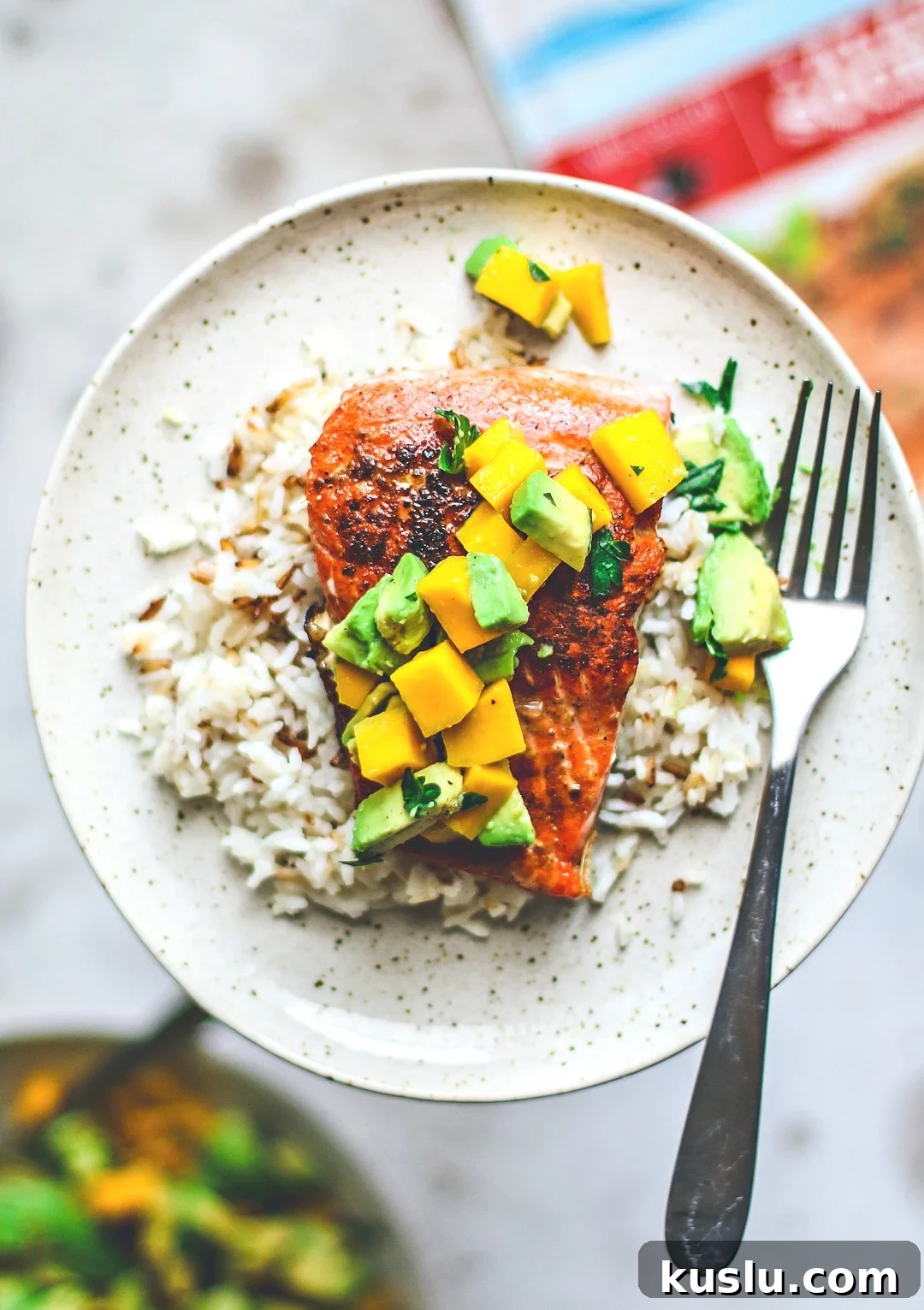
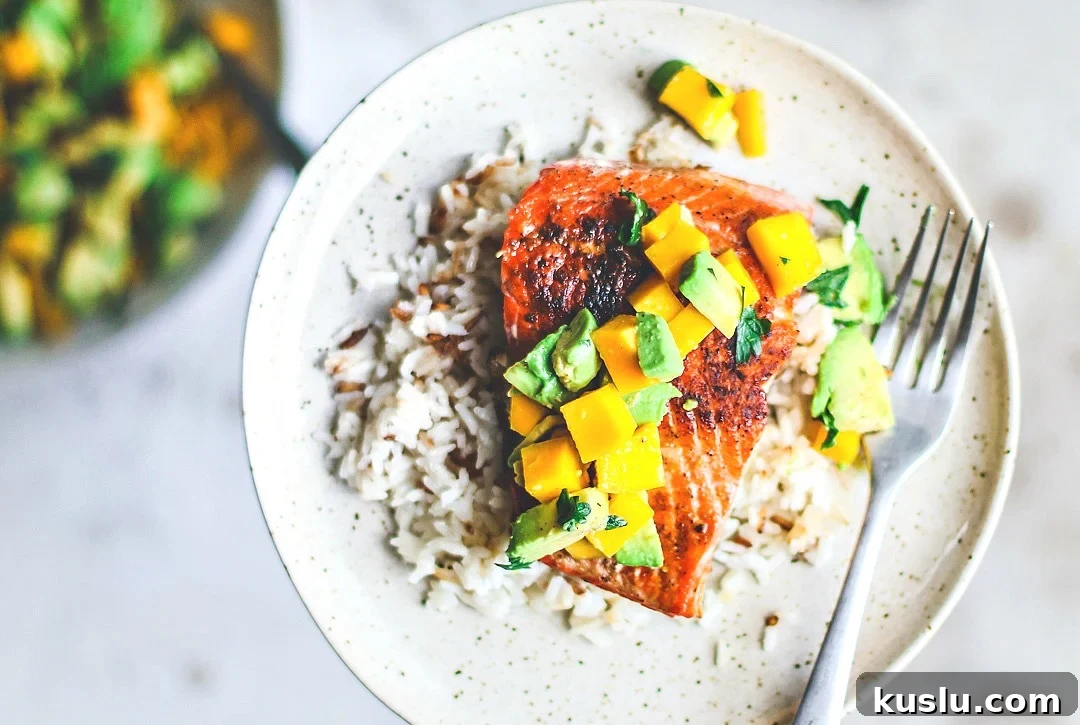
Salmon has been a staple for me during pregnancy. It’s versatile and pairs perfectly with nutritious add-ins like creamy avocado and bright mango. This dish is rich in omega-3s, healthy fats, potassium, and vitamins — a great choice for expecting mothers.
Serve the salmon with coconut rice, quinoa, or over a salad. Leftovers are wonderful on a bagel with cream cheese for a satisfying lunch.
If you try this recipe or create your own variation, let me know in the comments! Snap a photo and tag me on Insta @killing__thyme and you might be featured in our newsletter.
Pan-Seared Salmon With Avocado and Mango Salsa
Ingredients
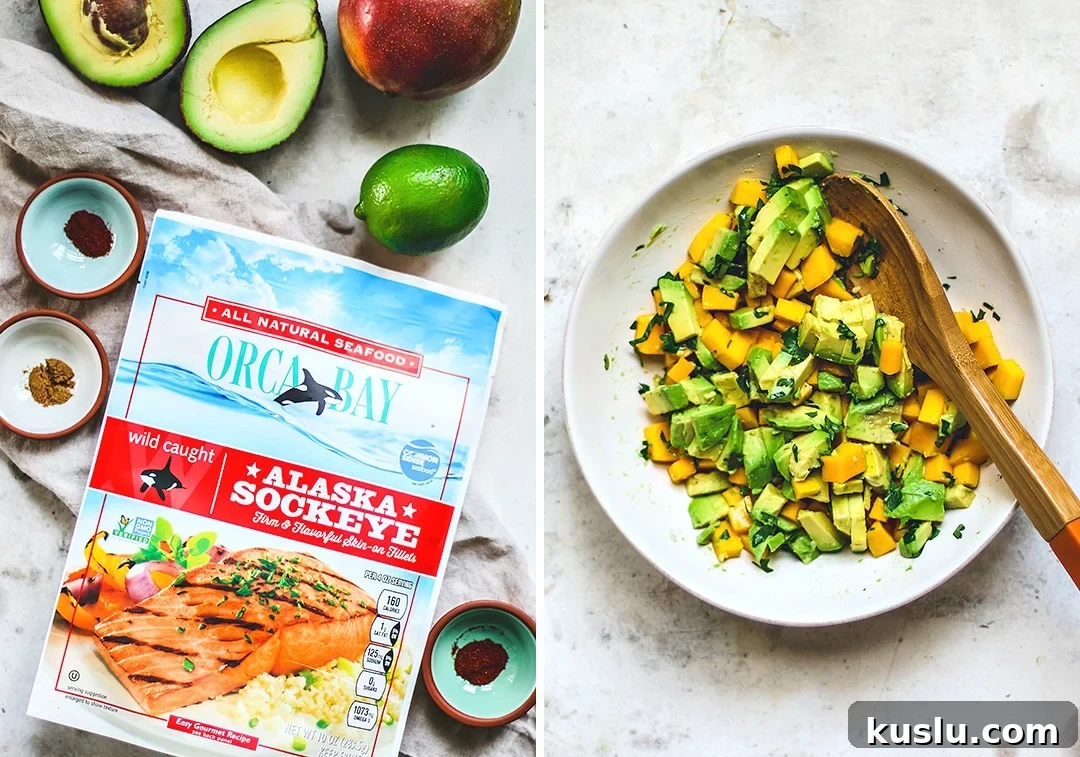
- 4 4 to 6 oz fillets of salmon, skin on (I used Orca Bay Foods Alaska Sockeye Salmon)
- 2 TBSP neutral oil with high smoke point (avocado or olive oil)
- Kosher salt and cracked black pepper
- 1 TBSP chili powder
- 1 TBSP ground coriander
- 2 tsp cumin
Avocado and Mango Salsa
- 1 ripened mango, cubed
- 1 large ripened avocado, cubed
- 1/4 cup chopped fresh parsley or cilantro
- 1 lime, juiced
- 1 TBSP extra virgin olive oil
- Kosher salt and cracked black pepper, to taste
Materials
- Cast iron skillet
Instructions
- Remove salmon from the fridge and pat dry with paper towels. Season lightly with salt and cracked black pepper. In a small bowl, combine chili powder, ground coriander, and cumin. Rub the spice blend evenly over the fillets. Let the fish sit at room temperature for about 15 minutes for even cooking.
Avocado and Mango Salsa
- In a bowl, combine diced mango, avocado, and chopped parsley or cilantro. Add lime juice, drizzle with olive oil, and season with salt and pepper to taste. Gently toss and set aside.
Salmon
- Heat a generous coat of oil in a skillet over high heat until it shimmers. Place one or two fillets skin-side down into the hot pan. Press down briefly with a spatula to keep the skin flat, then reduce heat to medium. Cook undisturbed for 4–6 minutes, until the skin edge is golden and the fish releases easily.
- Flip the fillet and cook another 2–3 minutes until the salmon reaches an internal temperature of 140–145°F (60–63°C), or until opaque throughout. Remove to a plate and tent with foil to keep warm. Repeat with remaining fillets.
Notes
Do not overcrowd the skillet. Cook one or two fillets at a time depending on pan size. Keep cooked fillets warm under foil while finishing the rest.