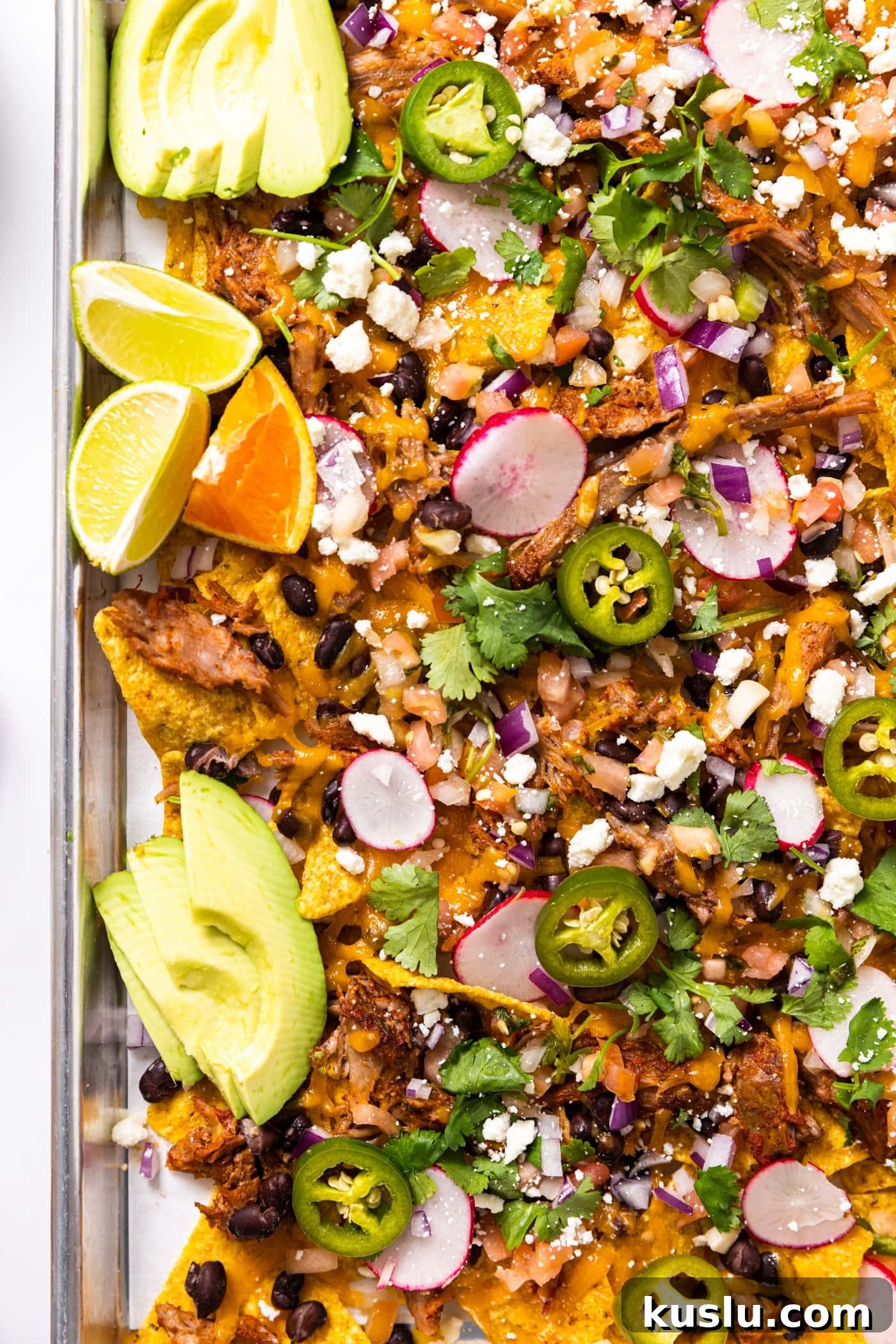

Why I Love This Pulled Pork Sheet Pan Nachos Recipe
Growing up, Sunday night meant my dad’s simple but beloved “chips and cheese” — tortilla chips covered with melted cheese. Those easy nachos were a family favorite and an example of how comforting uncomplicated food can be.
The pulled pork version takes that nostalgia and elevates it. The pork slow-cooks in the crock and needs very little attention while it becomes tender and shreddable. You can set it to cook overnight or during the day, and when it’s ready the meat pulls apart effortlessly.
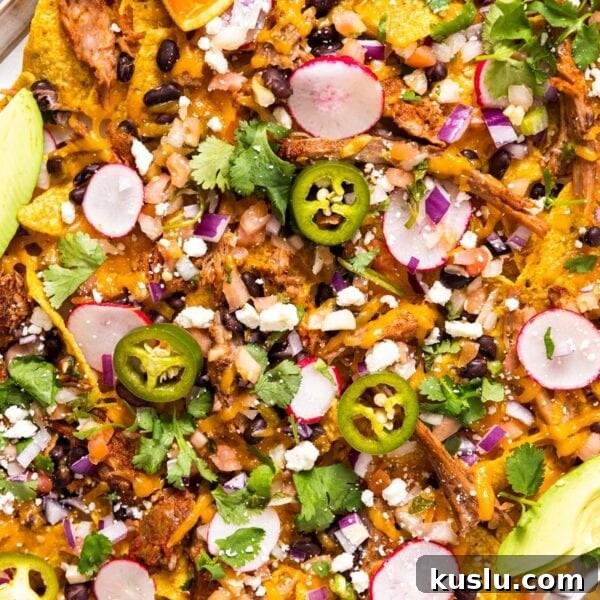
Sheet pan nachos are perfect for feeding a crowd quickly. Layered on a large pan, the chips become a platform for hearty pulled pork, melting cheese, beans, and any toppings you like. The slow-cooked pork brings depth and makes nachos a satisfying main-course appetizer or casual party meal.
Top them however you like — spicy peppers, sour cream, guacamole, radishes, cilantro, or fresh salsa all work great. These nachos are flexible and designed to please a wide range of tastes. Happy game day!
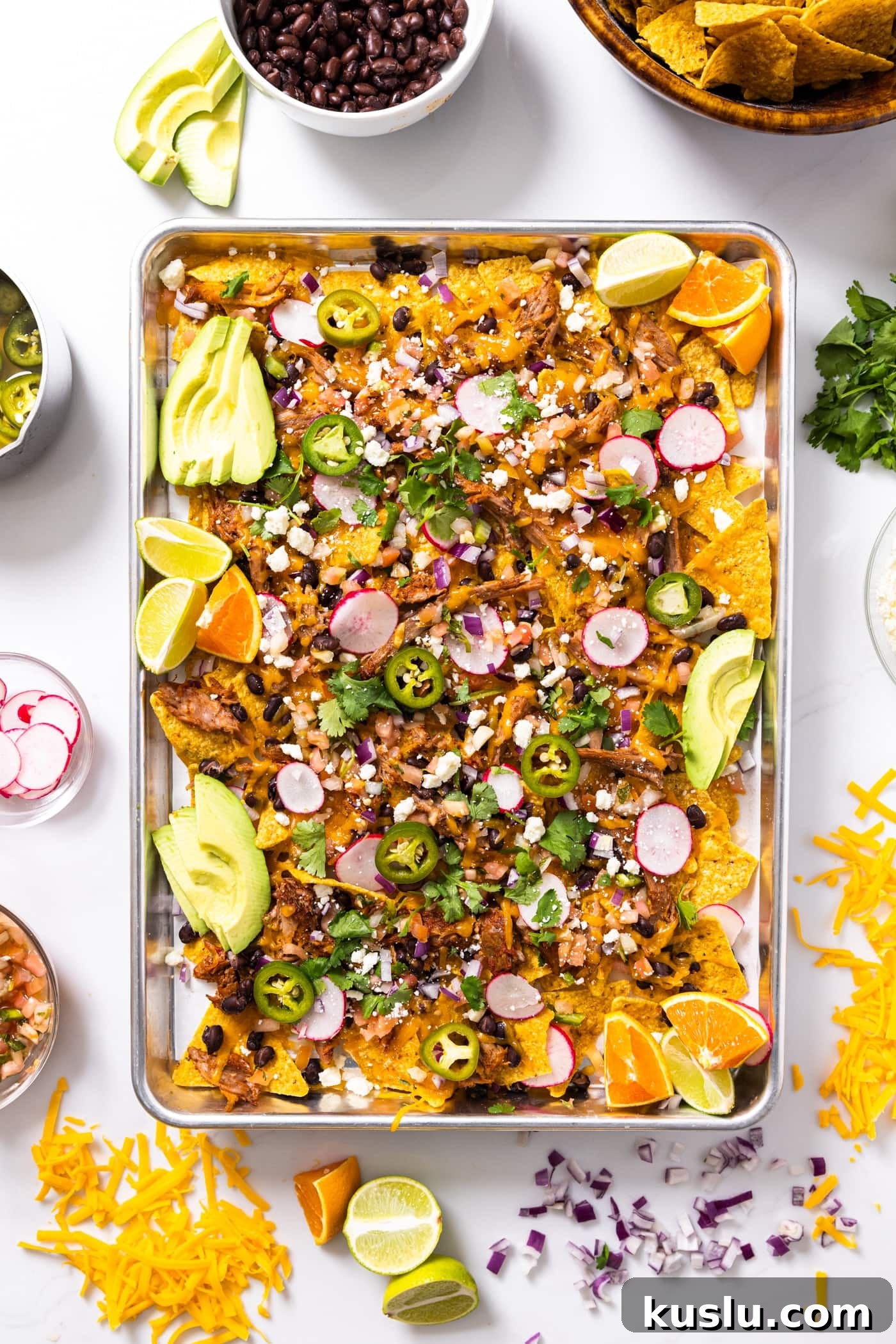
Pulled Pork Sheet Pan Nacho Ingredients
- Pork shoulder is ideal for slow cooking. The long, gentle heat breaks down connective tissue so the meat becomes tender and richly flavored.
- Tomato sauce creates a flavorful braising liquid when combined with the spices. Store leftovers with the sauce to keep the pork moist and tasty.
- Smoked paprika adds deep, smoky flavor without heat, giving the pork a barbecue-like character even when cooked indoors.
- Cumin, oregano, and chili powder form a Southwestern spice base that pairs well with the pork and nacho toppings.
- Orange juice contributes acidity to help tenderize the meat and brightens the overall flavor profile.
The full ingredient measurements are available in the recipe card below.
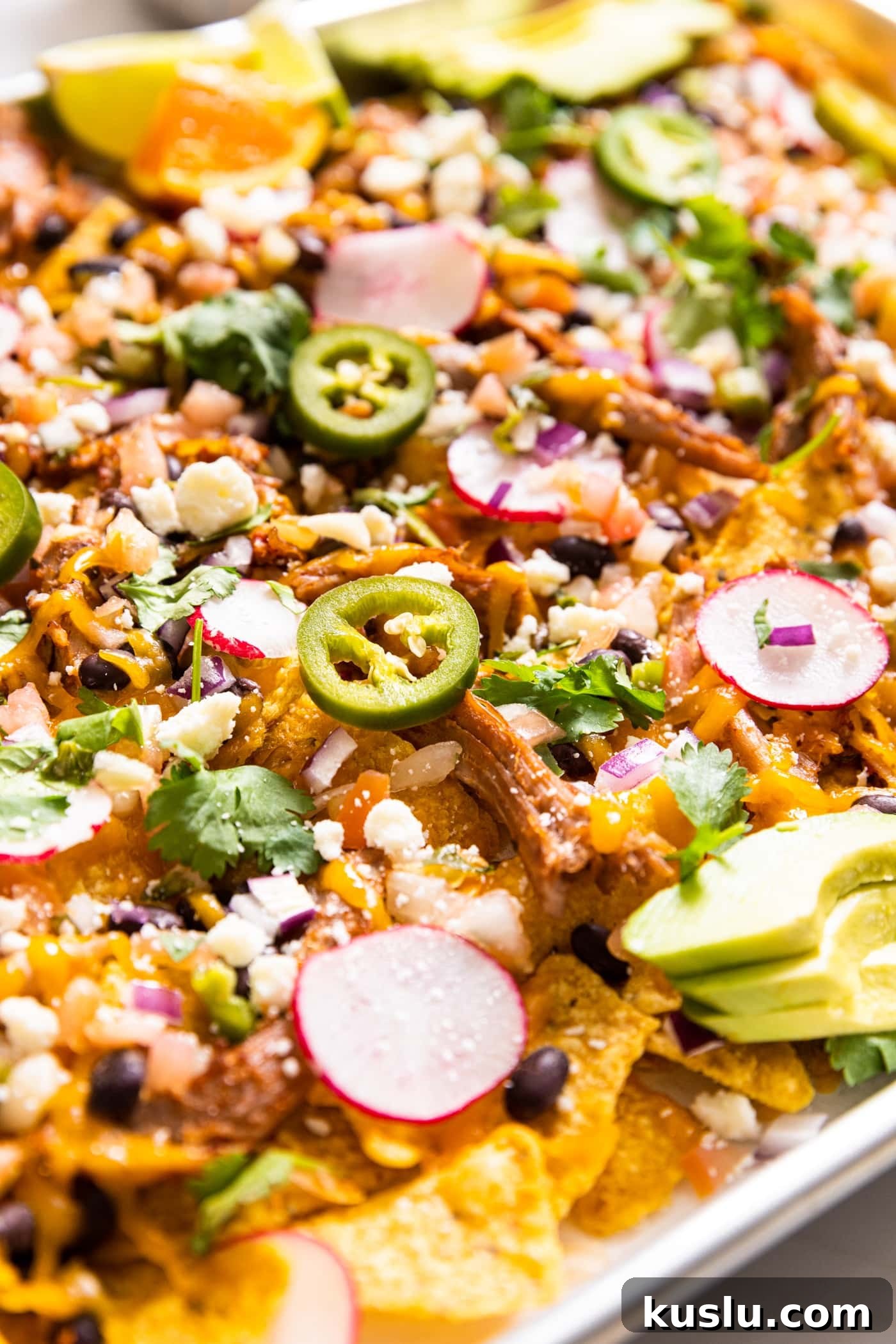
Follow These Tips
Serving & Storage
To serve – Serve directly from the sheet pan for a shareable presentation. Add sour cream, guacamole, salsa, pickled jalapeños, cilantro, or any fresh toppings right before serving so the chips remain crisp.
To store – Nachos are best fresh. Scrape leftover toppings (pulled pork, beans, cheese) into an airtight container and refrigerate for up to 3 days; discard soggy chips. Freeze pulled pork (without chips) for up to 3 months. Do not freeze assembled nachos.
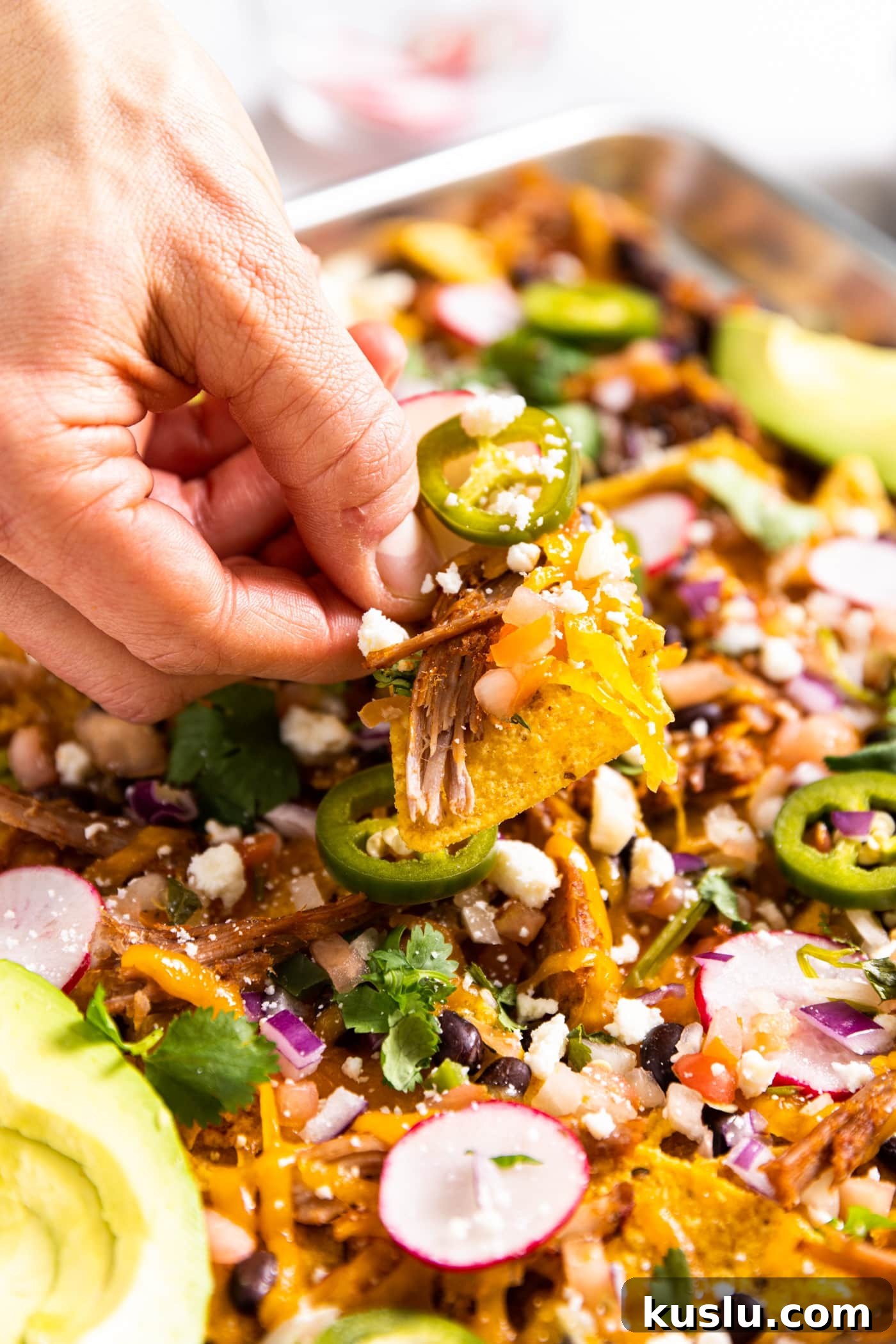
More Appetizer Recipes
- Cranberry Chicken Meatball Sliders
- Ham and Onion Jam Sliders
- Sweet Potato Chili Nachos
- Puff Pastry Sausage Bites
Have I Convinced You to Make This Recipe?
I hope you try this and enjoy a plate of hearty, shareable nachos with family or friends. Leave a comment and rating to let others know how the recipe turned out for you — it helps others decide to try it too.
Pulled Pork Sheet Pan Nachos
Ingredients
For the pulled pork
- 3 lb pork shoulder roast
- 1 14-oz can tomato sauce
- 2 tsp smoked paprika
- 1 tsp cumin
- 1 tsp dried oregano (Mexican oregano preferred)
- 2 tsp chili powder
- 2 ½ tsp kosher salt
- ½ cup fresh orange juice
For the nachos
- 1 14-oz can black beans rinsed and drained
- 4 cups shredded cheese
- 1 bag tortilla chips
Instructions
For the pork
-
Trim excess fat from the shoulder roast and discard. In a small bowl, combine smoked paprika, cumin, oregano, chili powder, orange juice, and salt. Rub the mixture over the roast on all sides.
-
Place the roast in the slow cooker and pour the tomato sauce over it. Cover and cook on high for 4–5 hours, or until the meat falls apart easily with a fork.
-
Remove the cooked meat from the slow cooker and let it cool slightly. Reserve the sauce for storage or other uses.
-
When cool enough to handle, shred the meat with two forks into bite-sized pieces. This roast will make about 3–4 large sheet pans of nachos depending on portion size. Store unused meat in its sauce.
For the nachos
-
Preheat the oven to 350°F (175°C).
-
Line a large baking sheet with parchment. Arrange a layer of tortilla chips, then top with shredded pork, black beans, and shredded cheese. Bake until the cheese melts, about 6–8 minutes.
-
Remove from the oven, add your favorite fresh toppings, and serve immediately.
Video
Nutrition
Nutrition information is automatically calculated, so should only be used as an approximation.

Did you make this? Leave a comment below!