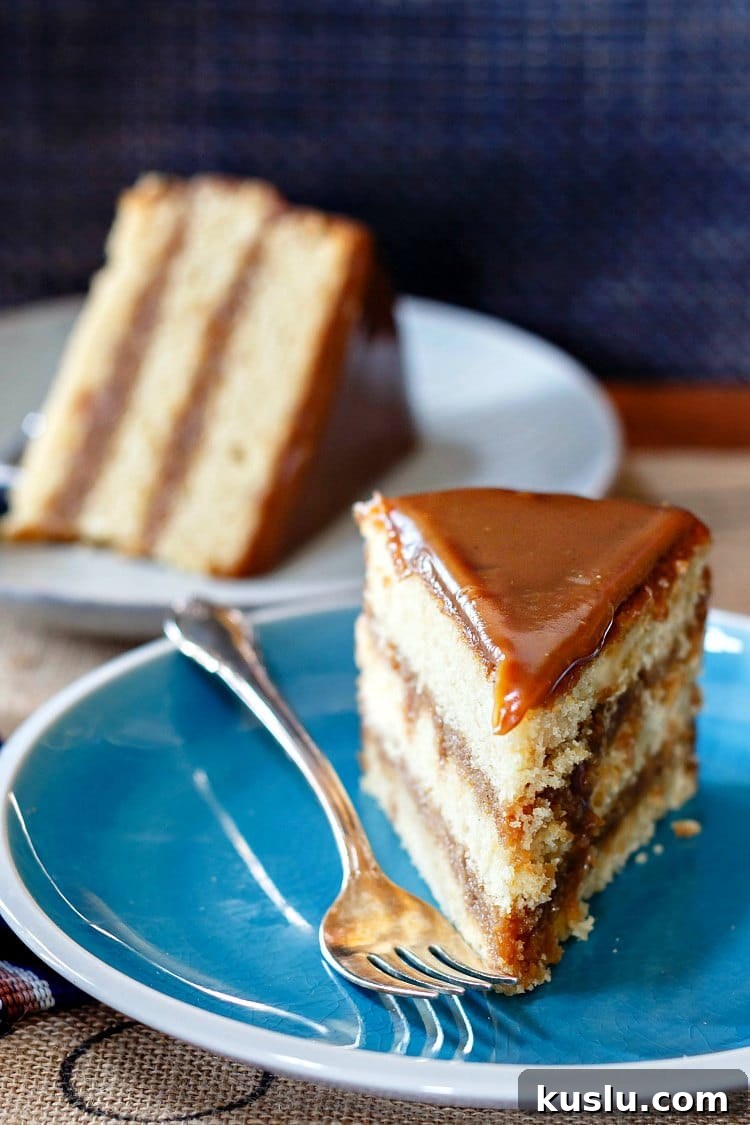
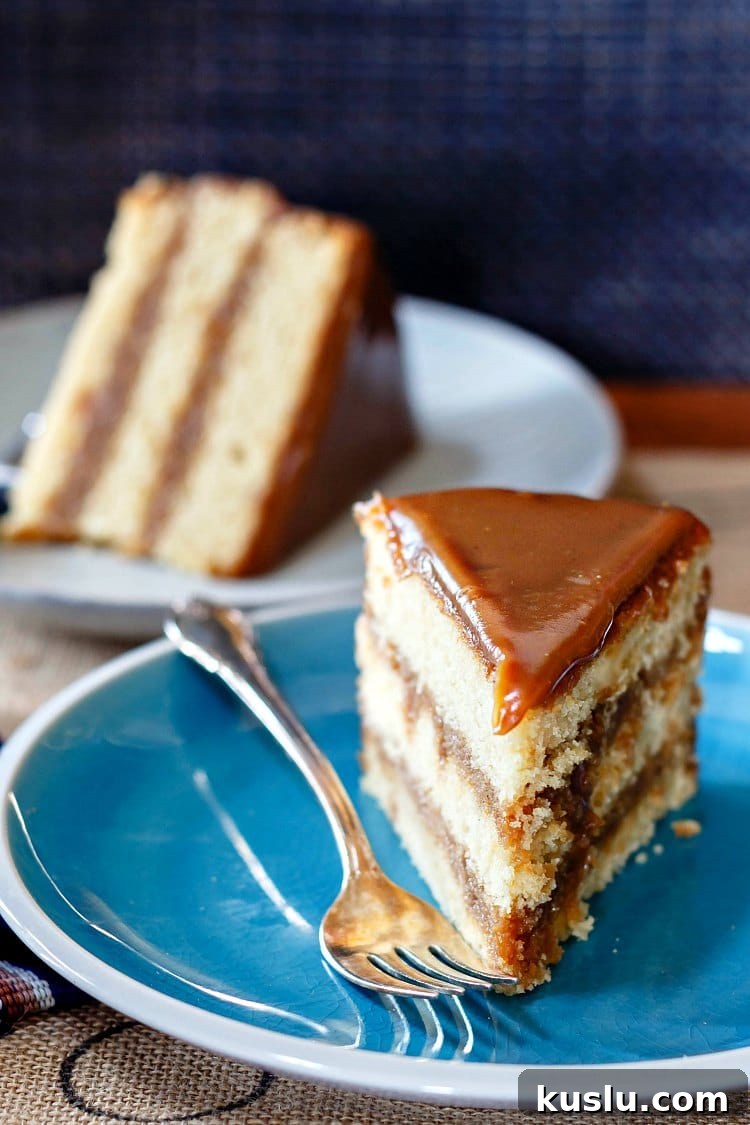
I set out to make every butterscotch treat I could think of, and this butterscotch cake with a glossy butterscotch icing is one of the best. Inspired by a Southern caramel cake, I swapped some granulated sugar for dark brown sugar and use an icing that is essentially a rich butterscotch sauce poured over the layers.
In short: candy-like butterscotch poured over a brown-sugar yellow cake. It’s decadent and worth trying.
If you want another easy option, try a butterscotch sheet cake or browse other butterscotch recipes collected in one place.
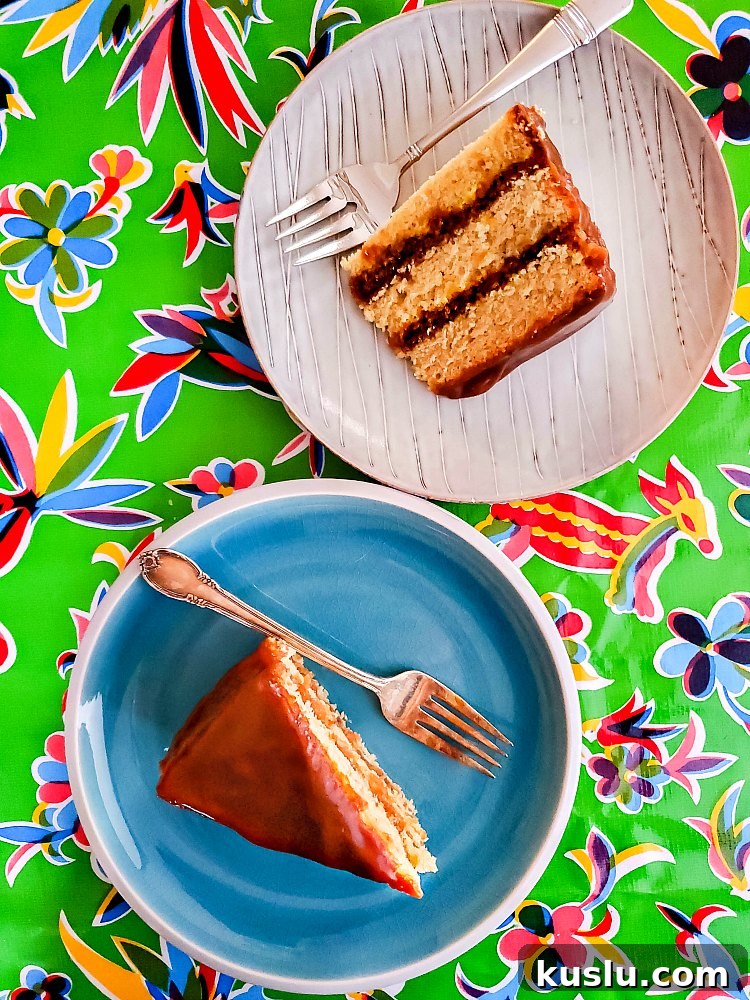
Icing vs Frosting. What’s the Difference?
I used to use “icing” and “frosting” interchangeably, but they do differ. Icing is usually poured — think royal icing or simple powdered sugar glazes. Frosting is whipped or aerated and spreadable, which gives it a fluffy texture thanks to a whisk, hand mixer, or stand mixer.
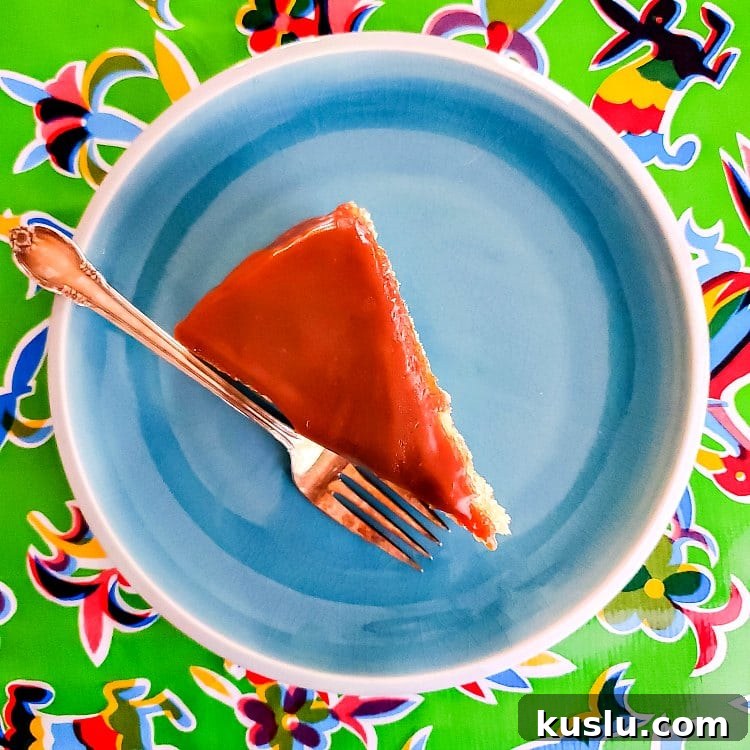
This cake is iced, not frosted: a smooth, shiny butterscotch sauce is poured over the layers and the whole cake.
Caution
Be careful when making the icing. If the sugar burns, discard and start again. Add the cream the moment the sugar begins to smoke slightly and smells like caramelized sugar.
Why Is It Called Butterscotch?
The origin of the name “butterscotch” isn’t certain. One theory links “scotch” to scoring hard candy before it cools so it breaks cleanly; another suggests it refers to scorching the butter, where browned butter contributes to the flavor.
For me, authentic butterscotch should include both brown sugar and butter, ideally with caramelized sugar and browned butter notes — which this icing delivers.
What You’ll Need to Make This Cake
This cake uses simple pantry ingredients; execution is what matters. Typical ingredients include:
- all-purpose flour
- granulated sugar
- dark brown sugar
- salt
- baking powder
- baking soda
- butter
- whole milk
- large eggs
- vanilla extract
- heavy cream
Helpful equipment: a heavy-bottomed saucepan for the butterscotch and three 8″ cake pans. A stand mixer is convenient but optional.
How to Make This Butterscotch Cake
- Make the golden yellow cake. This recipe uses a two-stage mixing method for a tender, velvety crumb. You may use the creaming method, but the texture and flavor will differ slightly.
- Bake and cool the layers; remove domes. Because you’re icing (not frosting) the cake, aim for flat tops. Trim domes with a serrated knife and save scraps for snacks.
- Make the icing. Prepare the butterscotch by cooking butter and dark brown sugar until smooth and boiling, then caramelize slightly. Add cream and cook to 237°F. Strain and let cool 20–30 minutes, stirring occasionally to avoid bubbles.
- Set a cooling rack over a tray. Glaze will drip; a rimmed tray beneath the rack will catch the excess.
- Ice the cake. When the butterscotch thickens to a pourable consistency, fill and ice the layers. Pour about 2/3 cup glaze onto the first layer and spread to the edges, add the next layer and repeat. After the top layer is in place, slowly pour icing over the top, letting it run down the sides. Patch any gaps with an offset spatula.
- Embrace imperfections. The top should be smooth and glossy; the sides may be uneven. A thin coating is ideal so the butterscotch doesn’t overwhelm the cake.
Butterscotch Cake Q & A
Butterscotch flavor is rooted in brown sugar + butter, ideally cooked. Pudding mix lacks those elements, so it doesn’t provide true butterscotch. Using brown sugar in the cake adds a subtle butterscotch note while the icing delivers the intense flavor.
It looks similar to a Southern caramel cake, but this version emphasizes butterscotch flavor rather than caramel.
Yes. Cool the butterscotch sauce and slowly pour it into whipping cream to create a light, spreadable butterscotch frosting. Store the finished cake in the refrigerator and bring to room temperature before serving if you choose this route.
Credit Where Credit is Due
The cake base is adapted from a golden yellow cake developed by a recipe shared online. I modified the process slightly and replaced one-quarter of the granulated sugar with brown sugar. The butterscotch icing was adapted from a Southern caramel cake icing, with adjustments: more butter and salt, dark brown sugar, and heavy cream instead of evaporated milk.
A Note of Caution When Making the Icing
Be vigilant when caramelizing sugar. If the butterscotch smells burned, don’t pour it on your cake — start over. Sugar and butter can go from caramelized to burnt quickly. When you see the first wisps of smoke and smell caramelized sugar, remove the pan and whisk in the cream immediately.
Cake and Serving Suggestions
A small slice of this rich cake often suffices, but for special occasions serve it with butterscotch ice cream or a butterscotch ripple. For an extra treat, sweeten coffee with butterscotch coffee syrup to pair with a slice.
More Old-Fashioned Cake Recipes
If you enjoy vintage-style cakes, try other classics like coconut cake, a simple 1-2-3-4 birthday cake, Moravian sugar cake, chocolate mayonnaise cake, or red velvet with ermine frosting.
Please consider rating and reviewing this recipe. Your feedback helps others decide whether to try it and helps me improve recipes.

Irresistible Butterscotch Cake
Ingredients
For the Cake
- 1 ½ cups (10.5 oz by weight) granulated sugar
- ½ cup (4 oz) dark brown sugar, packed
- 3 ¼ cups (14 oz) all-purpose flour
- 1 Tablespoon baking powder
- 1 teaspoon fine sea salt
- ⅛ teaspoon baking soda
- ¾ cup (6 oz) unsalted butter, softened
- 1 ¼ cup (10 oz) whole milk, room temperature, divided
- 4 large eggs
- 2 teaspoons vanilla extract
For the Butterscotch Icing
- 2 sticks (8 oz) unsalted butter
- 2 cups (16 oz) dark brown sugar, packed
- ¾–1 teaspoon fine sea salt, to taste
- 2 ½ cups (20 oz) heavy cream
Instructions
For the Cake
- Line three 8″ cake pans with parchment and spray the sides. Preheat oven to 350°F with the rack in the center.
- Whisk the dry ingredients together in a large bowl. In a separate bowl, whisk 1/4 cup milk, eggs, and vanilla.
- Add softened butter and the milk-egg mixture to the dry ingredients. Mix on low to moisten, then beat on medium for two minutes to develop structure.
- Mix in the remaining milk until just combined.
- Divide batter evenly among the three pans (about 17 oz of batter per pan if weighing). Smooth tops and bake until deeply golden and just pulling from the sides, 25–30 minutes. Check at 20–22 minutes if your oven runs hot. Internal temperature should be about 195–200°F.
- Cool in pans for 15 minutes, then turn out onto cooling racks to cool completely. Optionally wrap layers in plastic to retain moisture.
For the Butterscotch Icing
- Melt butter over medium heat. Add dark brown sugar and salt; whisk constantly over medium-high until smooth and boiling.
- The mixture may separate and look sloppy; keep whisking and cooking — it will come back together.
- When you see faint smoke and smell caramelized sugar, remove heat and whisk in the cream a bit at a time. Expect hissing and spitting; continue whisking over medium-low until smooth.
- Cook, whisking frequently, until the mixture reaches 237°F. Remove from heat and strain into a pitcher. Let cool and thicken for about 30 minutes before using.
To Ice the Cake
- Place a rack over a rimmed baking sheet. Trim domes from cake layers with a serrated knife.
- Put one layer on an 8″ cake board or foil-wrapped cardboard on the rack. Pour about 2/3 cup icing onto the layer and spread to the edges.
- Add the second layer and repeat. Place the final layer (bottom side up) on top and press gently.
- Pour a generous amount of icing over the top, starting in the center and working outward so it runs down the sides. Use an offset spatula to patch any missed spots.
- Let the iced cake sit at room temperature until completely cool, at least two hours. Move the cake with two large spatulas or a cake lifter.
- The cake stays fresh for 2–3 days before cutting; once sliced, keep covered at room temperature for 3–4 days.
Notes
- If not using a scale, measure flour by whisking, lightly spooning into the measuring cup, and leveling with a straight edge. Do not scoop the cup into the flour.
- If you have only two pans, bake the batter unevenly (one pan with 1/3, the other with 2/3) and split the thicker layer horizontally after baking.
- The post video demonstrates butterscotch-making techniques; that step is the trickiest part of the recipe.
Nutrition
This cake is spectacular — rich, buttery, and intensely butterscotchy. If you make it, I hope it becomes a favorite.

Hi, y’all! I hope this post was helpful and inspiring. If you enjoy this style, consider signing up for a newsletter with occasional recipe updates and behind-the-scenes notes.
Thanks for spending time here. Take care and enjoy your baking.