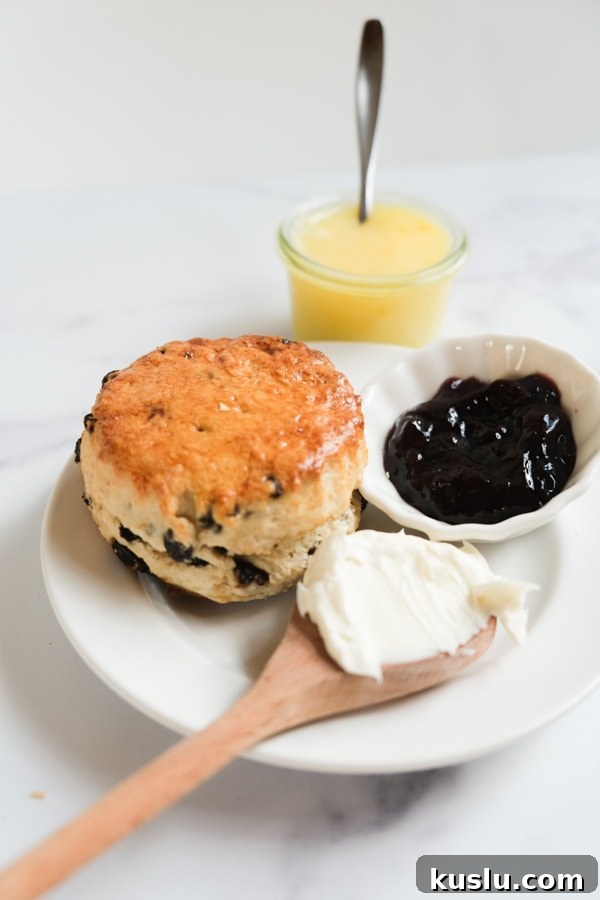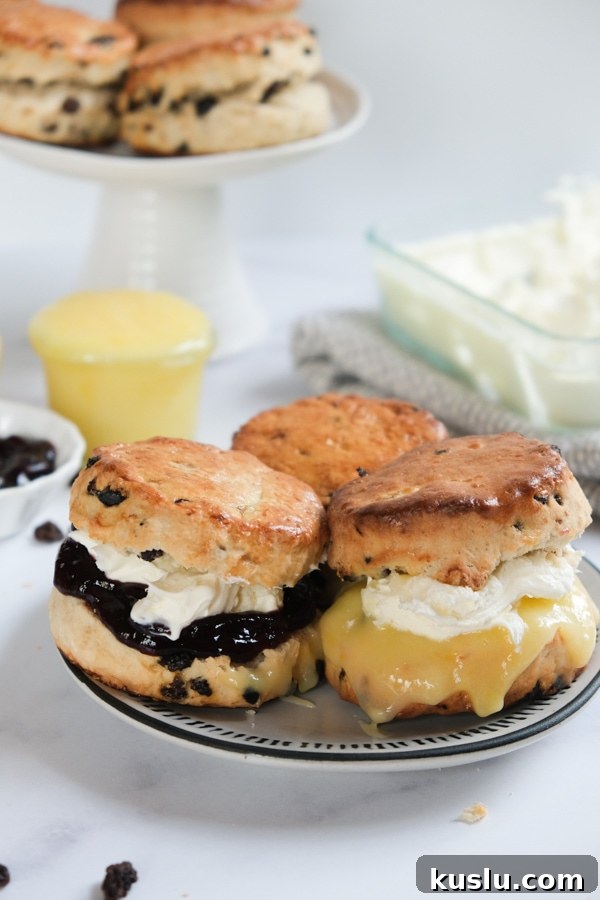
These light, tender scones are quick and easy to make—with or without currants. They pair perfectly with clotted cream, lemon curd, jam or even German plum butter. With just a few simple ingredients you can bake fresh scones in about 30 minutes.

About the Recipe: Homemade Currant Scones
I didn’t appreciate scones until I spent time in the UK, where fresh warm scones with clotted cream and jam quickly became one of my favorite treats. While scones are less common in everyday American baking, a proper British-style scone enjoyed with tea is a simple pleasure worth recreating at home.
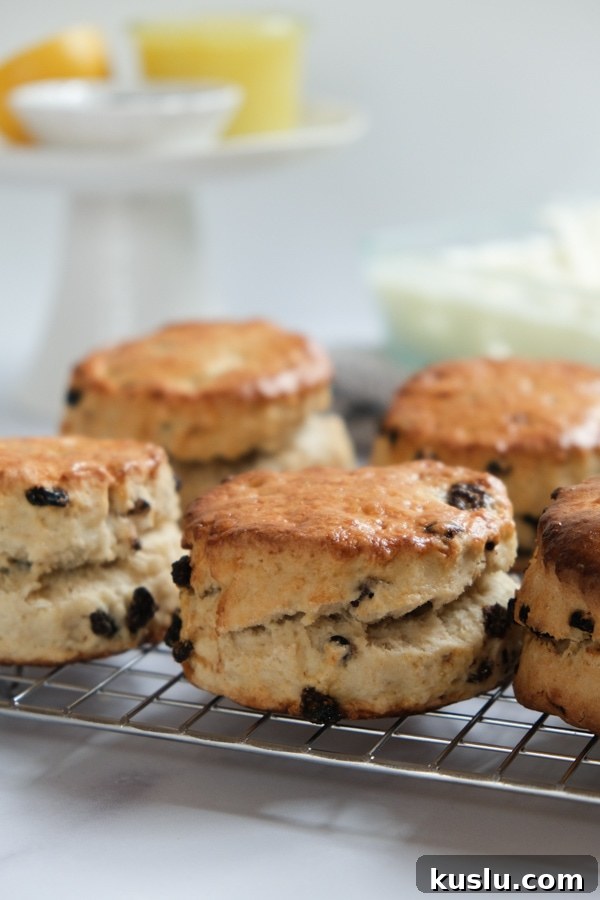
This recipe yields light, fluffy scones that are tender inside with a slightly golden top. They’re forgiving and adaptable: use dried currants, raisins, cranberries, nuts, or omit mix-ins entirely for plain scones. The basic dough comes together fast and bakes in just a few minutes, so you can easily have warm scones for afternoon tea or brunch.
British-style Scones vs American Scones
British-style scones differ from many American scones in texture and balance. They generally contain less butter and sugar in the dough itself, since richness and sweetness are often added at the table with clotted cream, butter and jam. British scones are usually lighter and less sweet, while American versions can be denser and sweeter with added mix-ins like chocolate chips or blueberries.
Traditional varieties in the UK and Ireland include plain, currant and cheese scones. Shape varies—round with smooth or fluted edges is common—but you can also find triangular scones. Despite appearances, British scones are not the same as American biscuits in flavor or texture.
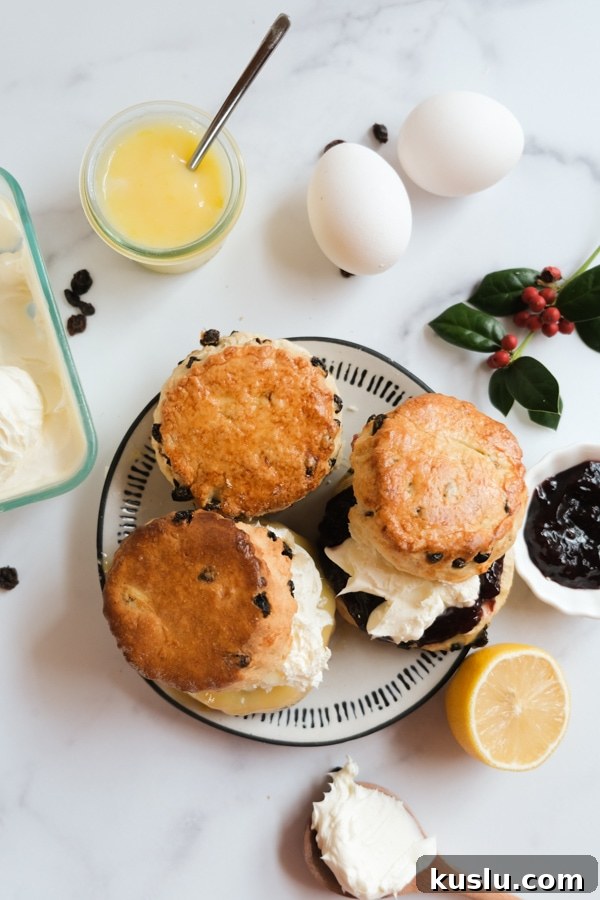
This recipe is a reliable way to enjoy classic British scones at home. Serve them warm with clotted cream, lemon curd or your favorite jam for a traditional treat.
- Tea parties
- Office gatherings
- Holidays and potlucks
- Showers and birthdays
- Casual afternoon tea or weekend brunch
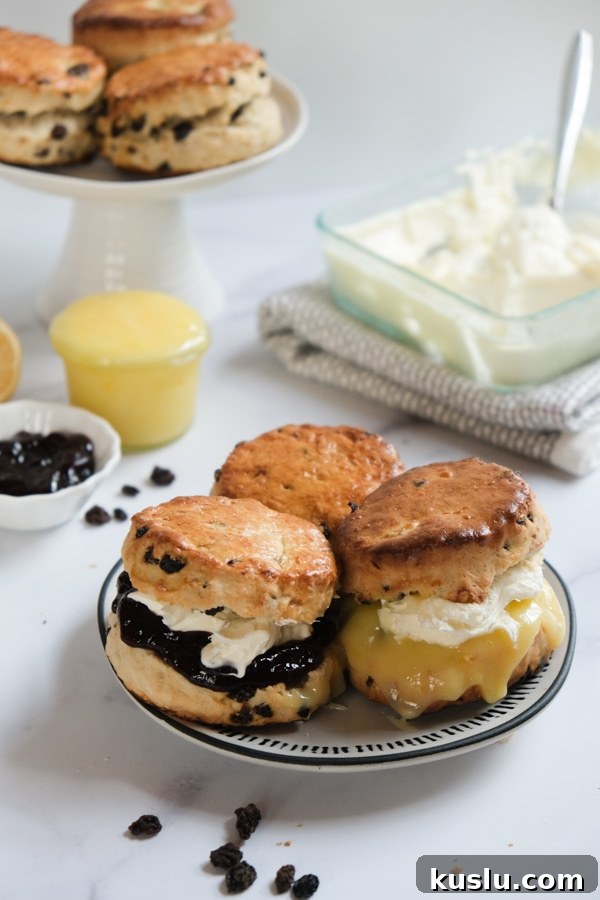
What to Put on Scones
Scones are delicious plain but even better with toppings. Popular choices include:
- Thick clotted cream
- European-style cultured butter or whipped cream
- Lemon curd
- Strawberry jam, raspberry jam or your favorite preserves
- Fruit compotes such as red berry Rote Grütze or plum butter for a different twist
- Fresh berries on the side
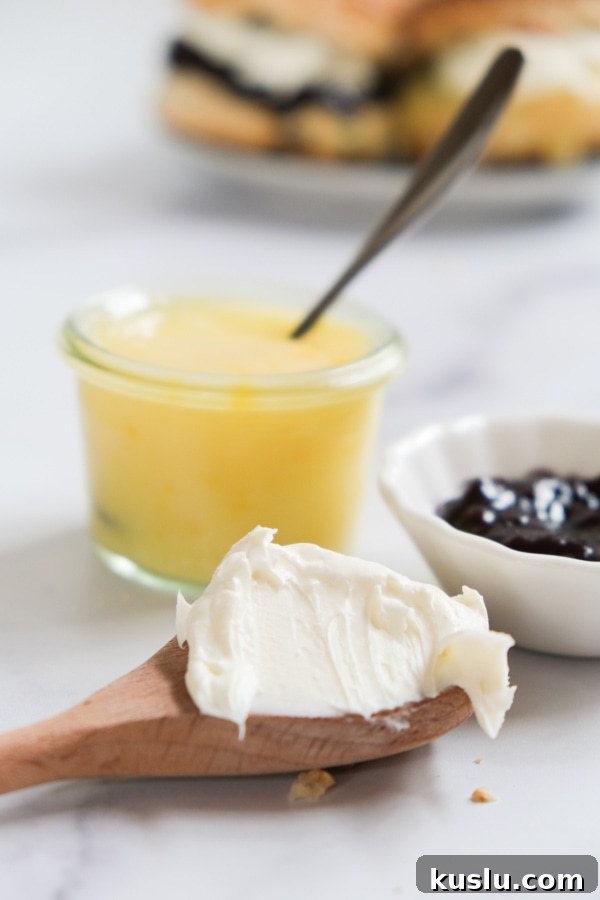
Homemade Scone Tips
1. If you plan to serve clotted cream, make it a day ahead so it has time to cook and chill. Any leftover cream can be used in the dough.
2. Many accompaniments—cultured butter, lemon curd, jam or plum butter—can be prepared in advance. Make them a few days before and bake scones the day you serve them for best freshness.
3. Scones are at their best the day they are baked, still warm from the oven. They remain quite pleasant the next day if stored properly.
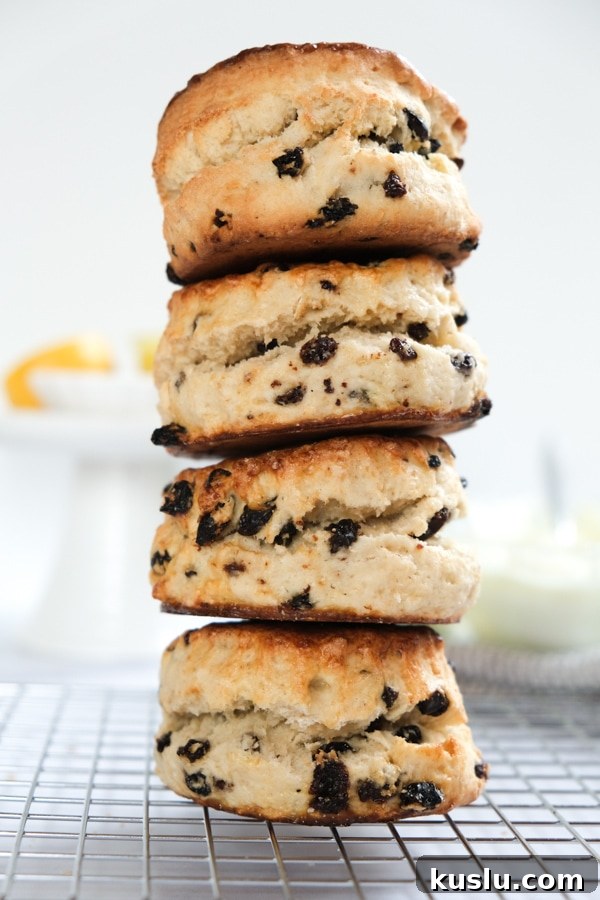
What Do I Need to Make Currant Scones?
Ingredients:
- All-purpose flour
- Granulated sugar
- Baking powder
- Salt
- Cold unsalted butter
- Dried currants (or other dried fruit)
- Whole milk or cream
- Eggs
Equipment:
- Large mixing bowl
- Knife and spoon or spatula
- Round cutter, jam jar, or fluted cookie cutter
- Baking sheet lined with parchment or a silicone mat
- Pastry brush and wire cooling rack
- Airtight container for storage
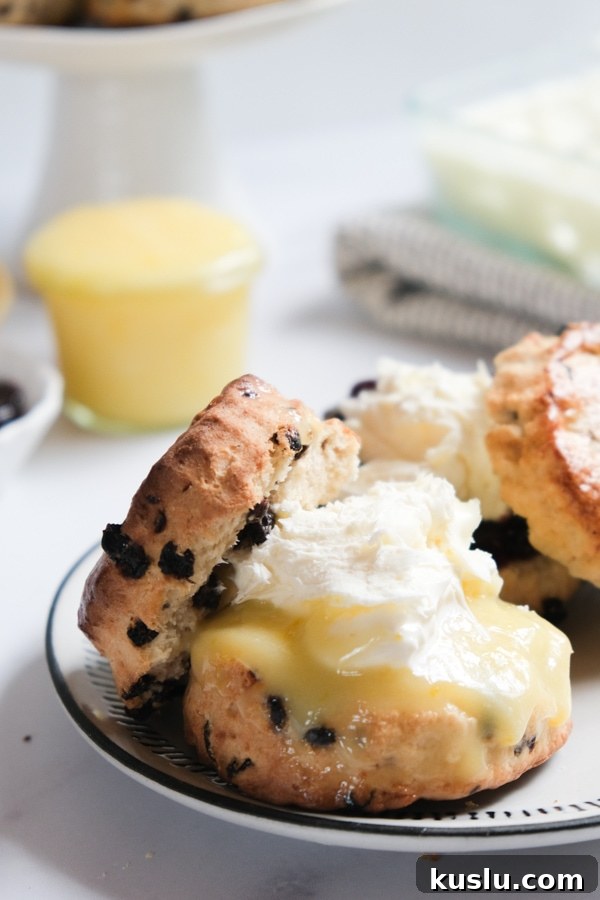
Do I Have to Use Currants?
No. Currants are a classic choice, but you can substitute raisins, dried cranberries, chopped nuts, or even grated cheese and herbs for a savory scone. Plain scones are also lovely and let your toppings shine.
Can I Freeze Scones?
Yes. You can freeze scones either before or after baking. Freezing unbaked cut scones is convenient: place them on a baking sheet until firm, then transfer to a freezer-safe bag so they don’t stick together. Bake from frozen, adding a couple of extra minutes if needed, for freshly baked scones any time.
How to Make the Best British Currant Scones
Preheat the oven to 500°F (260°C). You will turn the heat down before baking, but starting with a hot oven helps building steam for lift.
Combine the flour, sugar, baking powder and salt in a large bowl and whisk to blend. Cut cold butter into small pieces and work it into the dry ingredients with your fingertips until the mixture resembles coarse crumbs.
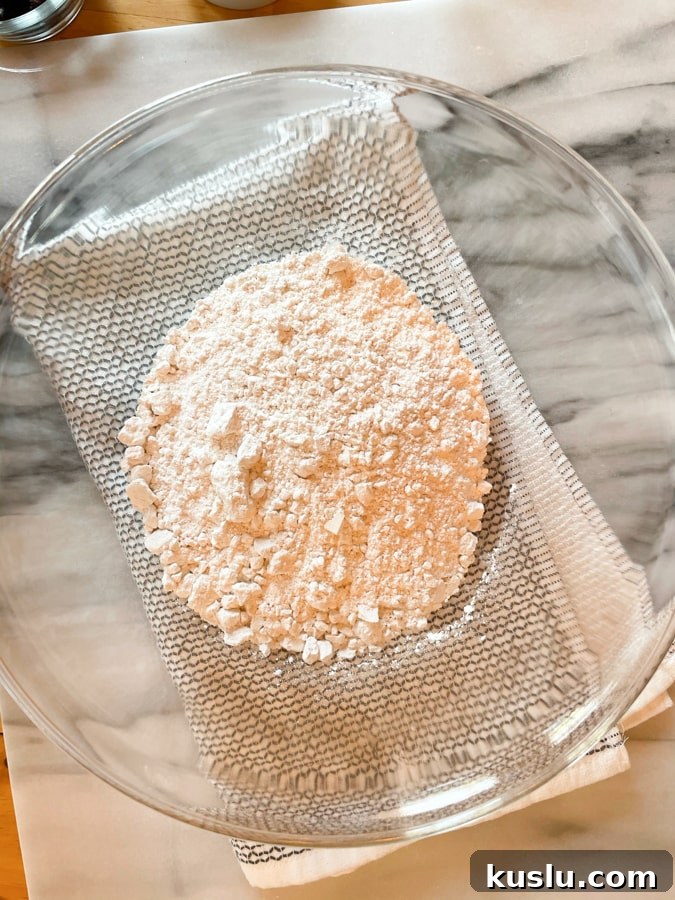
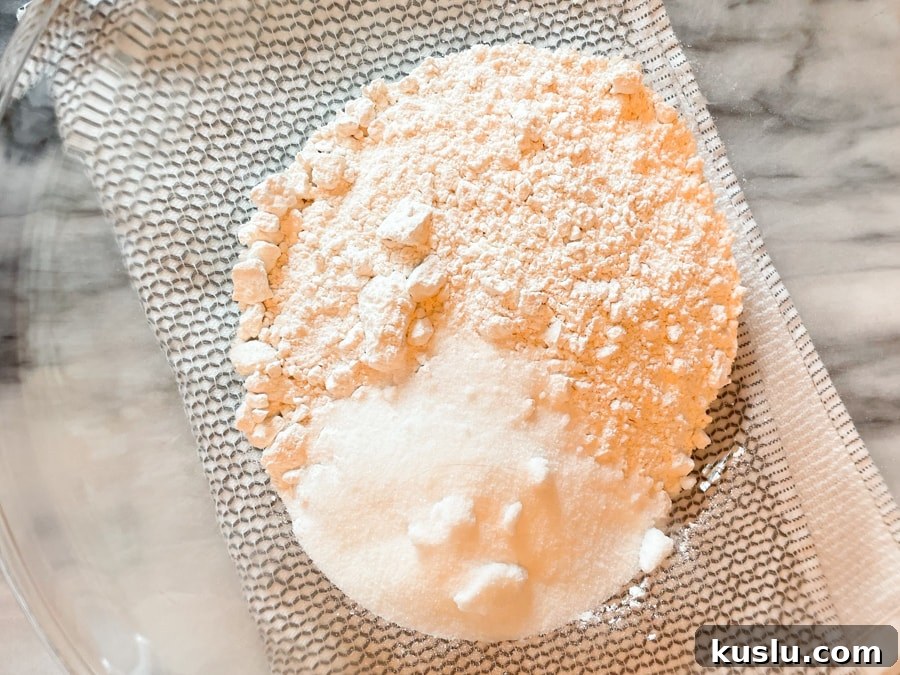
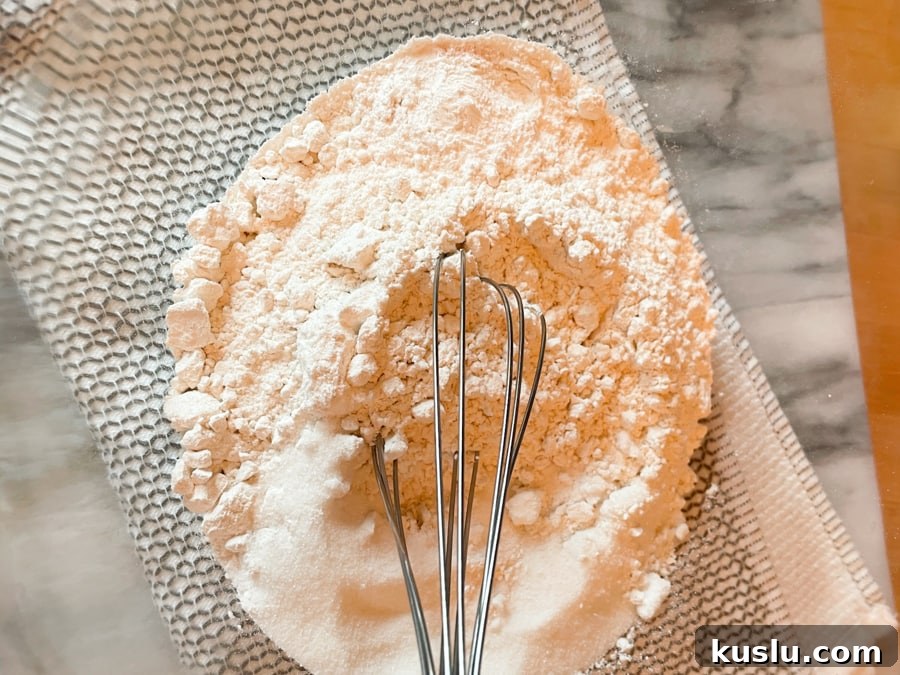
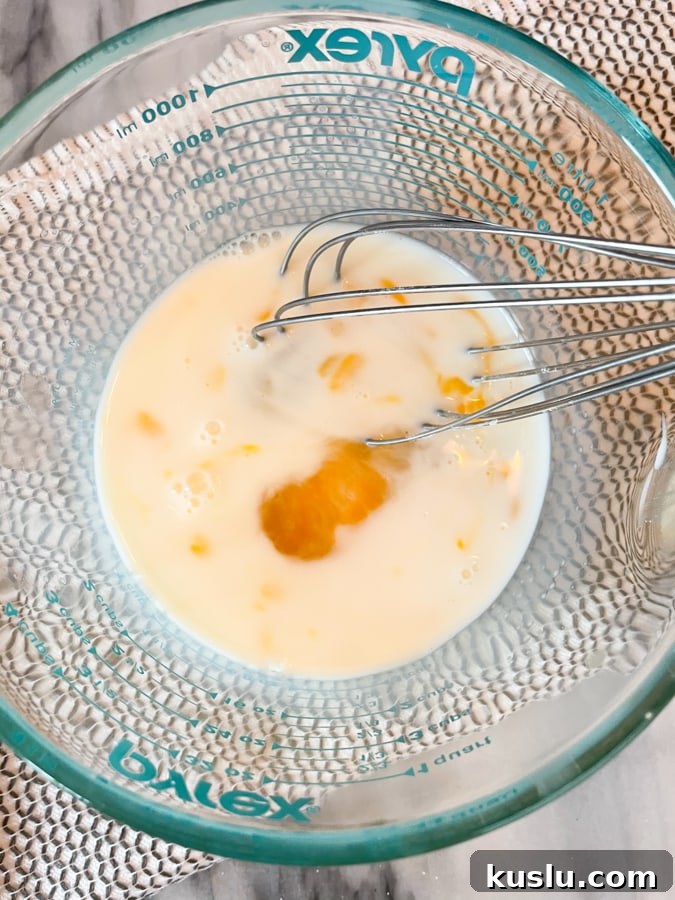
Stir in the currants or your chosen mix-in. In a small bowl whisk together the milk (or cream) and eggs, then add the liquid to the dry mix a little at a time. You may not need all the liquid—add just enough for the dough to come together into a ball. If it becomes too wet, sprinkle in a little more flour.
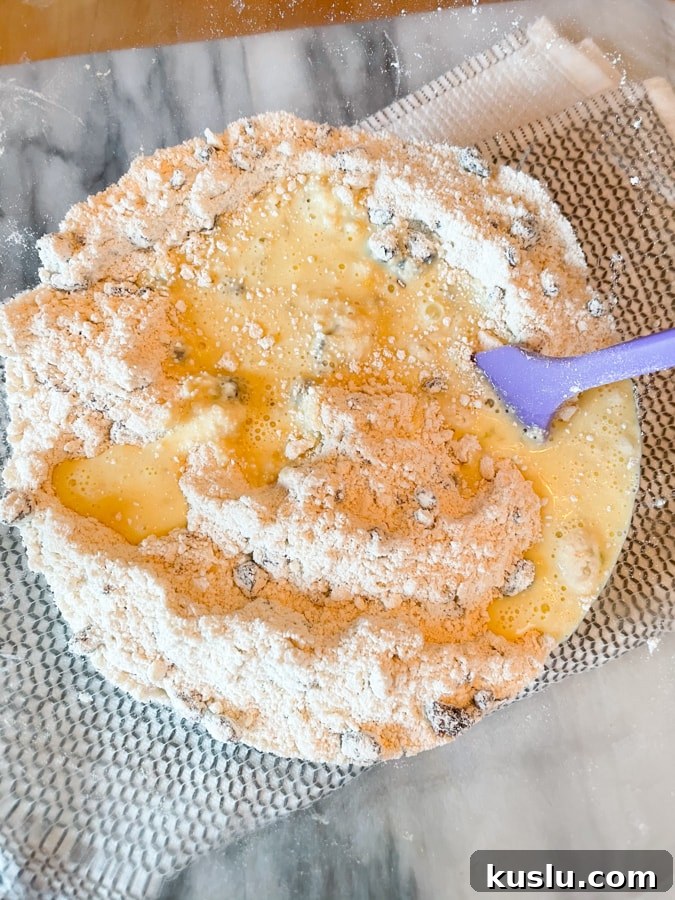
Turn the dough onto a well-floured surface and knead briefly with floured hands until smooth and free of cracks. Pat or roll the dough out to about 1 inch (25 mm) thick. Use a round cutter or small jar to cut scones; you should get 7–12 depending on cutter size. Gather scraps, reshape once or twice and cut additional scones.
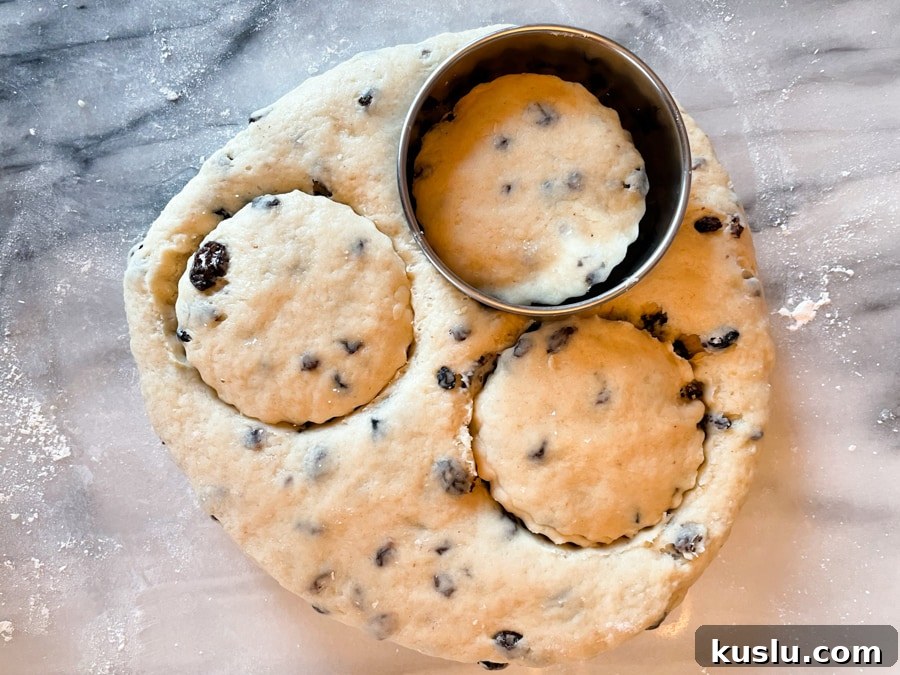

Place scones on a lined baking sheet. Brush the tops with the remaining milk-and-egg mixture or whisk one extra egg with a teaspoon of milk or water for an egg wash. Reduce the oven temperature to 425°F (215°C) and bake smaller scones 10–12 minutes, larger ones 12–15 minutes, until golden. If the tops brown before they are fully baked, tent with foil.

Cool scones on a wire rack. Serve warm or at room temperature with butter, clotted cream, whipped cream, lemon curd or jam. They’re best the day they are made but still pleasant the next day.

Best British Scones with Currants
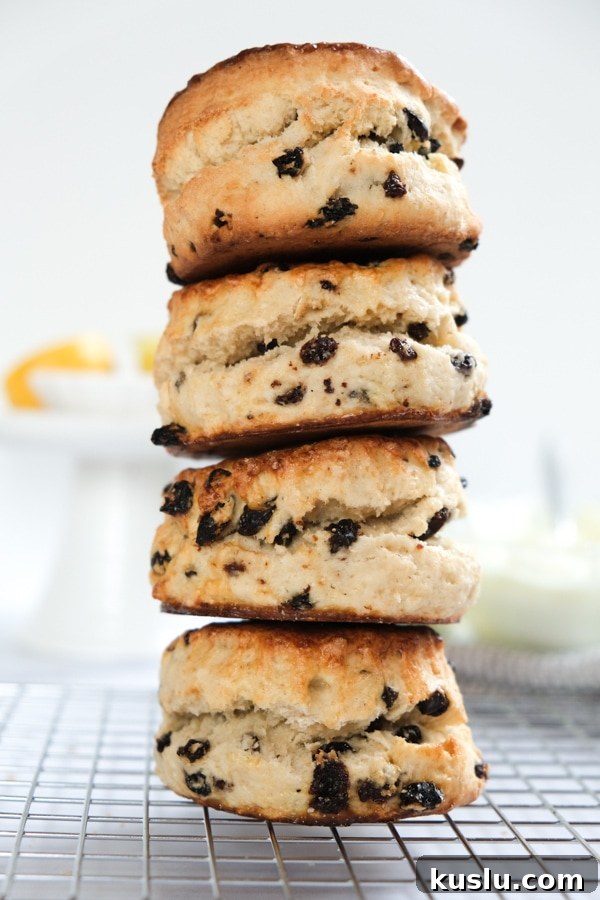
If you have 30 minutes, you can bake a batch of tender, flaky British-style scones to enjoy with tea or as a simple dessert.
10 minutes
12 minutes
22 minutes
Ingredients
- 3 cups (360 g) all-purpose flour
- 1/3 cup (65 g) granulated sugar
- 2 tablespoons baking powder
- 1/2 teaspoon salt
- 8 tablespoons (115 g) unsalted cold butter
- 3/4 cup (100 g) dried currants
- 1/2 cup (125 ml) whole milk or cream
- 2 eggs
Instructions
- Preheat oven to 500°F (260°C).
- Whisk together flour, sugar, baking powder and salt in a large bowl.
- Cut cold butter into small pieces and work into the flour until the mixture resembles coarse crumbs.
- Stir in currants or your chosen mix-in.
- Whisk milk and eggs together and add a little at a time to the dry mix until a dough forms. You may not need all the liquid.
- Turn dough onto a floured surface and knead briefly until smooth. Pat to 1 inch (25 mm) thickness.
- Cut out scones with a round cutter or jar and place on a lined baking sheet. Re-roll scraps once or twice to cut remaining scones.
- Brush tops with remaining milk-and-egg mixture or an egg wash.
- Reduce oven to 425°F (215°C) and bake 10–15 minutes depending on size, until golden brown.
- Cool on a wire rack and serve warm or at room temperature with clotted cream, butter, lemon curd or jam.
Notes
1. FLOUR: The cup measurement assumes spooning flour into the cup. Scooping can compact flour and increase quantity; weigh flour when possible for accuracy.
2. LIQUID: Egg size and how the flour is measured affect liquid needs. Add liquid gradually and adjust with small additions of flour if the dough is too sticky.
3. MIX-INS: Use dried fruit, nuts, or savory additions like grated cheese and herbs as desired. Plain scones also work well.
4. BAKING: If the tops brown before the centers are done, tent with foil to prevent over-browning.