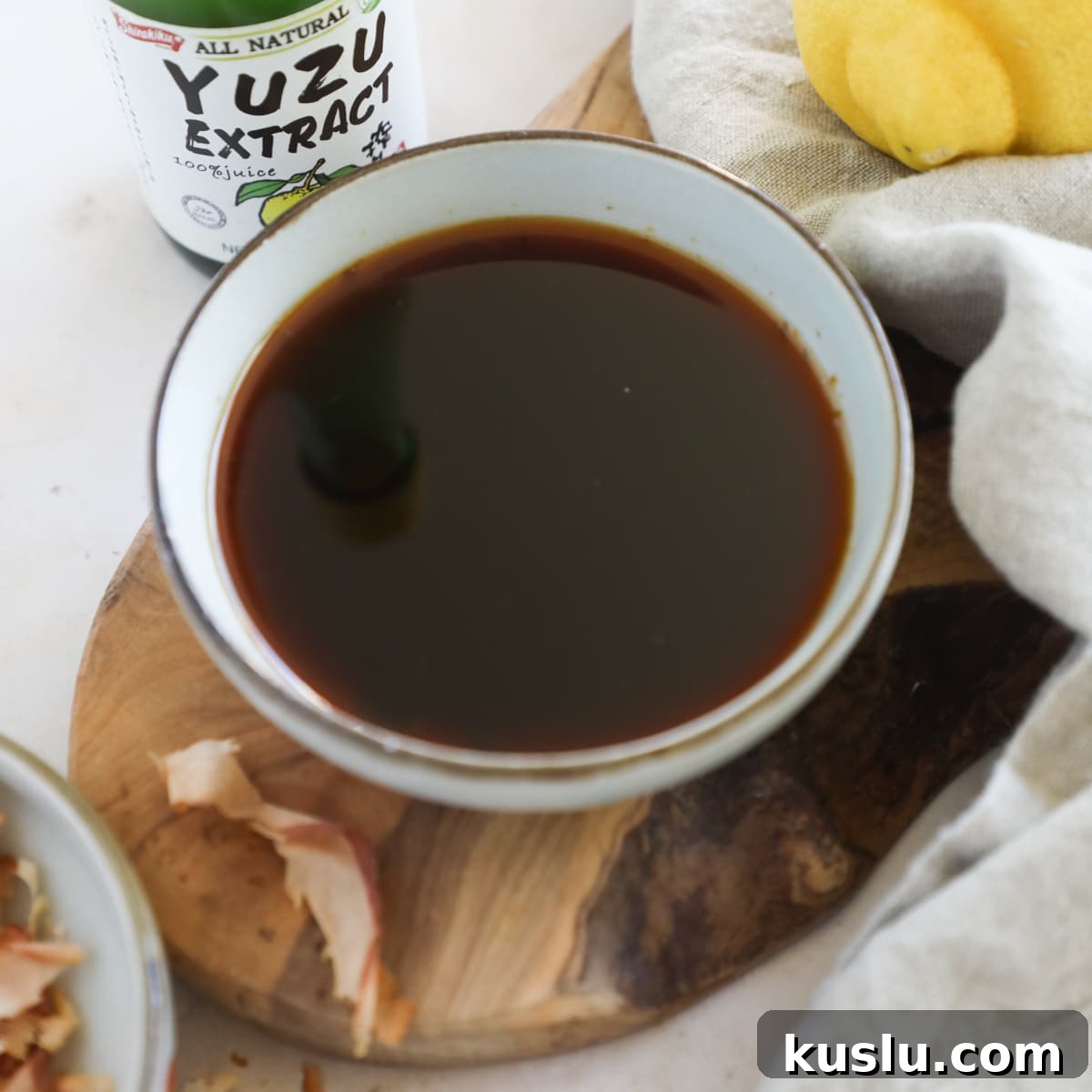
Yuzu Ponzu is a smoky, umami-rich sauce that works beautifully as a marinade or a dipping sauce. Bright yuzu juice brings citrus notes while soy sauce and katsuobushi (bonito flakes) add salty, smoky depth. This versatile sauce comes together in about 15 minutes with just a few simple steps.
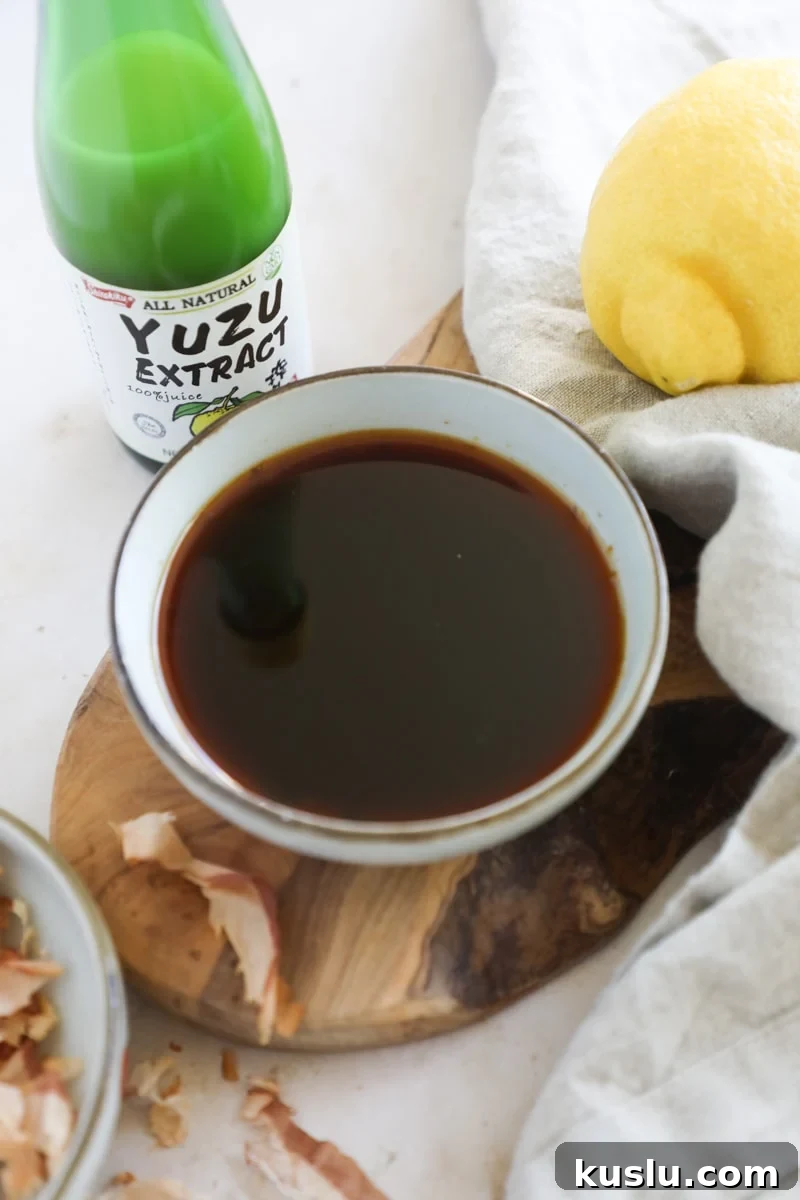
This umami-forward ponzu is ideal for marinating meats or as a dipping sauce for sushi and sashimi. It brightens many dishes—try making a batch to keep in the refrigerator or freeze portions so it’s ready whenever you want to add a fresh citrus-soy kick to a meal.
Why You’ll Love Yuzu Ponzu Sauce
- Taste – Tangy and slightly sweet with floral, citrusy undertones and a smoky umami backbone.
- Texture – Light and thin, similar in viscosity to soy sauce; perfect for drizzling and dipping.
- Effort – Simple: simmer a few ingredients briefly, cool, then combine with soy and yuzu.
- Time – Ready in roughly 15 minutes including cooling time.
What to Serve with Yuzu Ponzu
Yuzu ponzu complements many dishes. Popular uses include:
- Dressing for hamachi or salmon crudo.
- Dipping sauce for ebi or vegetable tempura, shabu shabu, and sushi rolls.
- Marinade for seared or grilled fish and meats (works well with tataki-style preparations).
- Drizzle over steamed Japanese rice to add a bright finishing touch.
- Vegetable dip—mix ½ cup kewpie mayo with 1 tablespoon yuzu ponzu for a creamy yuzu dipping sauce for broccoli or asparagus.
- Salad dressing—toss with lettuce, shaved carrots, tomatoes, and protein for a light, citrusy salad.
Ingredients
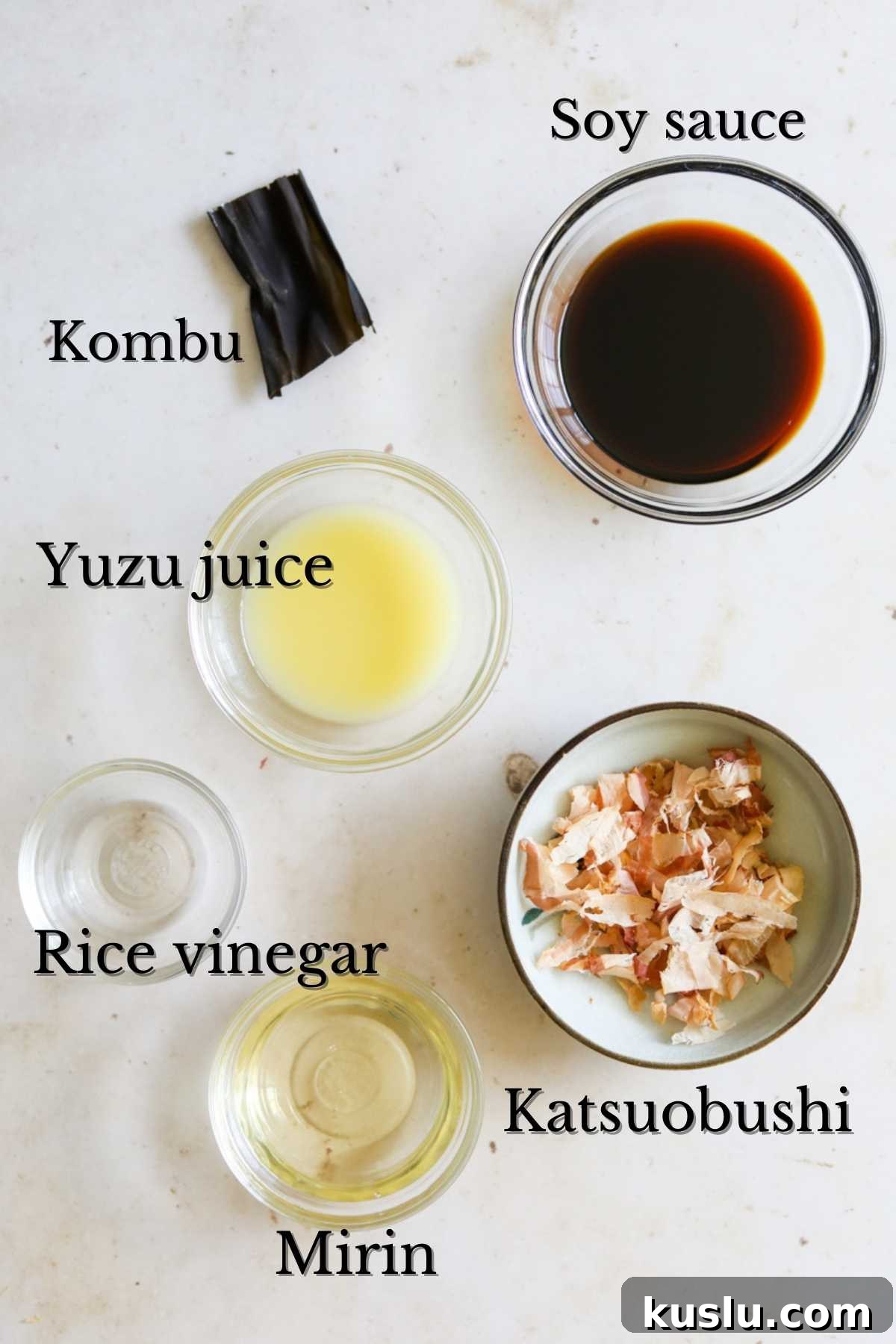
- Kombu – Dried kelp that contributes a briny, savory base.
- Katsuobushi (bonito flakes) – Dried, smoked skipjack tuna flakes that add smoky umami.
- Mirin – Sweet Japanese rice wine that deepens the sauce’s umami and balances acidity.
- Rice vinegar – Adds gentle tang and balance.
- Soy sauce – The salty backbone; use shoyu or a gluten-free tamari if needed.
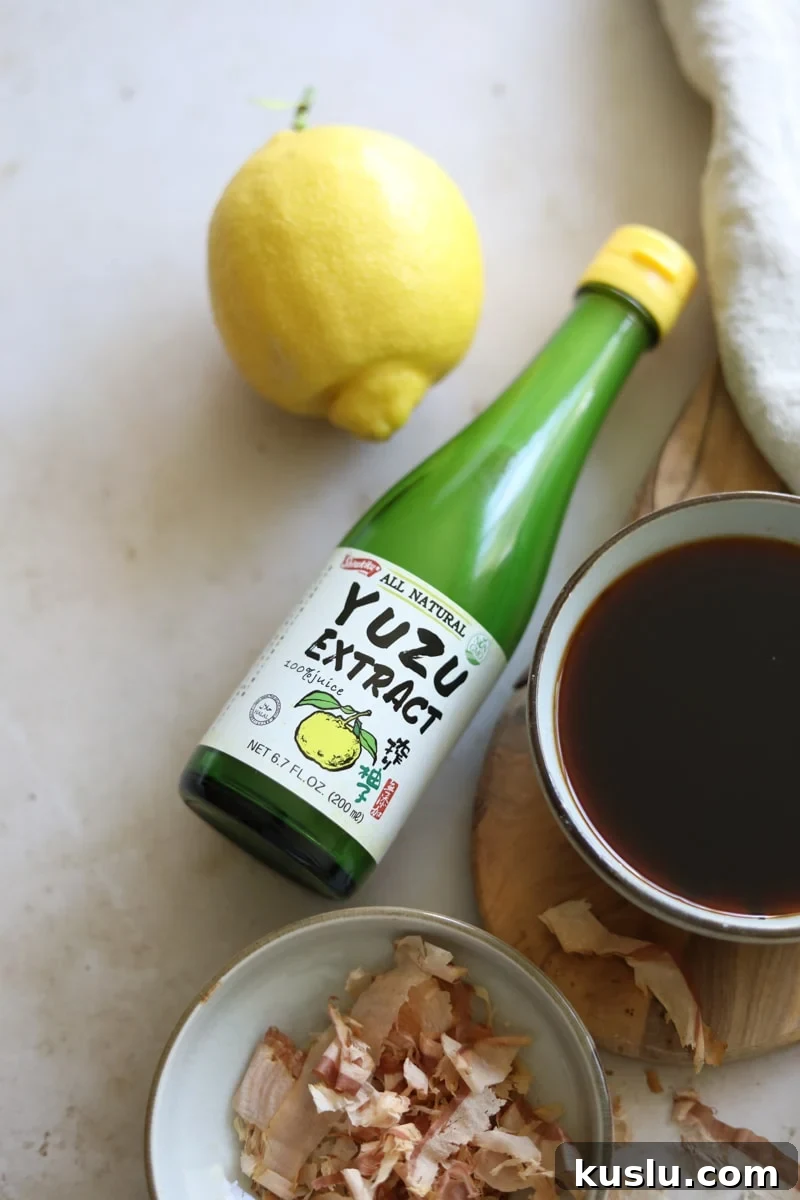
- Yuzu juice – Fresh or bottled yuzu provides bright, aromatic citrus notes (can be substituted if unavailable).
See the recipe card below for exact quantities.
Instructions
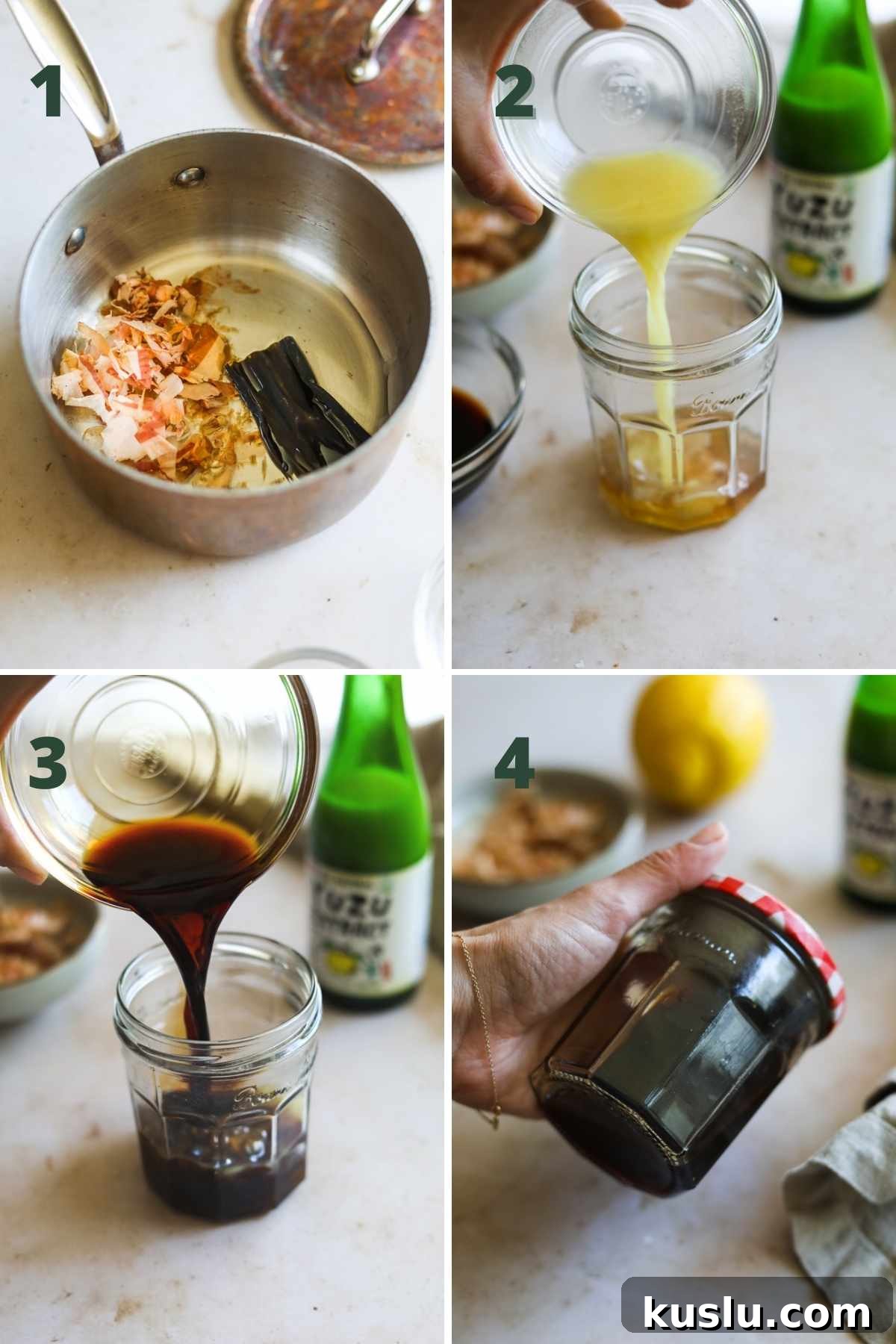
- Cook the base – In a small saucepan combine kombu, katsuobushi, mirin, and rice vinegar. Warm gently over low heat until just simmering. Stir, remove from heat, and let cool. The mixture should smell sweet and smoky and the kombu will have softened.
- Strain – After about 10 minutes of cooling, strain the liquid to remove kombu and bonito flakes, and transfer the strained liquid to a jar.
- Finish – Add soy sauce and yuzu juice to the jar, secure the lid, and shake well to combine. Chill in the refrigerator before serving.
Substitutions
- Lemon juice – Use instead of yuzu for a bright, familiar citrus flavor.
- Lime juice – A crisper, slightly more aromatic alternative to lemon.
- Orange juice – For a milder, sweeter citrus note if you prefer less tartness.
Variations
- Spicy – Add red chili flakes or a touch of Sriracha while heating for heat.
- Vegan – Omit katsuobushi to keep the sauce plant-based; consider adding a splash of liquid smoke or extra kombu for depth.
- Garlic – A small amount of minced garlic adds pungency.
- Sesame – A few drops of toasted sesame oil introduce a nutty aroma.
- Sweetened – Stir in a little sugar or honey to taste for a sweeter profile.
- Herby – Add sliced green onion for fresh, aromatic bite.
FAQ
Most ingredients are available at Japanese or Asian grocery stores and many mainstream supermarkets. Bottled yuzu juice and specialty items can also be purchased online or at well-stocked markets.
Soy sauce is a single condiment made from fermented soy; ponzu is a lighter, citrus-forward sauce made by combining soy with citrus (yuzu or substitutes), vinegar, and a dashi-like base.
Ponzu made with katsuobushi has a faint fishy or oceany note from the bonito flakes, but the overall flavor is primarily salty, tangy, and citrusy rather than strongly fishy.
Not by default. The basic recipe is not spicy, but you can add chiles, chili flakes, or hot sauce to introduce heat.
Traditional ponzu often contains katsuobushi (bonito flakes), which is not vegan. Omit the katsuobushi to make a vegan version; enhance umami with extra kombu or mushrooms if desired.
Regular soy sauce contains gluten. To make a gluten-free ponzu, use gluten-free tamari or a certified gluten-free soy sauce.
Equipment
Basic kitchen tools are all you need: measuring spoons, a small saucepan, a strainer, and a jar or airtight container for storage.
Storage
Keep homemade yuzu ponzu refrigerated in an airtight container or lidded jar for up to one month. Stir or shake before using to recombine any settled particles. You can also freeze portions for up to three months—use a freezer-safe container and leave space for expansion.
Top Tips
- Use a spatula to scrape all the sauce from the saucepan to minimize waste.
- For marinating, place protein in a sealed bag or bowl, coat with ponzu, then cook as desired.
- Do not leave the sauce at room temperature for extended periods; refrigerate after cooling.
Related Recipes
- Unagi Sauce (Eel Sushi Sauce)
- Spicy Kewpie Mayo (Sauce for Poke and Sushi)
- Miso Sauce (Glaze and Marinade)
- Spicy Chipotle Mayo
- Healthy Ranch Dressing with Greek Yogurt
Did You Like This Recipe?
Love this easy ponzu sauce? Consider leaving a rating and a comment if you try it—feedback helps refine the recipe. Tag your creations on social media so others can find inspiration.
📖 Recipe

How to Make Yuzu Ponzu Sauce
2 mins
3 mins
10 mins
15 mins
Equipment
- Measuring spoons
- Mixing bowl or jar for storage
- Small saucepan and strainer
Ingredients
- 1 strip kombu (about 2 inches)
- ¼ cup katsuobushi (bonito flakes)
- 3 tablespoons mirin
- 1 teaspoon rice vinegar
- ¼ cup soy sauce (or tamari for gluten-free)
- ¼ cup yuzu juice (or lemon/lime/orange as substitute)
Instructions
- Cook ingredients – Combine kombu, katsuobushi, mirin, and rice vinegar in a small saucepan. Heat gently over low until just simmering, stir, then remove from heat and let cool for about 10 minutes. The mixture will smell sweet and smoky and the kombu will soften.
- Strain – Strain the liquid to remove the kombu and bonito flakes, then pour the strained liquid into a jar.
- Shake – Add soy sauce and yuzu juice to the jar, secure the lid, and shake until combined. Chill before serving.
Notes
Storage
Store in the refrigerator in an airtight container for up to one month. Stir or shake before use. Freeze in suitable containers for up to three months if desired.
Top Tips
- Scrape the pan with a spatula to collect all the flavorful liquid.
- Marinate proteins in a sealed bag or bowl; remove before cooking according to your recipe.
- Refrigerate promptly and do not leave the sauce at room temperature for long periods.
Nutrition
Carbohydrates: 7 g |
Protein: 11 g |
Fat: 1 g |
Sodium: 949 mg
Share your results and feedback—it helps others discover the recipe.