Sourdough pizza focaccia combines the airy crumb of focaccia with the flavors of your favorite pizza toppings. Baked in a cast iron skillet, it develops a crisp, golden base and a pillowy interior, finished with tomato sauce, mozzarella and any toppings you enjoy.
This version is baked in a cast iron skillet for great texture. It pairs well with a simple homemade pizza sauce, fresh basil and good mozzarella. If you enjoy sourdough pizza recipes, you might also like other easy sourdough pizza ideas made with discard or fully active starters.
Why you’ll love this recipe
A tasty hybrid – this recipe merges sourdough pizza crust and focaccia into a single, satisfying bread. The result is a flavorful, chewy focaccia topped like a pizza.
Cast iron baking – baking in a cast iron skillet gives the base a lovely crispness while keeping the interior soft. A 12″ skillet is ideal for each round.
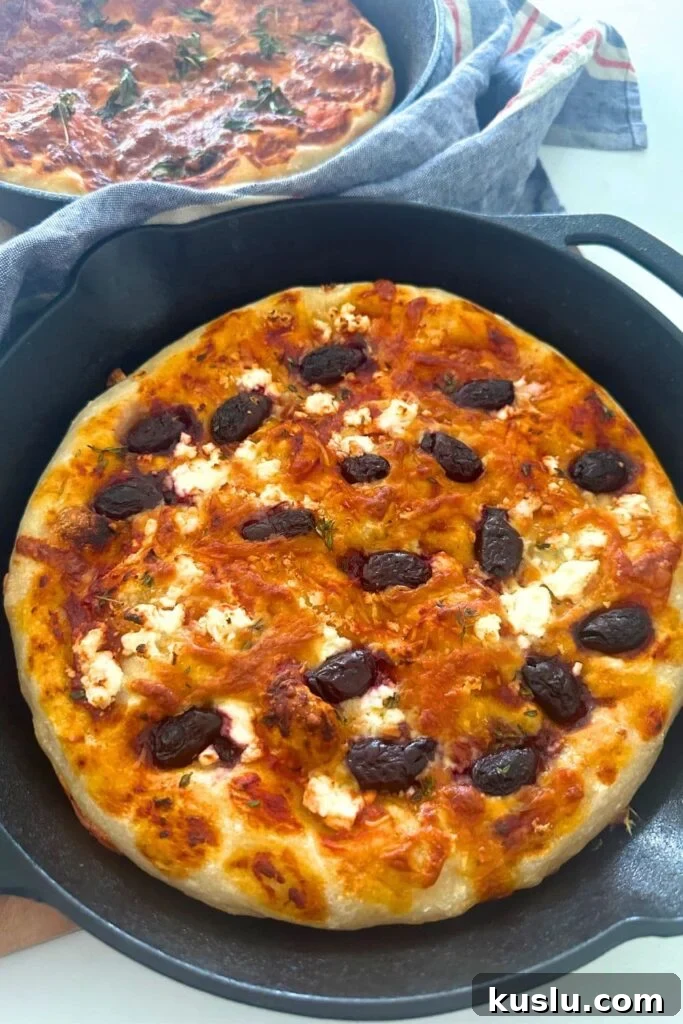
Flexible toppings – use whatever you have on hand: classic margherita, feta and olives, or your favorite combination. Focaccia-style dough makes a forgiving canvas for lots of flavors.
Starter or discard?
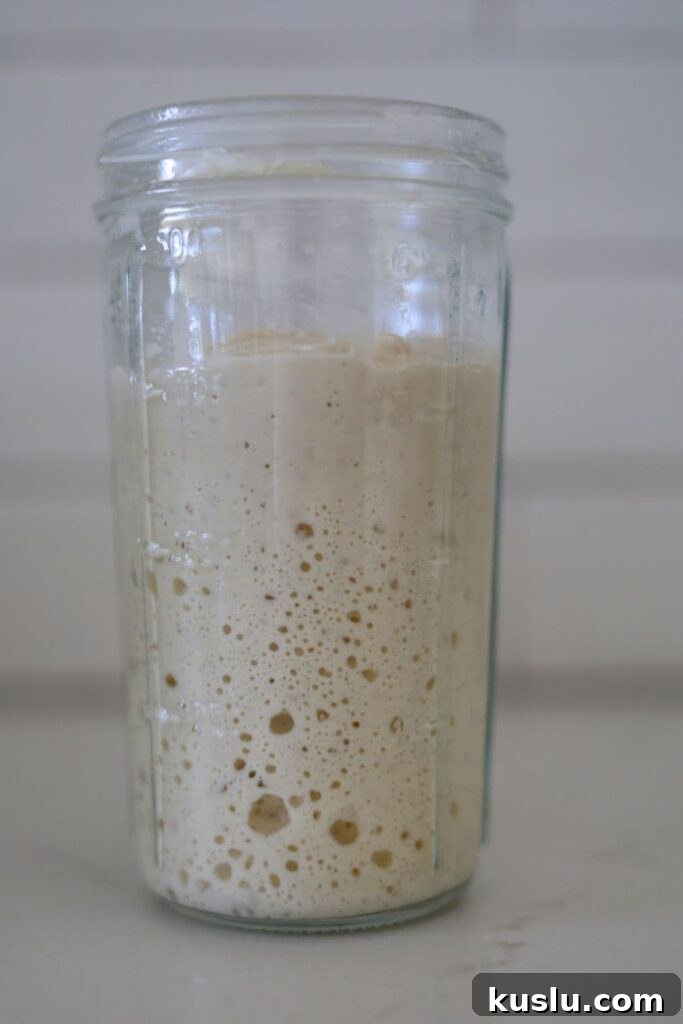
You can use either an active sourdough starter or sourdough discard. The instructions below assume an active, bubbly starter. If using discard, replace the active starter with the same weight of discard and add about 7 g instant or active dried yeast to speed the rise. When adding yeast, expect much faster fermentation and adjust timings accordingly.
How to make sourdough pizza focaccia bread
This recipe yields two 12″ focaccia rounds baked in cast iron skillets. If you have two skillets you can bake both at once. The process is straightforward: mix, rest, strengthen, bulk ferment, divide, shape, proof, top and bake.
Mixing the dough
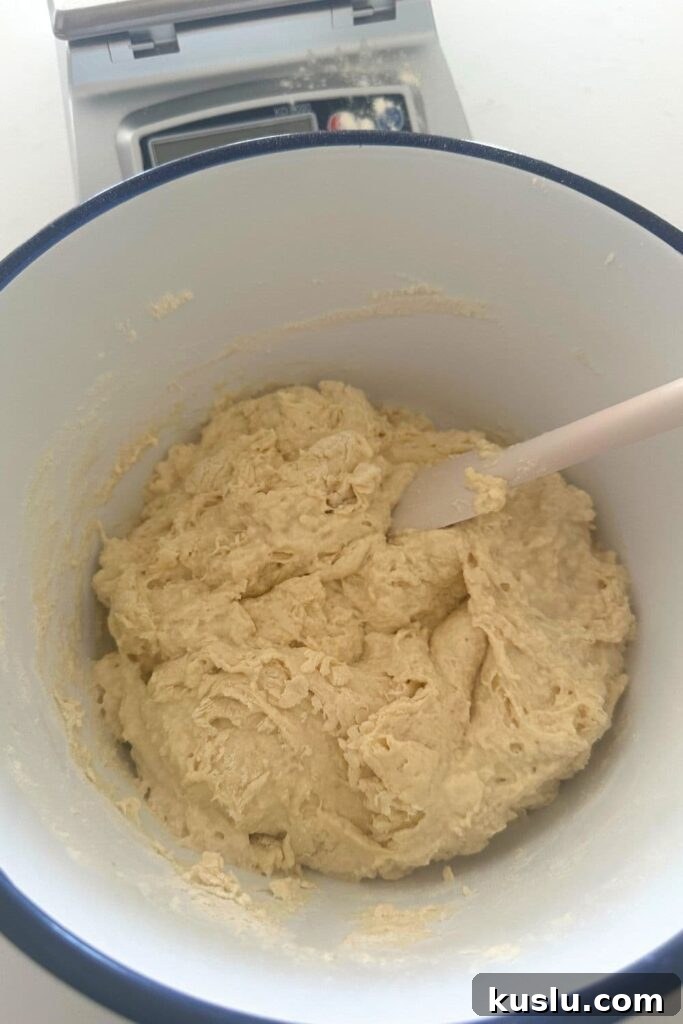
Weigh starter and water into a large bowl and mix briefly. Add bread flour and salt, then combine until a sticky, cohesive dough forms with no dry flour remaining. A dough scraper or Danish whisk works well for this step. Cover the bowl and rest for about 1 hour.
Strengthening the dough
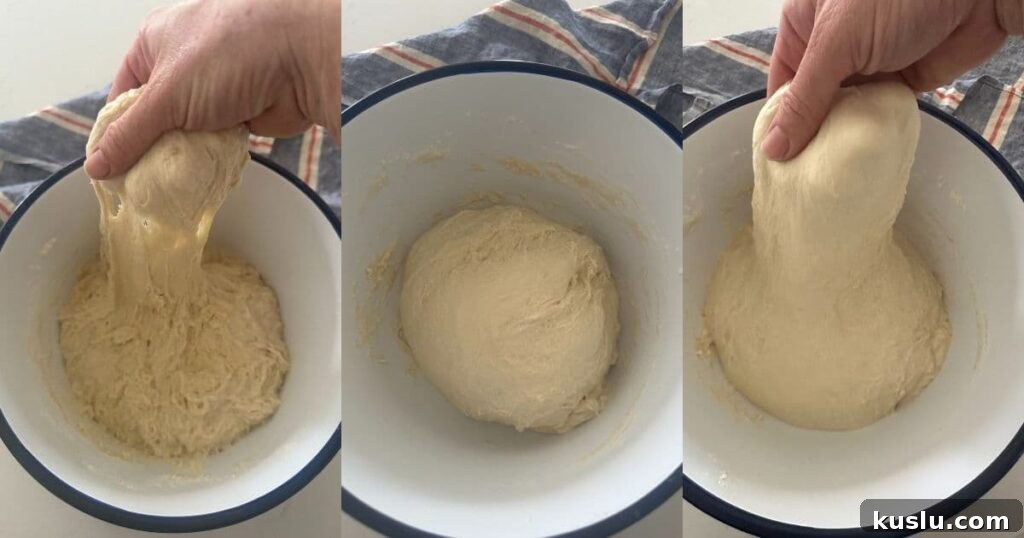
After the autolyse, bring the dough together into a ball by stretching and folding around the bowl. Pull the dough from the outside and fold it into the center, repeating around 10–15 times. You want the dough to feel stronger; it doesn’t need to be perfectly smooth.
Bulk ferment
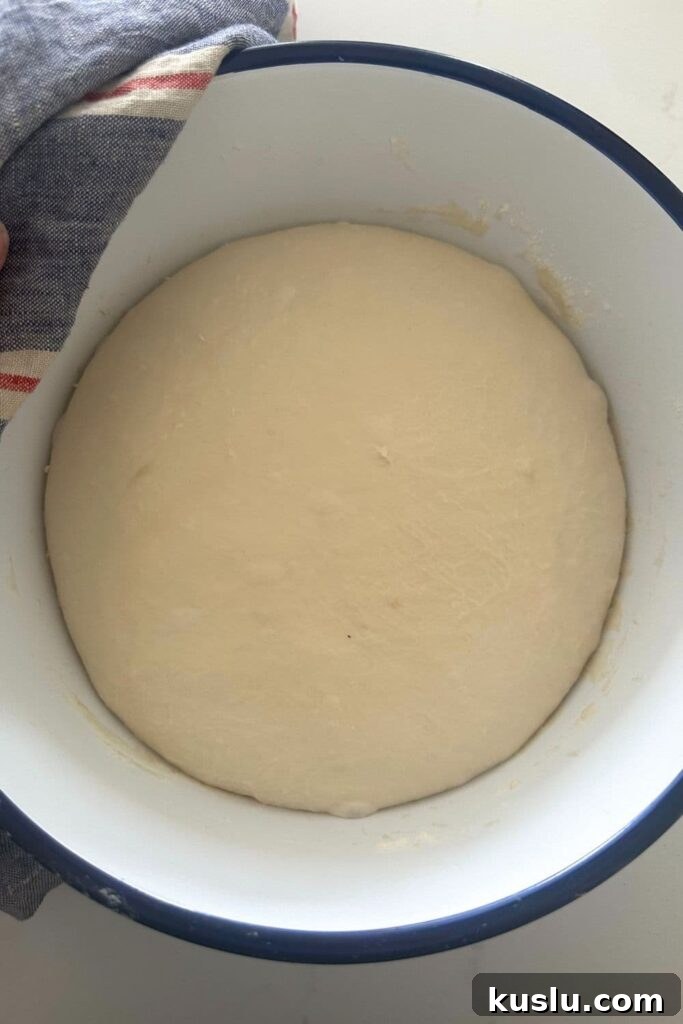
Cover the dough and leave it to ferment until it has approximately doubled in size. Focaccia is forgiving, so it does not have to be a perfect double—close is fine.
Shaping focaccia
Generously oil the base of each cast iron skillet. Turn the dough out onto a work surface and divide it into two pieces with a bench scraper. With oiled hands, lift each piece into a skillet and gently stretch to fill the pan. The dough will continue to relax and fill the skillet as it proofs.
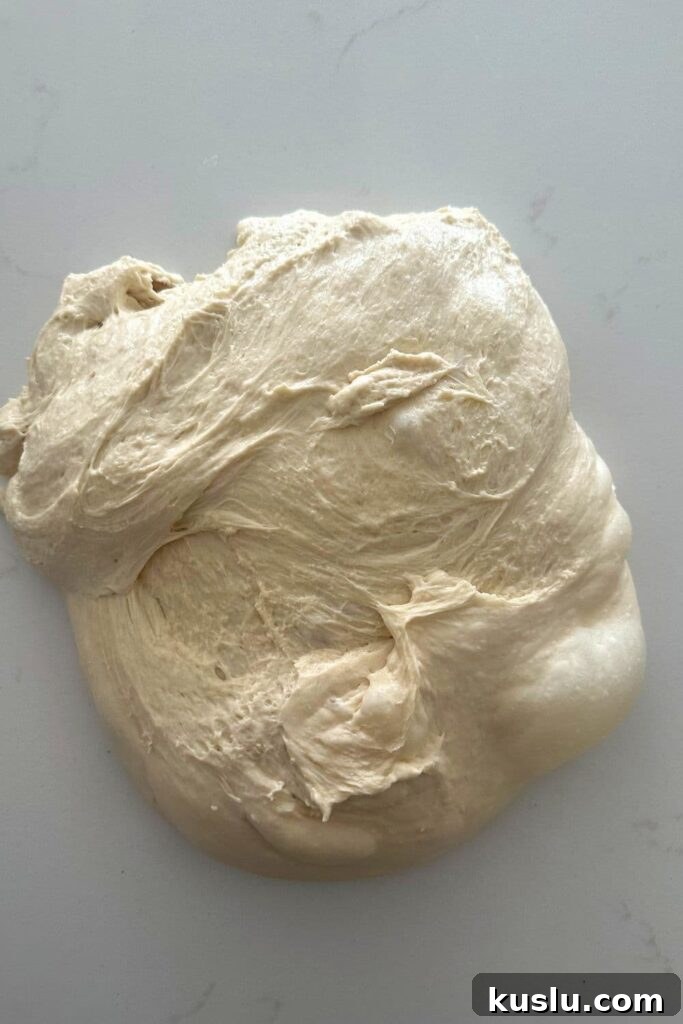
Use a little olive oil on your hands while shaping to prevent sticking and to help the dough spread evenly.
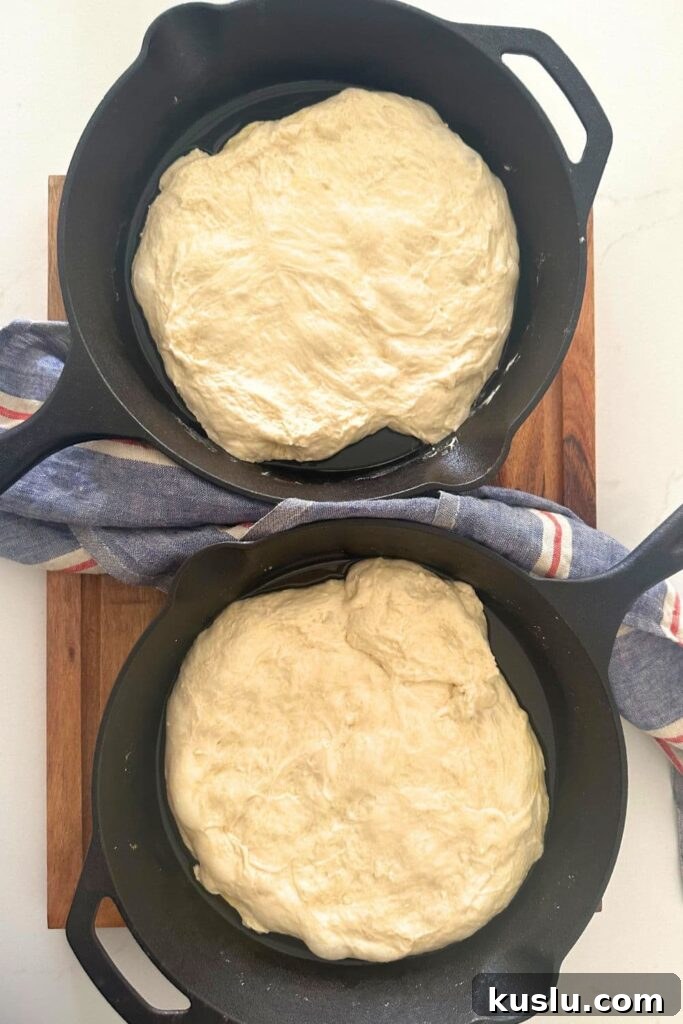
Second rise
Allow the dough to proof again until it spreads to fill the skillet and becomes puffy. You may see bubbles forming—this is desirable.
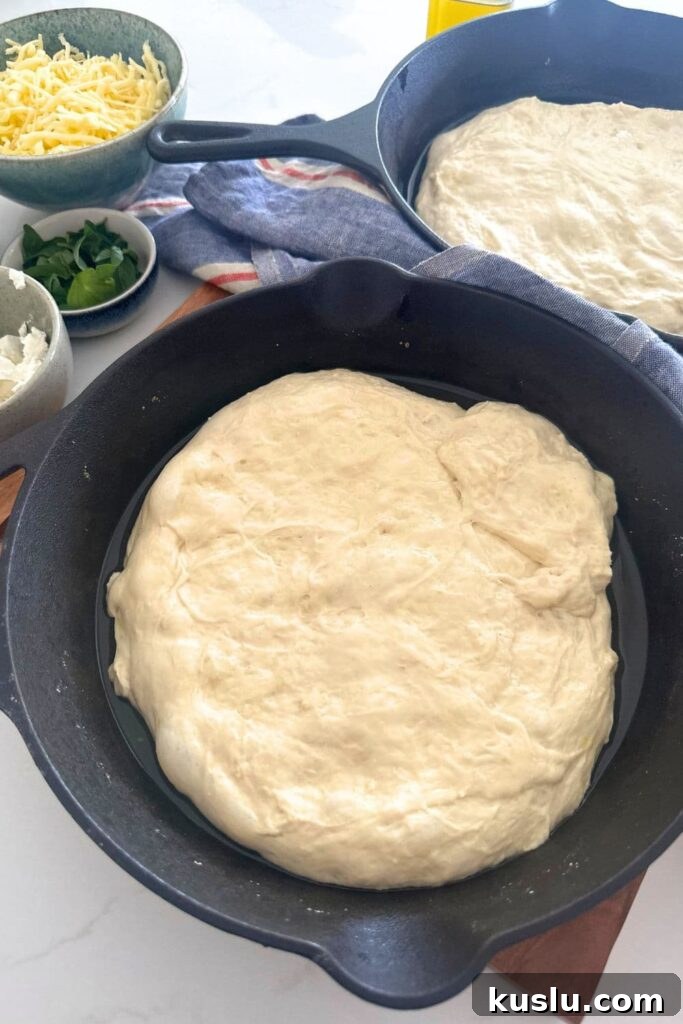
Topping
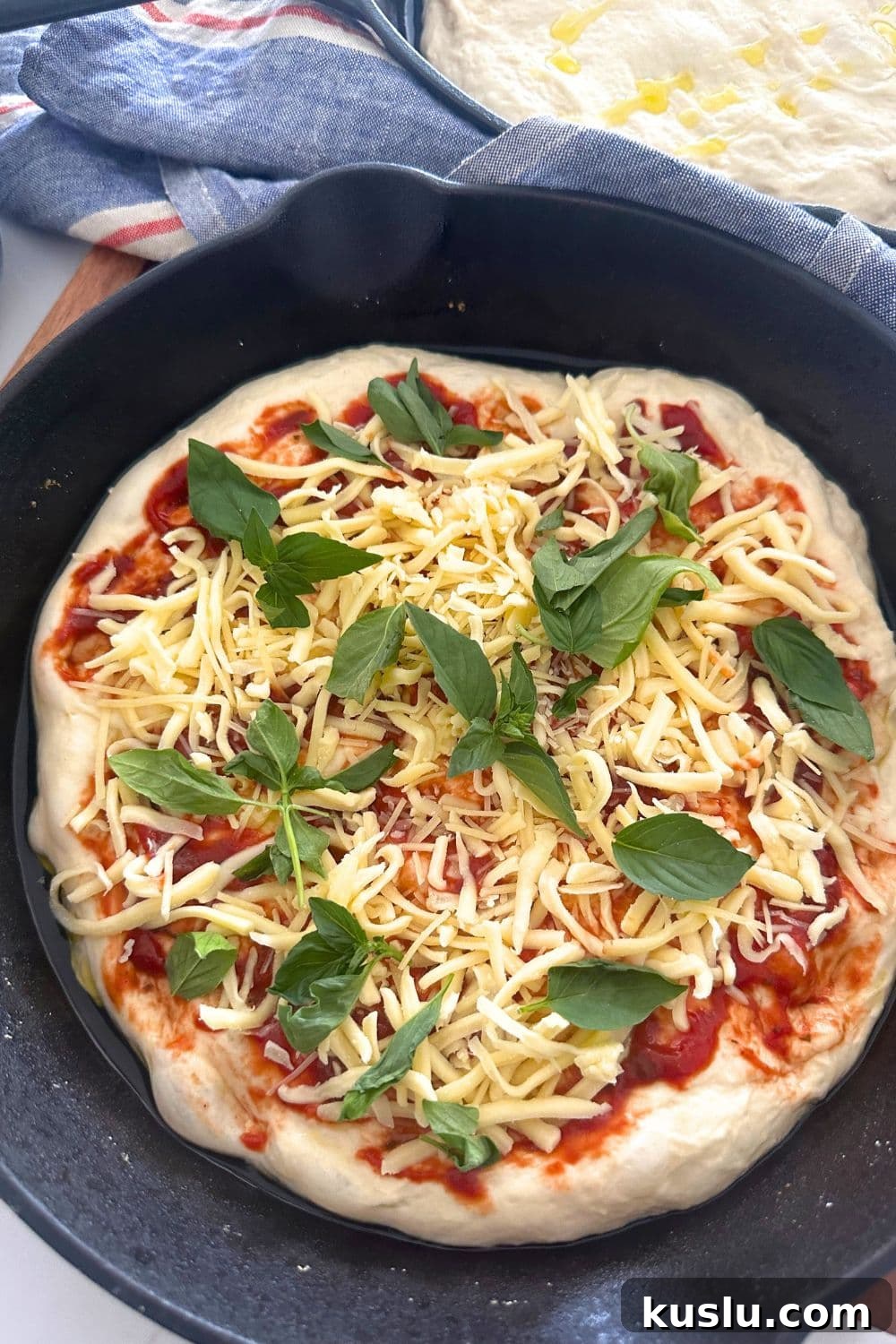
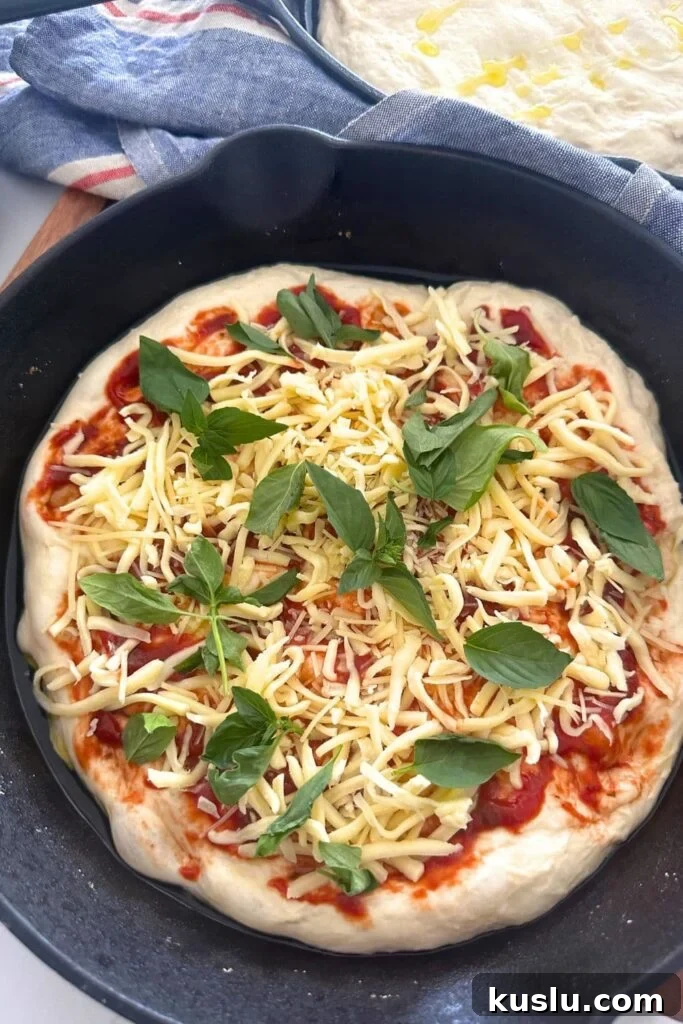
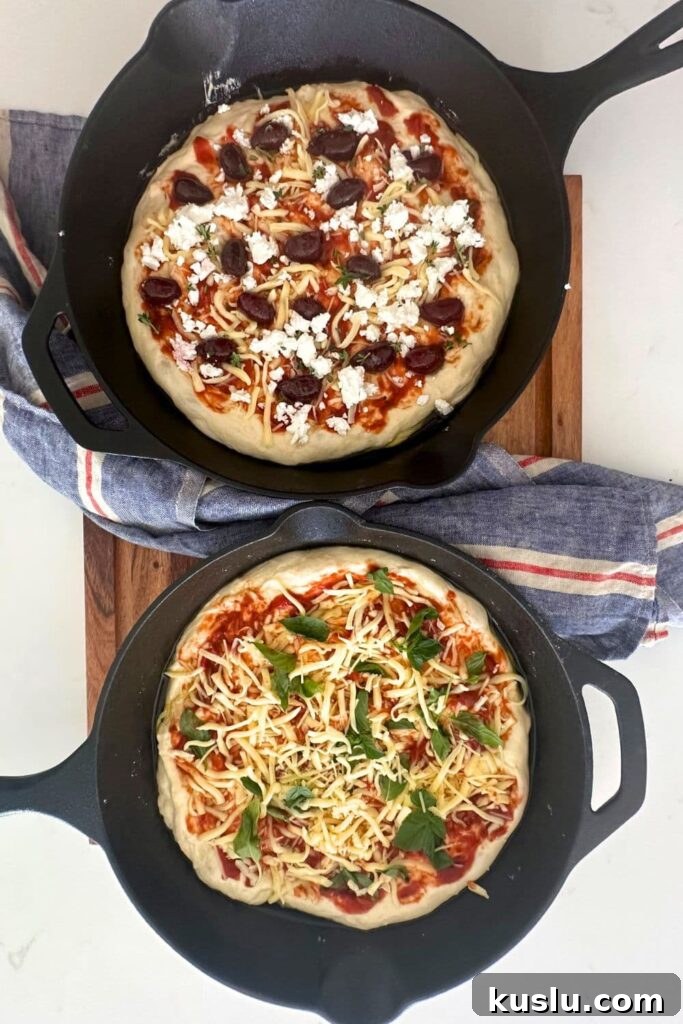
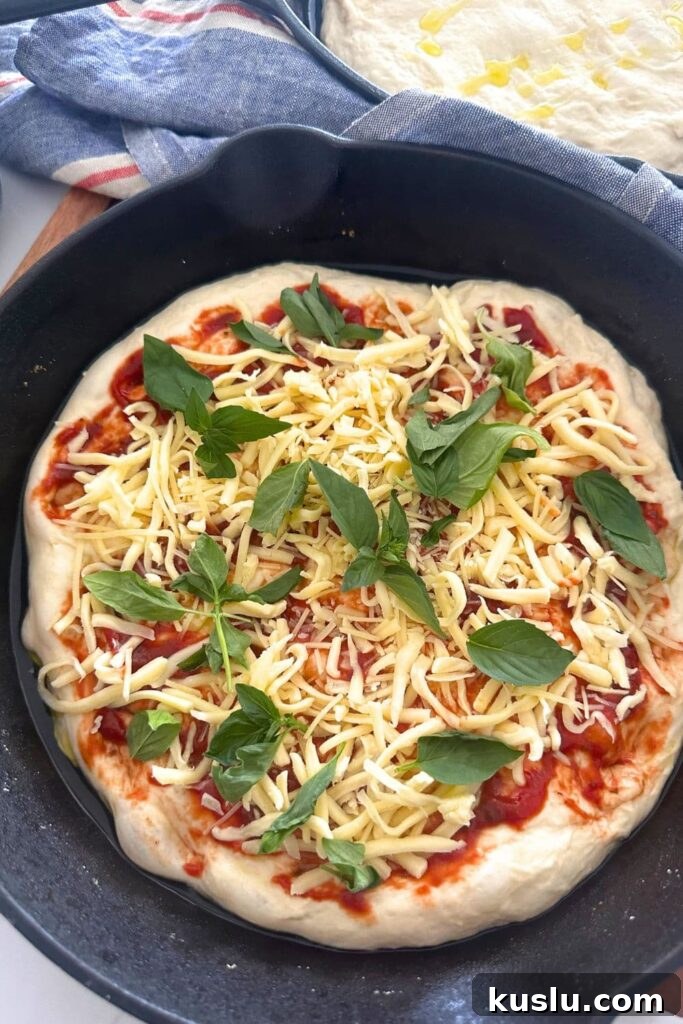
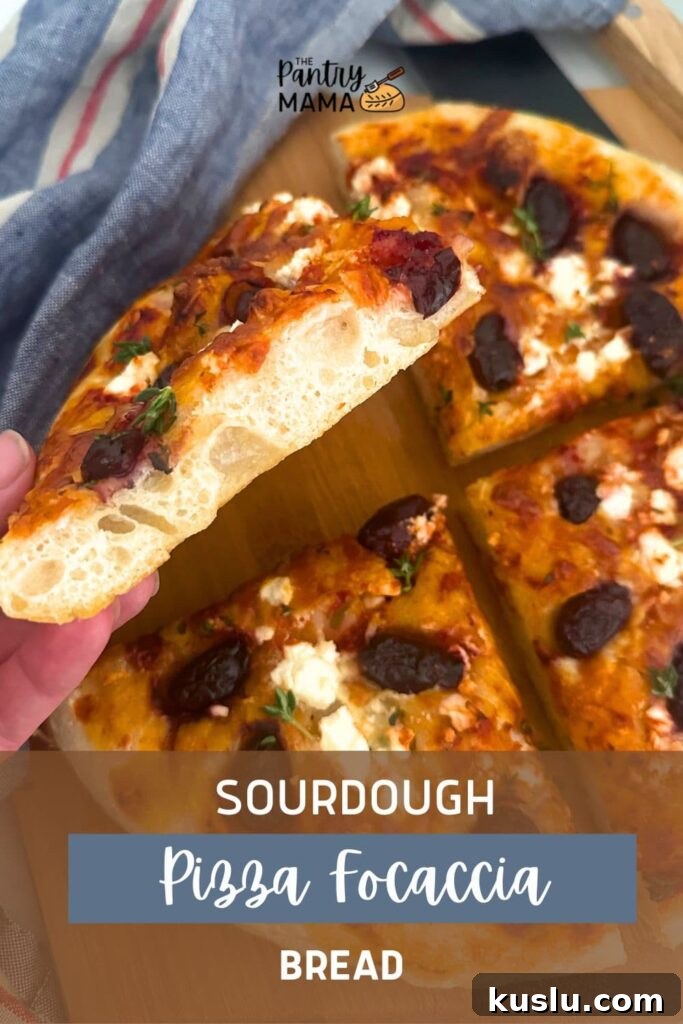
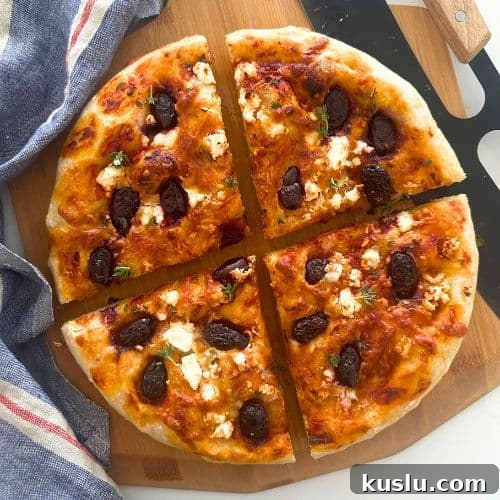
When the dough is puffed and full, press your fingertips into the surface to create dimples. Drizzle olive oil and add spoonfuls of pizza sauce, gently pressing some sauce into the dough. Scatter shredded mozzarella and any other toppings you like. In the examples shown, one pan is margherita and the other is topped with feta and olives.
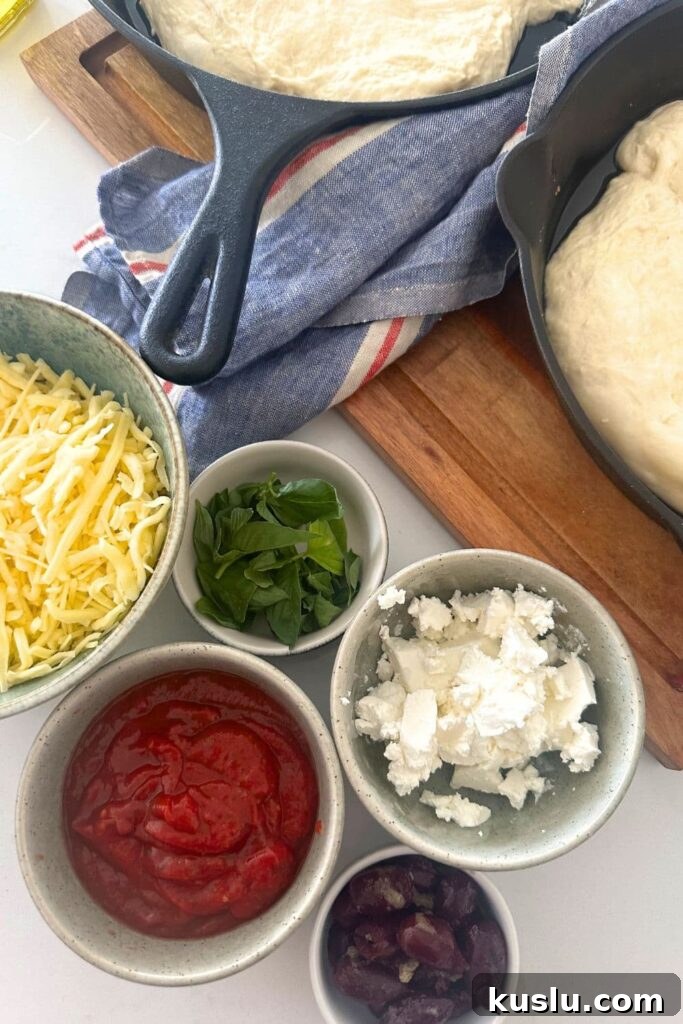
Let the topped focaccia rest for about 10 minutes before baking.
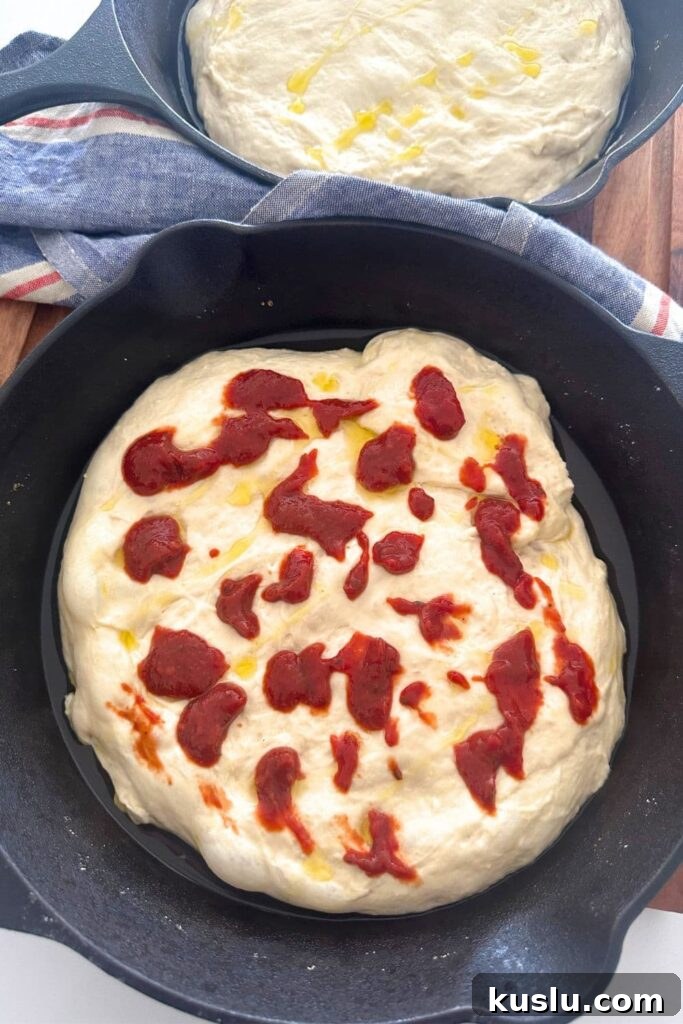
In the photos, the dough sits in a well-oiled skillet topped with tomato, mozzarella and basil for a classic look.
Baking sourdough focaccia
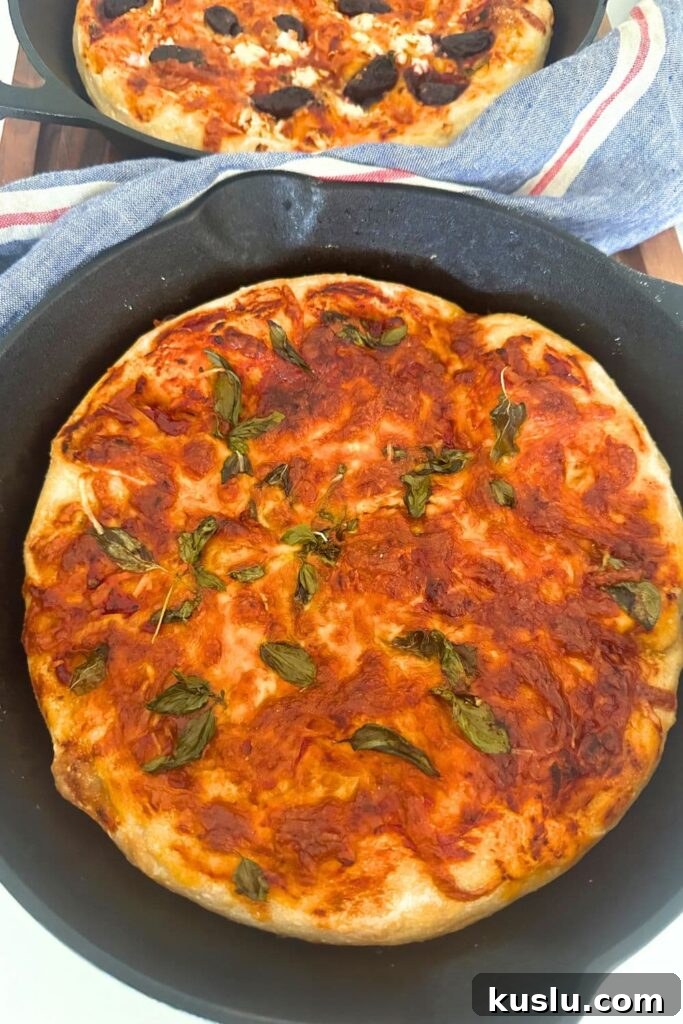
Preheat your oven to 200°C (390°F). Bake the focaccia for about 30 minutes, or until the crust is golden brown and the toppings are bubbling. Remove from the oven and allow to cool slightly before slicing.
Baker’s timeline (example)
This is a sample schedule you can adapt. Times will vary depending on starter activity and ambient temperature.
The night before
9:00 pm – Feed your starter to prepare for the next day.
The next morning
7:00 am – Mix the dough, perform initial stretch-and-folds and begin bulk fermentation.
3:00 pm – Divide and shape the dough into skillets for the second proof.
6:00 pm – Add toppings and let the dough rest briefly.
7:00 pm – Bake and enjoy.
Sourdough Pizza Focaccia Bread Recipe
Equipment
- Mixing bowl
- Digital scale
- 2 cast iron skillets (12″)
Ingredients
For the dough
- 100 g active sourdough starter
- 400 g water (adjust ±30 g if needed)
- 500 g bread flour
- 10 g salt
For the topping (for 2 focaccias)
- 100 g pizza sauce
- 100 g shredded mozzarella
- Any other toppings you like (pepperoni, olives, herbs, feta, etc.)
Instructions
- Mixing the dough: Combine starter and water in a bowl, then add flour and salt. Mix to a sticky dough with no dry flour. Cover and rest about 1 hour.
- Strengthening: Stretch and fold the dough around the bowl 10–15 times to build strength.
- Bulk ferment: Cover and leave until roughly doubled in size. Focaccia is forgiving; near doubling is fine.
- Shaping: Oil two 12″ cast iron skillets. Divide the dough in two and place each piece into a skillet. Gently stretch to fill.
- Second rise: Let the dough proof until it spreads to the edges and becomes puffy.
- Topping: Dimple the dough with your fingertips, drizzle olive oil, dot with pizza sauce, then add cheese and toppings. Let rest 10 minutes before baking.
- Bake: Preheat oven to 200°C (390°F) and bake 30 minutes or until golden.
Notes
Hydration: The dough is fairly wet but will strengthen with stretching and folding. If you’re new to high-hydration doughs, reduce water slightly the first time.
Skillets: Two 12″ cast iron skillets give the best results for the amounts listed.
Topping ideas: tomato sauce and basil, white sauce and ricotta, pepperoni, ham, bacon, olives, fresh or dried herbs, and extra cheeses like feta or parmesan.
Nutrition
Nutrition information is an estimate and should be used as a guide only.
Enjoyed this recipe? Try different toppings and share your results.