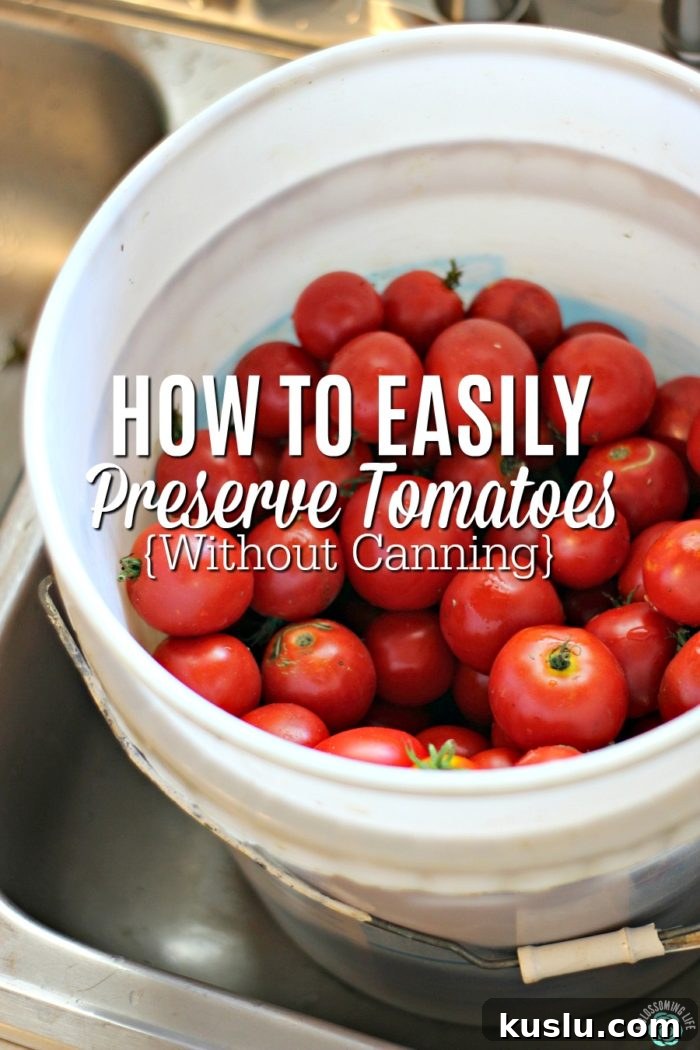
Learn how to freeze tomatoes so you can enjoy your harvest all year. This straightforward, no-canning method lets you preserve tomatoes quickly: wash, pulse or blend with a little salt and optional herbs, portion into freezer bags, and freeze. When you need them, thaw and use in sauces, soups, chilis, and other cooked dishes.
Table of Contents
This post was updated June 2019
Enjoy garden tomatoes longer:
Late-summer and early-fall tomatoes can feel endless. You may be tired of slicing them fresh every day, but freezing allows you to save that flavor for months to come. Think ahead to chilly nights when you want quick pasta sauce, soup, or a homemade pizza topping—frozen tomatoes make those meals effortless.
Freezing is a simple option if you don’t want to learn canning or fuss with peeling every tomato. The method described here is fast, flexible, and works well with many tomato varieties. A food processor or blender makes the job easy, and you can add a bit of salt and fresh herbs—basil works great—to boost flavor before freezing.
Set aside an hour, gather your equipment, and you’ll turn a bucket of ripe tomatoes into ready-to-use portions for the freezer. This approach saves time, reduces waste, and ensures you have homegrown tomato flavor on hand when you need it.
Tools you may need:
- Freezer bags or airtight containers suitable for freezing
- Food processor or blender (optional, depends on desired texture)
- Permanent marker for labeling bags with date and contents
How To Freeze Tomatoes:
Step 1: Rinse tomatoes under cool running water. Remove stems and any blemishes, then pat dry.
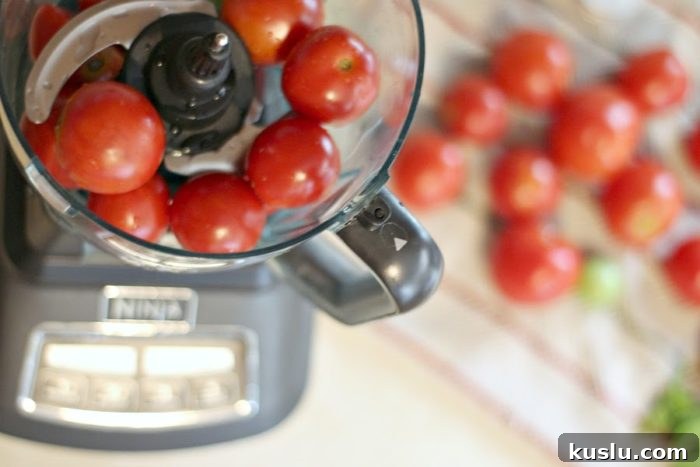
Step 2: Cut larger tomatoes into pieces if needed and add a batch to your food processor or blender. Add a pinch of salt and a few basil leaves or other mild herbs if you like. Pulse until the tomatoes reach your preferred consistency—somewhere between chunky and saucy.
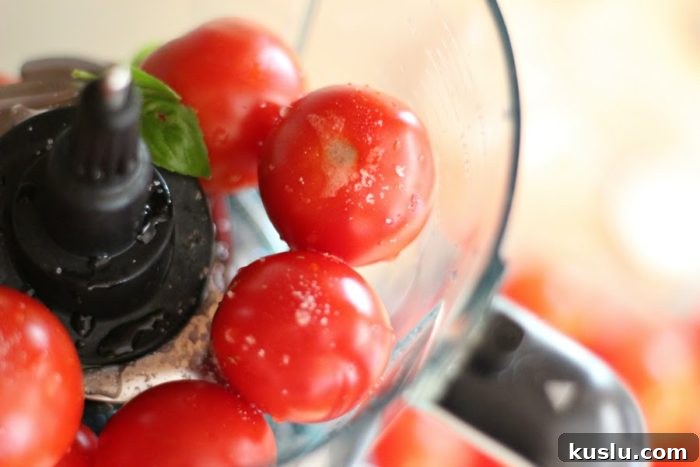
Step 3: Aim for a texture similar to chunky salsa or a smooth crushed tomato, depending on future use. If you prefer a finer puree for sauces, blend longer; leave it chunkier for stews or salsas.
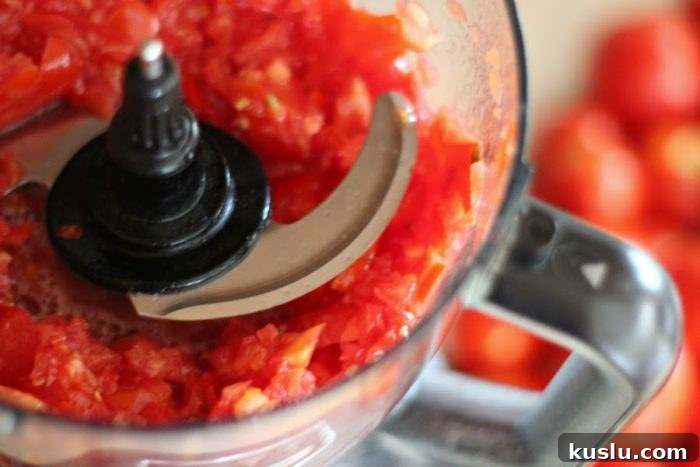
Step 4: Spoon the crushed or pureed tomatoes into freezer bags or containers. Flatten bags to remove excess air and to allow them to freeze flat for efficient storage. Label each bag with the date and amount. I typically fill gallon bags with about 6 cups per bag so portions are easy to use later.
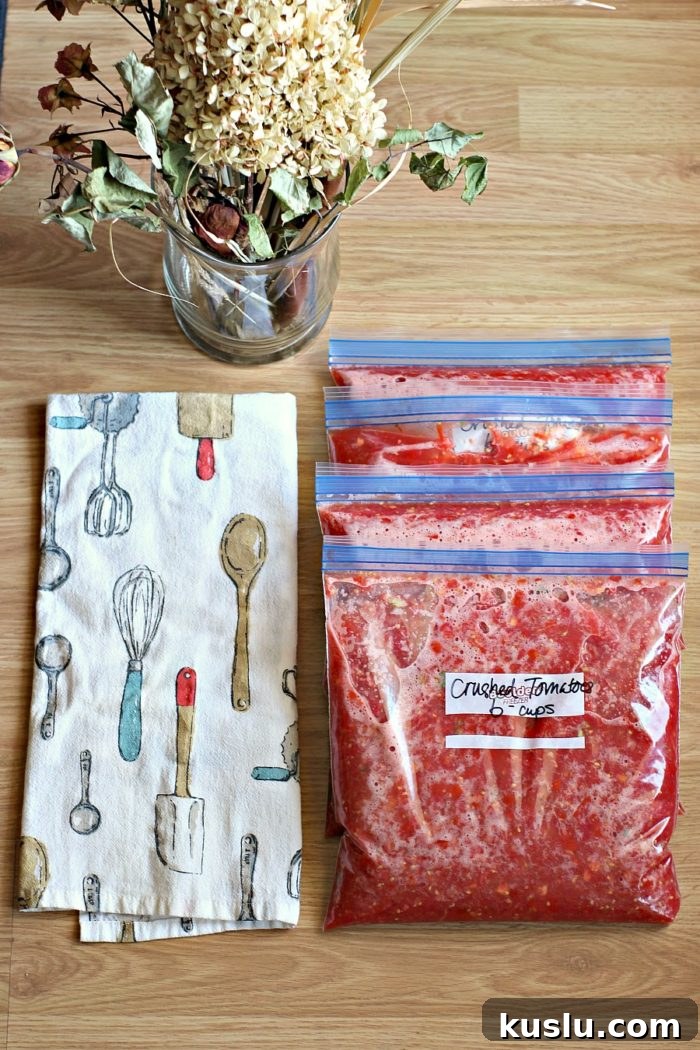
Other Ways To Freeze Tomatoes:
Freeze whole: Wash and dry tomatoes, then place them in a single layer inside a freezer bag. Freeze flat. Whole frozen tomatoes are convenient when you plan to cook them down later; skins will slip off easily after thawing.
Blanch and peel: For skinless frozen tomatoes, blanch whole tomatoes in boiling water for 60–90 seconds, then transfer to an ice bath. The skins will peel off readily; core and slice if desired before packing into bags. This method gives a cleaner texture for sauces.
How To Use Frozen Tomatoes:
- Thaw bags on the counter for a short time or under cool running water until the tomatoes slide out.
- Use frozen tomatoes in any cooked recipe that calls for canned tomatoes—sauces, soups, stews, chilis, and casseroles all benefit.
- Because frozen tomatoes change texture, they work best in cooked dishes rather than raw salads.
- Portion control is easy when you freeze in measured bags or trays; thaw only what you need for a recipe.
How long can you keep fresh tomatoes in the freezer?
For best quality, use frozen tomatoes within about three months. They remain safe to eat beyond that time but may lose flavor and texture the longer they stay frozen. Properly sealed bags and consistent freezer temperature will help maintain quality.
Can you freeze tomatoes without blanching them first?
Yes. Many people freeze tomatoes without blanching, especially when they will be used in cooked dishes. Tomatoes have enough acidity to freeze safely, and skipping blanching saves time. Keep in mind that texture changes after freezing, so they’re best suited for sauces and cooked recipes.
Want more preserving tips and tricks? Check out some of our favorite:
- How to freeze kale
- Homemade refrigerator dill pickles
- How to freeze blueberries
There are many ways to preserve tomatoes, but this quick-freeze method is one of the simplest and most practical. It’s perfect for gardeners who want to save time and capture summer flavor without canning. With a little prep, you’ll have ready-made tomato portions that make weeknight meals faster and more flavorful.