
Almond-flour oatmeal cookies can be tricky: they often crumble, dry out, or stay too soft to hold together because almond flour contains no gluten. Without the right balance of ingredients and technique, cookies won’t maintain their shape.
This recipe solves those problems so you get soft, chewy cookies with defined edges that hold together well. What makes this method reliable: a tender interior, lightly crisp edges, easy handling, and consistent results compared with many almond-flour recipes.
Table of Contents

If you’ve tried other almond-flour bakes, you’ll recognize the same principles here: controlled ratios, proper mixing, and measured handling lead to dependable results. Below is a quick overview to help you plan timing, texture, and expectations before you start.
Quick Recipe Snapshot
A short summary of what to expect from these cookies so you can plan easily.
| Detail | Info |
|---|---|
| Prep Time | 20 minutes |
| Bake Time | 15 minutes |
| Texture | Soft & chewy |
| Diet | Gluten-free |
| Difficulty | Easy |
Ingredients Quick Scan List
Everything you need at a glance so you can get started quickly.
- Vegan butter
- Brown sugar
- White sugar
- 1 egg (or flax egg for vegan)
- Pure vanilla extract
- Almond flour
- Rolled oats
- Baking soda
- Ground cinnamon
- Salt
- Semi-sweet chocolate chips (or raisins)
Ingredients & Substitutions
Understanding each ingredient helps you predict how small changes will affect texture and structure.
What Each Ingredient Does
- Almond Flour: Adds moisture, fat, and flavor but doesn’t form gluten-based structure.
- Oats: Provide structure and chewiness to compensate for the lack of gluten.
- Brown + White Sugar: Brown sugar adds moisture and chew; white sugar adds slight crispness and sweetness balance.
- Vegan Butter: Supplies fat for tenderness and mouthfeel.
- Egg: Main binder that helps cookies set; replaceable with a flax egg for a vegan option.
- Vanilla, Cinnamon, Salt: Flavor enhancers and balanceers.
- Baking Soda: Adds lift and controlled spread.
- Chocolate Chips: Texture and richness—do not affect structure significantly.
Substitutions (What Works and What Changes)
- Maple syrup for sugar: Adds moisture and makes cookies softer and more prone to spread; increase almond flour slightly or chill longer.
- Coconut oil for vegan butter: Works but increases spread and yields a slightly softer cookie.
- Flax egg (1 tbsp ground flax + 2.5 tbsp water): Binds well for a vegan version but produces a more delicate texture.

Printable Almond Flour Oatmeal Cookies Recipe Card
Ingredients
- 8 Tablespoons vegan butter
- ½ cup brown sugar (about 100 g)
- ¼ cup white sugar (about 50 g)
- 1 large egg
- 1 teaspoon pure vanilla extract
- 1⅔ cups almond flour (about 175 g)
- 1½ cups rolled oats (about 150 g)
- ½ teaspoon baking soda
- ½ teaspoon ground cinnamon
- ½ teaspoon salt
- 1 cup semi-sweet chocolate chips
Instructions
- Cream together the softened butter and sugars on low speed for 30 seconds, scrape the bowl, then mix another 30 seconds on medium until smooth.
- Add the egg and vanilla and mix on medium for about 2 minutes until incorporated and slightly fluffy.
- Add almond flour, oats, baking soda, cinnamon, and salt. Mix on low for 30 seconds, scrape the bowl, then mix on medium for another minute. Avoid overmixing.
- Fold in the chocolate chips with a large spoon.
- Chill the dough in the refrigerator for 30 minutes to reduce spread.
- Preheat the oven to 350°F (175°C).
- Scoop tablespoon-sized portions onto a parchment-lined baking sheet, spacing them evenly. Lightly flatten each mound to control spread.
- Bake for about 15 minutes, until edges are set and lightly golden while centers still look soft.
- Cool on the tray for 5 minutes, then transfer to a wire rack to finish cooling and firm up.
Notes
Doneness Cues
- Edges should look set and slightly golden.
- Centers should appear soft but not wet.
- Cookies will firm up as they cool—overbaked cookies look fully firm in the oven.
Success Tips
- Do not overmix after adding the flour to avoid a dense texture.
- Slightly underbake for the soft, chewy result; residual heat will finish them.
- Let cookies cool completely before handling to improve structure.
- Measure almond flour by spooning it into the cup and leveling rather than packing it down.
Storage
- Room temperature: Store in an airtight container up to 3 days.
- Refrigerator: Keep up to 5–7 days; bring to room temperature before serving for best texture.
- Freezing (dough): Scoop dough portions and freeze up to 2 months; bake from frozen, adding 1–2 minutes to time.
- Freezing (baked): Freeze cooled cookies up to 2 months and thaw at room temperature.
Nutrition
|
Carbohydrates: 13 g
|
Protein: 2 g
Why Almond Flour Cookies Behave Differently
Knowing how each ingredient behaves clarifies why almond-flour oatmeal cookies differ from traditional cookies and why texture can go wrong.
The Absence of Gluten Means Less Stability
Almond flour does not develop gluten during baking, so the dough is inherently more fragile and needs structural compensation through oats and proper mixing.
Higher Fat Alters Baking Behavior
Almond flour is higher in fat than wheat flour, which softens the interior and encourages faster surface browning. That’s why timing and temperature matter.
Structure Has to Be Added Back
This recipe relies on oats and controlled mixing to provide the cohesion almond-flour dough lacks, producing cookies that hold together after cooling.
The Reasons This Recipe Works
Key elements that make this approach effective are controlled ingredient ratios, a mixing method that distributes fats and sugars evenly, and chilling to limit spread for uniform cookies.

Ingredient Ratios Are Controlled
Proportions prevent excess spread or collapse. Each element is measured to keep results consistent across batches.
Mixing Method Creates Stability
Creaming butter and sugars first distributes fat and sugar evenly before adding dry ingredients, helping the cookies hold their shape as they bake.
Dough Handling Improves Consistency
Chilling the dough reduces spread and ensures uniform thickness, making baking outcomes more predictable.
Step-by-Step Instructions
With ingredients ready, follow these steps for consistent cookies every time.
Essential Kitchen Tools
Helpful tools for consistent results:
- Mixing bowls
- Cookie scoop for uniform portions
- Baking sheet and parchment paper
- Silicone spatula for folding
- Oven thermometer to confirm temperature
- Cooling rack to prevent soggy bottoms
Step 1: Mix Wet Ingredients
Combine softened vegan butter with brown and white sugars and mix until smooth. Add the egg and vanilla and beat until slightly fluffy. This builds the base structure for the dough.

Step 2: Combine Dry Ingredients
Whisk almond flour, baking soda, cinnamon, and salt in a separate bowl, then add to the wet mixture and mix about one minute until combined. The dough will begin to thicken.

Step 3: Form Dough
Add the oats and mix until evenly distributed, then fold in the chocolate chips. The dough should be thick, slightly sticky, and cohesive. Refrigerate for 30 minutes to reduce spreading.

Step 4: Shape Cookies
Preheat the oven to 350°F (175°C) and line a baking tray with parchment. Scoop portions of dough onto the tray, spacing them evenly, and lightly flatten each mound to control spread and promote even baking.

Step 5: Bake
Bake about 15 minutes until edges are set and lightly golden while centers remain soft. Let rest on the tray for a few minutes, then transfer to a wire rack to finish cooling and firm up.

How To Control the Texture
Adjust texture with baking time and shaping rather than changing base ingredients.
For Soft & Chewy Cookies
Remove cookies when edges are set but centers still look slightly underdone; residual heat will finish them as they cool.
For Crispy Edges
Flatten dough evenly and extend bake time slightly so outer edges firm up while centers remain intact.
Baking Temperature Chart
Temperature affects spread, set, and browning.
| Temp | Time | Result |
|---|---|---|
| 325°F | 12–14 min | Soft |
| 350°F | 15 min | Balanced |
| 375°F | 8–10 min | Crisp edges |
- 325°F: Slower heat gives wider spread, softer texture, and lighter color.
- 350°F: Balanced spread with a soft center and lightly crisp edges.
- 375°F: Faster set and browning with firmer edges and less spread.
Common Mistakes That Arise with This Recipe And How To Resolve
Even with good technique, a few issues can occur. Here are common problems and simple fixes.

Why Cookies Fall Apart
If cookies break when lifted, the structure didn’t set properly. Often this results from a missing or too-small egg, or uneven mixing. Ensure the egg is fully incorporated into the wet ingredients and the dough holds together when pressed before baking.
Too Soft or Undercooked
If cookies collapse after cooling, they likely needed more time in the oven. Look for set edges and a light golden underside; centers can remain slightly soft.
Dry Cookies
Excess almond flour or packed measurements can produce dry, dense cookies. Use leveled measurements and avoid compressing the almond flour. The dough should be slightly sticky, not stiff.
Cookies Spread Too Much
Too much fat or warm dough causes excessive spreading. Chill the dough before baking and avoid adding extra butter or oil.
Other Ways To Prepare This Recipe
Once you know the base method, you can adapt these cookies without changing the fundamentals that control texture and structure.
Chocolate Chip Version
Use dark chocolate chips for less sweetness or add a few extra chips for a richer bite. Maintain overall ratios so dough still holds together.
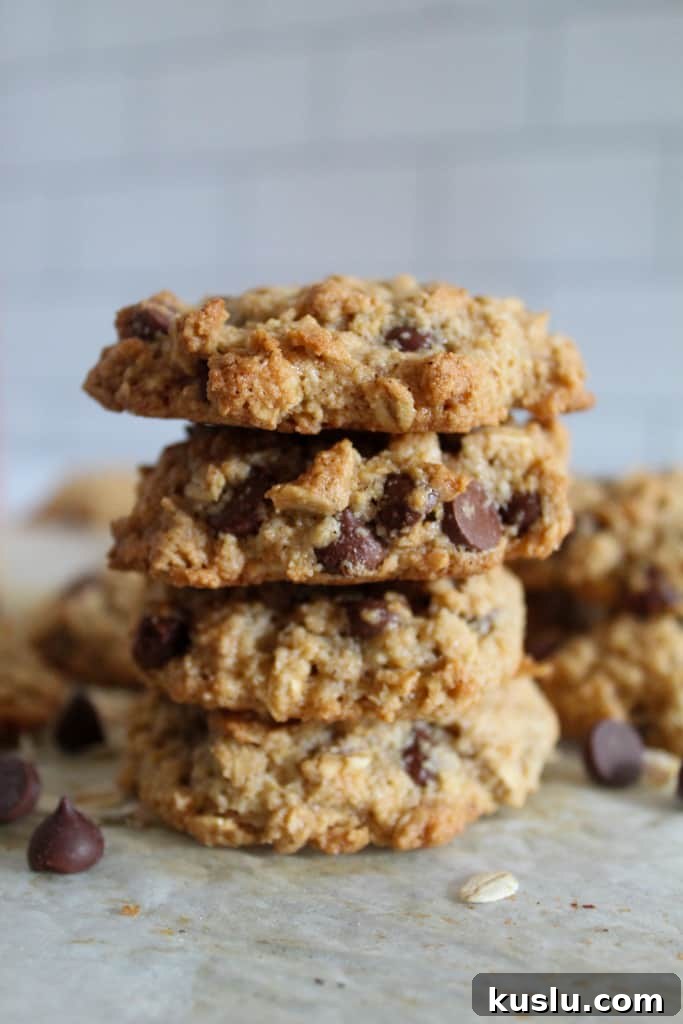
Vegan Version
Replace the egg with a flax egg (1 tbsp ground flaxseed + 2.5 tbsp water). Let it thicken before using. This yields a slightly more delicate cookie but keeps the structure acceptable.
Dairy-Free Version
The recipe already uses vegan butter, so it’s dairy-free. Confirm chocolate chips are dairy-free as needed.
No Sugar / Maple Syrup Version
Maple syrup increases moisture and spread. Compensate by adding a little more almond flour or chilling the dough longer before baking.
Raisin Version
Swap chocolate chips for raisins for a classic oatmeal profile. Raisins add chewiness and natural sweetness without harming structure.
Serving Ideas You Should Try
How you serve these cookies affects the eating experience—here are a few ideas.
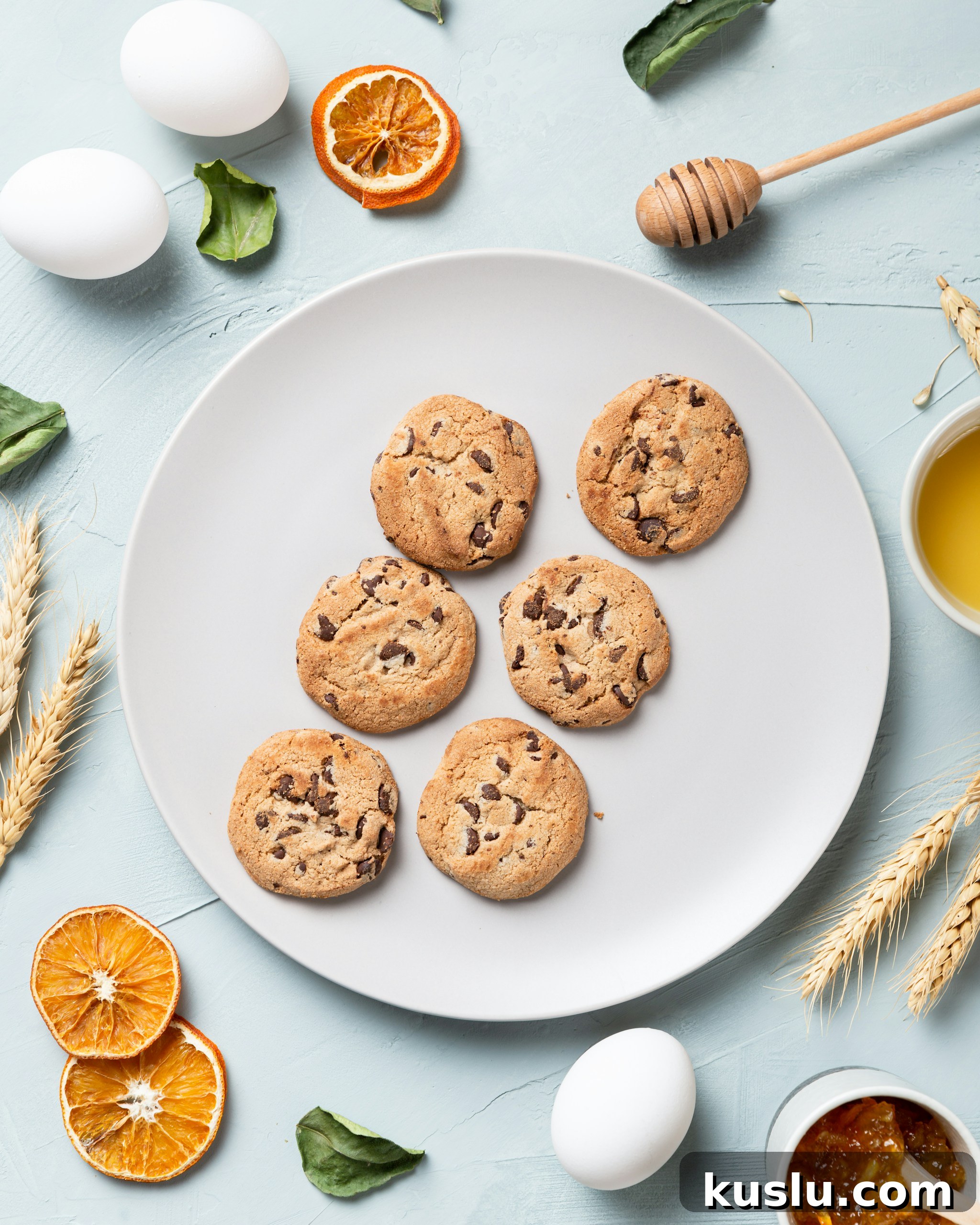
Breakfast Cookies
They make a quick breakfast paired with fruit or a protein source for a more balanced meal—the oats and almond flour provide sustaining energy.
Snack
Packable and satisfying, they’re a practical mid-day snack that keeps you fuller thanks to fat and fiber.
Dessert with Milk or Coffee
Serve warm or at room temperature with coffee or milk. For a dairy-free pairing, choose a non-dairy milk alternative.

How To Store, Freeze, and Make These Cookies Ahead
Proper storage preserves texture and prevents drying or excess softness.
Room Temperature
Store airtight up to 3 days. Use parchment between layers if stacking to prevent sticking.
Refrigerator
Refrigerate up to 5–7 days; bring to room temperature briefly before serving for a softer bite.
Freezing Dough vs Baked Cookies
You can freeze both: scoop dough and freeze on a tray, then store portions in a sealed container (bake from frozen with 1–2 extra minutes). Freeze baked cookies up to 2 months and thaw at room temperature.
The Nutritional Benefits This Recipe Offers
Combining almond flour and oats gives a more nutrient-dense cookie than one based on refined flour alone: healthy fats, protein, fiber, and micronutrients contribute to satiety and sustained energy.
- Sustained energy from fiber and healthy fats
- Greater satiety than refined flour cookies
- Gluten-free option with a balanced ingredient profile
Who This Recipe Is For
- Gluten-free diets
- Balanced snacking with more fat and fiber
- Those reducing refined flour
- Flexible diets—easy to adapt for vegan or dairy-free needs
Baking Questions Answered
A few practical answers to common questions:
Can I Make The Dough Ahead and Bake Later?
Yes. Refrigerate up to 24 hours to firm the dough and improve portioning. Let it sit briefly at room temperature if too firm to scoop.
Why Didn’t My Cookies Brown Properly?
Almond-flour cookies brown differently. If surface looks pale, check the underside for a light golden color, which is a better indicator of doneness.
Can I Use Quick Oats Instead of Rolled Oats?
Yes, but expect a softer, less chewy texture. Rolled oats add more structure and bite.
Why Do My Cookies Taste Greasy After Baking?
Greasy taste can result from removing cookies too early or using overly soft or melted butter. Let cookies cool completely before assessing texture and flavor.
Can I Double The Recipe Without Issues?
Yes—scale carefully and mix thoroughly so ingredients, especially egg and fat, are evenly incorporated to avoid inconsistent texture across the batch.
Related Recipes To Try
If you enjoy these cookies, try other almond-flour and oat-based bakes to explore texture and structure in different formats.
- Almond flour banana muffins
- Almond flour peanut butter cookies
- Gluten-free almond flour scones
- Gluten-free oatmeal raisin cookies
Give These Almond Flour Oatmeal Cookies a Try!
Tried the recipe or a variation? Share your experience and details like texture, spread, and bake time to help other bakers troubleshoot and improve their results.
Share your results or questions in the comments section below.