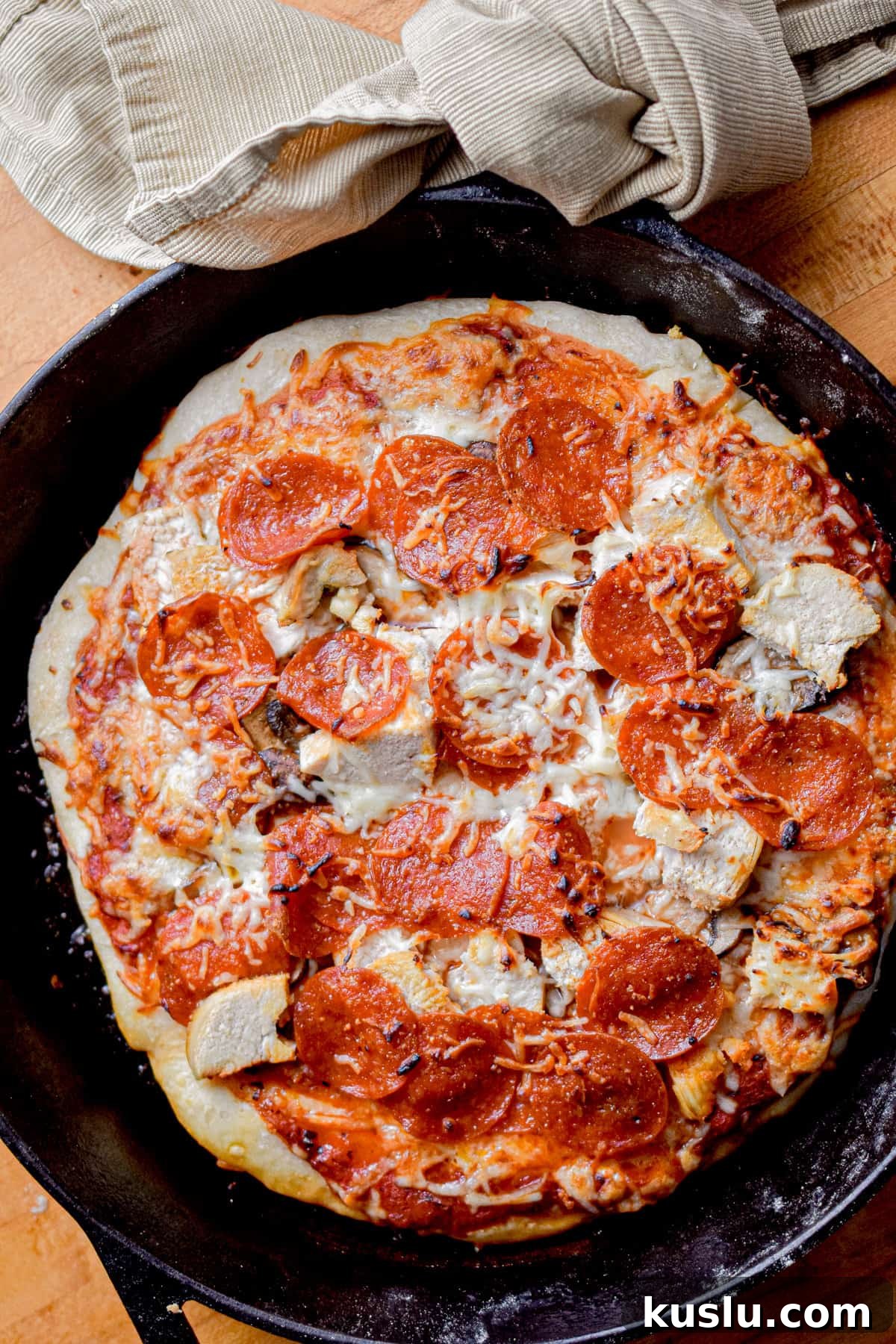
Over the years I’ve made countless homemade pizzas, but this Cast Iron Sourdough Pizza dough is my favorite. After many tests and tweaks in my kitchen, this recipe consistently produces a chewy, airy crust with crisp edges. The dough uses just four simple ingredients you likely have on hand, making it perfect for Friday pizza night or a relaxed weekend bake with the family. When I have the time to use my active sourdough starter, this is the dough I reach for every time.
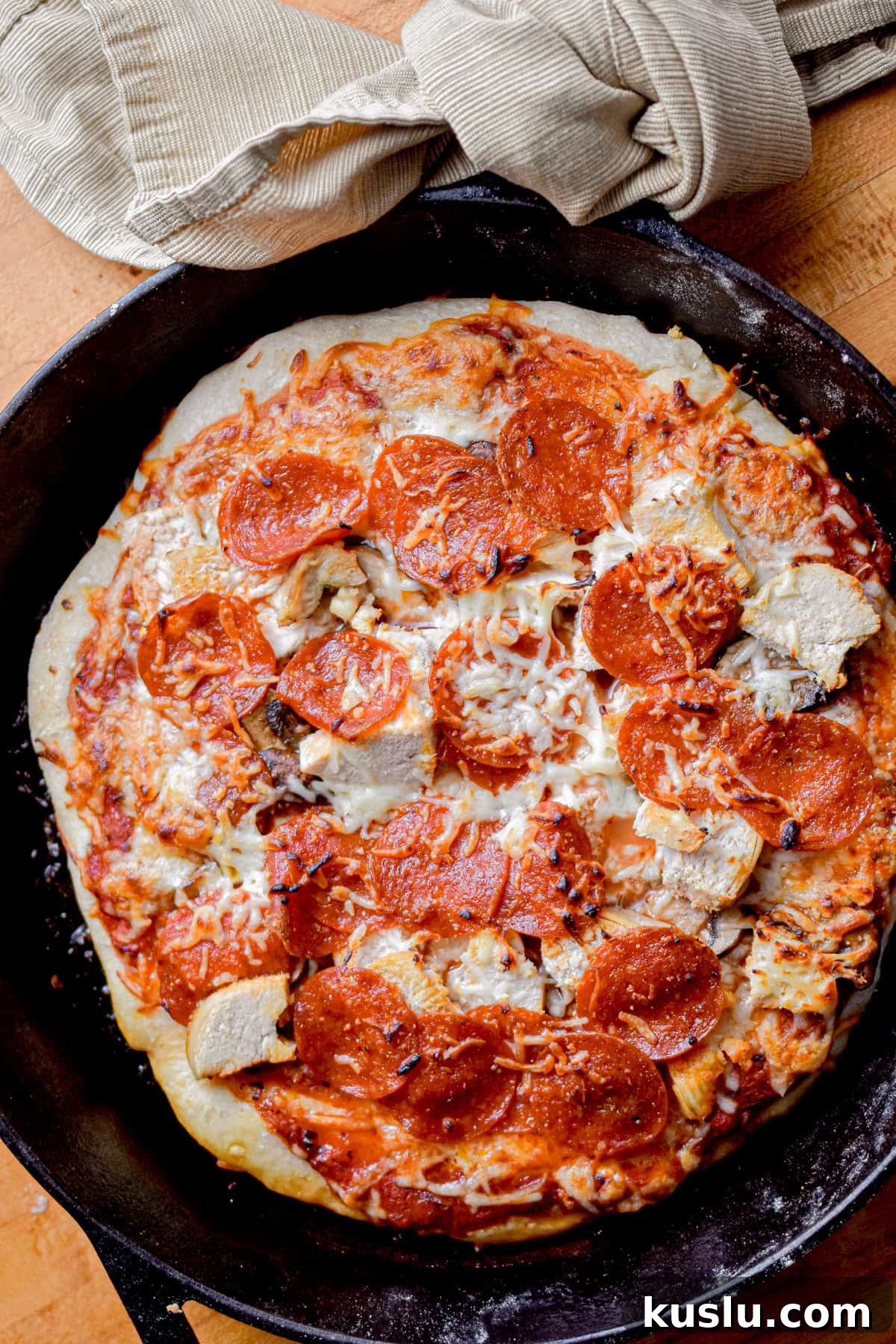
For a long time I relied on a sourdough discard pizza dough that included commercial yeast. One summer I decided to try using my active starter instead, and I never looked back. The starter brings lots of airy bubbles, creating a light yet chewy texture that holds toppings beautifully.
[feast_advanced_jump_to]
Why You’ll Love this Cast Iron Sourdough Pizza
- Airy, flavorful crust. The active starter gives the crust an open, airy crumb and a pleasant tang from fermentation.
- Simple to make. Combine the ingredients, let the starter do its work, and with a little patience you’ll have an exceptional pizza dough.
- Make-ahead friendly. The dough can be refrigerated for up to 24 hours after bulk fermentation, so you can prepare in advance and bake when ready.
What is Sourdough Pizza?
Sourdough pizza uses a naturally leavened dough made with an active sourdough starter instead of commercial yeast. The result is a light, chewy crust with a subtle tang that sets it apart from conventional pizza dough.
Ingredients Needed for Cast Iron Sourdough Pizza
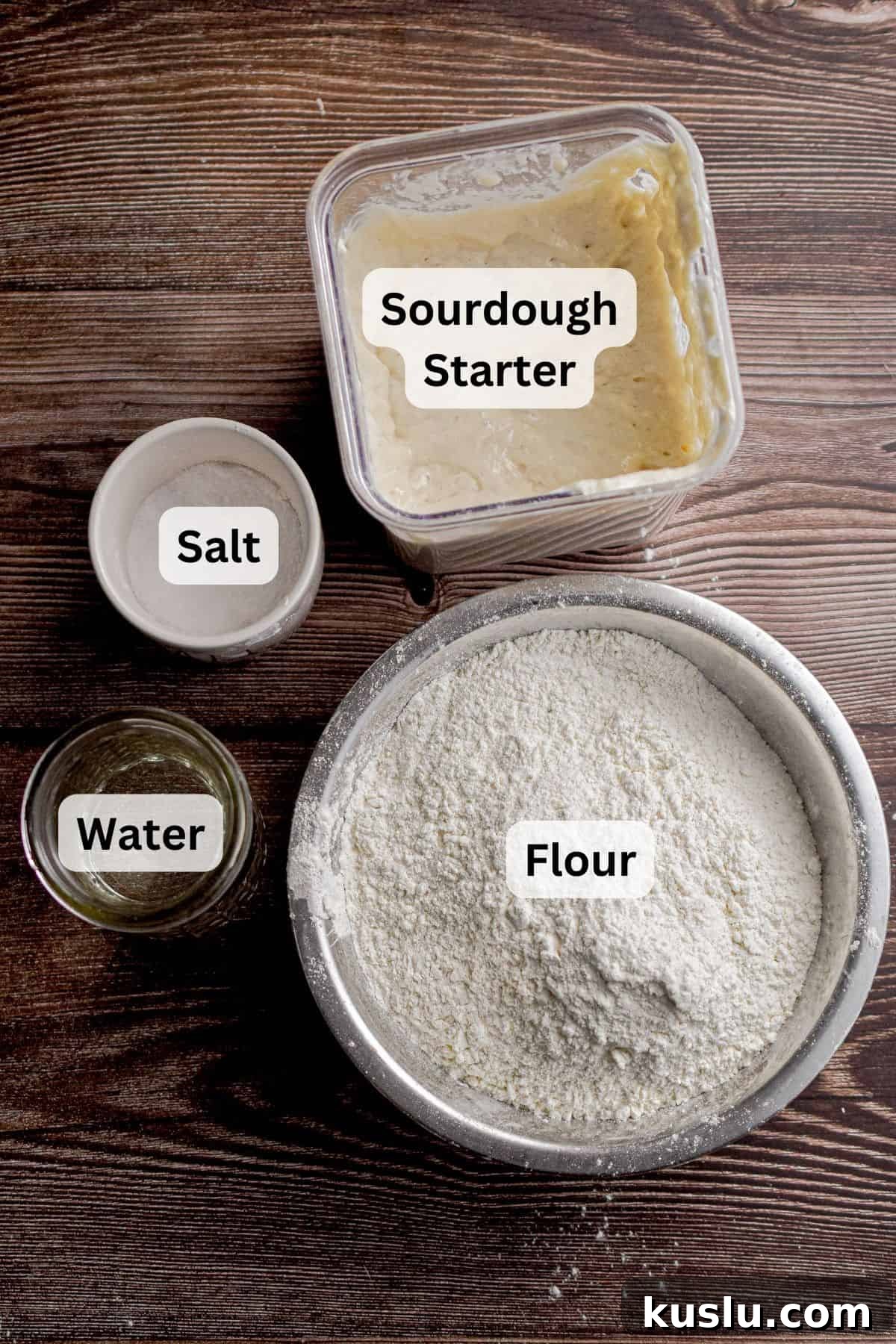
- Sourdough starter. Use a fed, active, bubbly starter—feed it the day before for best results.
- Bread flour. High gluten content gives a chewy, resilient crust that holds toppings well.
- Warm water. Slightly warm water encourages the starter’s wild yeast to become active; avoid cold water that slows fermentation.
- Salt. Enhances flavor and helps control fermentation to prevent overproofing.
See the recipe card below for exact ingredient weights and full instructions.
What Type of Flour is Best?
Different flours produce different textures. Here are the common options and why you might choose each:
Bread flour. Higher gluten gives a chewier crust—my preferred choice for this dough.
All-purpose flour. Convenient and versatile; unbleached all-purpose works fine if bread flour isn’t available.
Tipo 00 flour. Finely milled Italian flour ideal for Neapolitan-style pizzas, producing a thin, tender crust.
Whole wheat flour. Adds flavor and nutrition but can make the dough denser. If used, blend with white flour and increase hydration as whole wheat absorbs more water.
Semolina flour. Coarse semolina is helpful sprinkled on the peel or pan to prevent sticking and to add a crisp bottom.
Recommended equipment:
You don’t need a pizza oven to make great sourdough pizza. Useful tools include a mixing bowl, kitchen scale for accurate measurements, bench scraper for shaping, and a pizza stone or baking steel for a crisp bottom. A cast iron skillet or sturdy baking sheet works well too. A pizza peel makes transfers easier, and a sharp pizza cutter finishes the job neatly.
How to Make Sourdough Pizza Crust
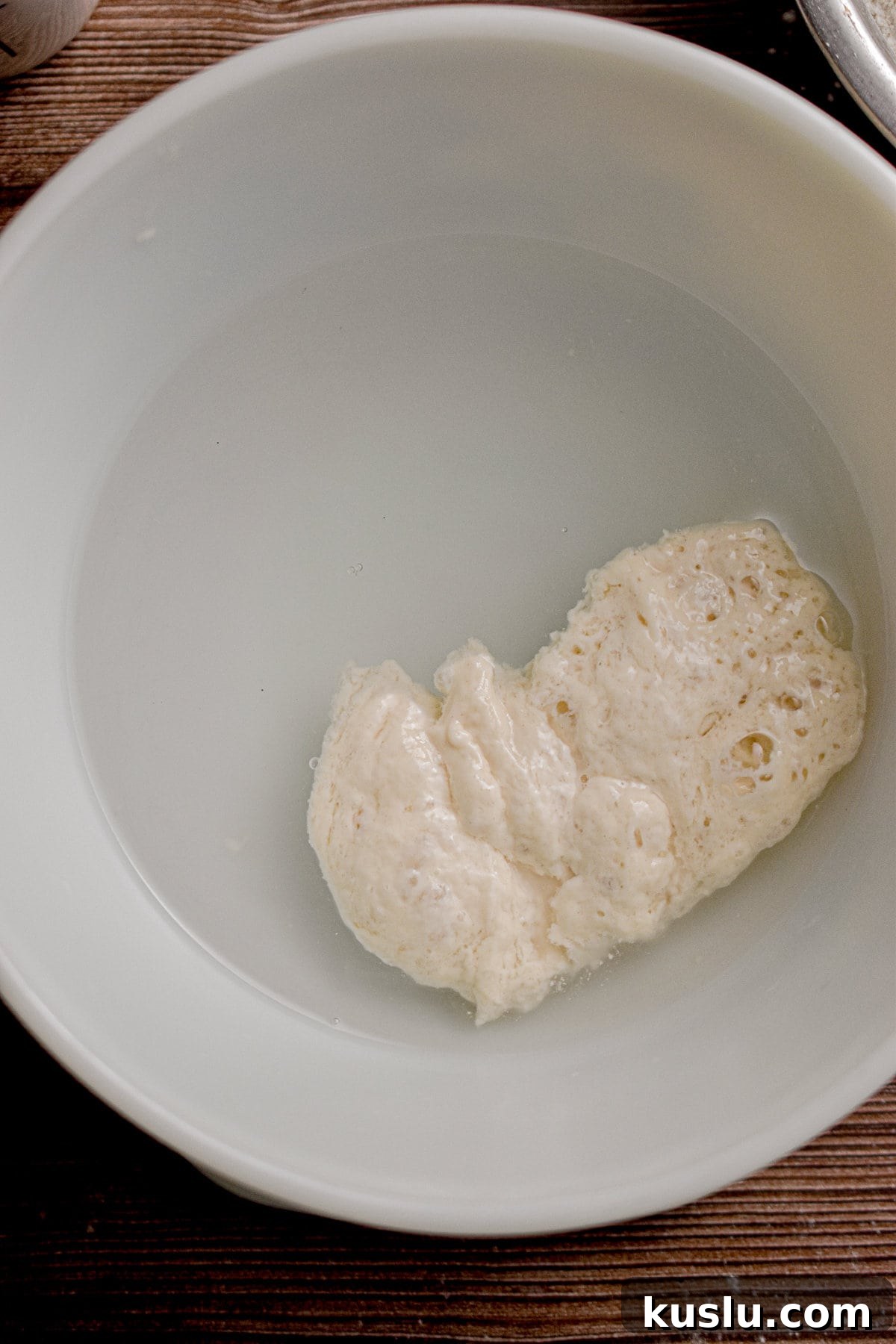
Step 1: In a large bowl combine warm water and the active starter. A starter that floats in water indicates it’s active. Stir to dissolve the starter.
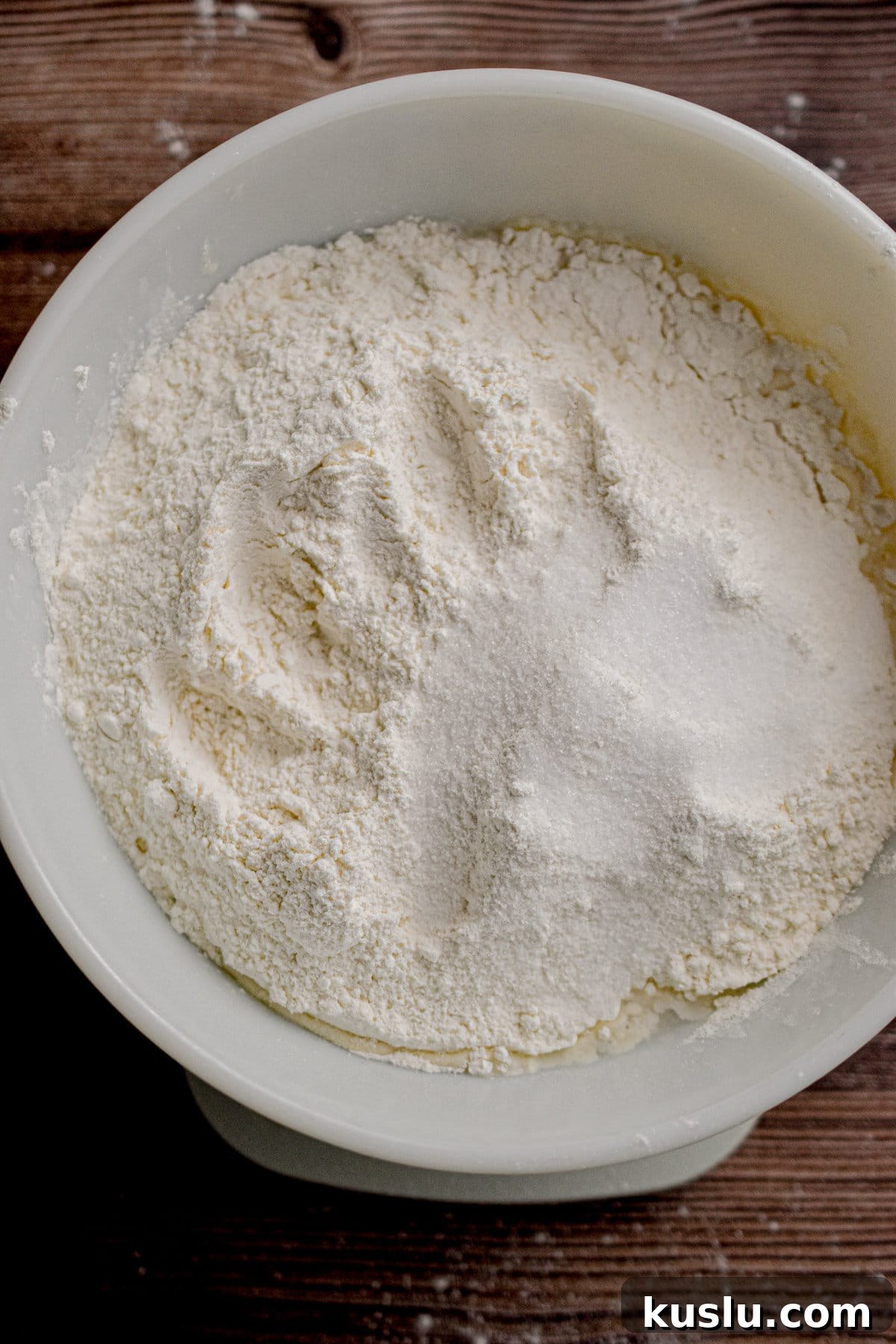
Step 2: Add flour and salt, then mix until a shaggy dough forms. Cover with a damp towel and perform a stretch-and-fold after 30 minutes, then again 30 minutes later. Let the dough rise at room temperature for 8–10 hours.
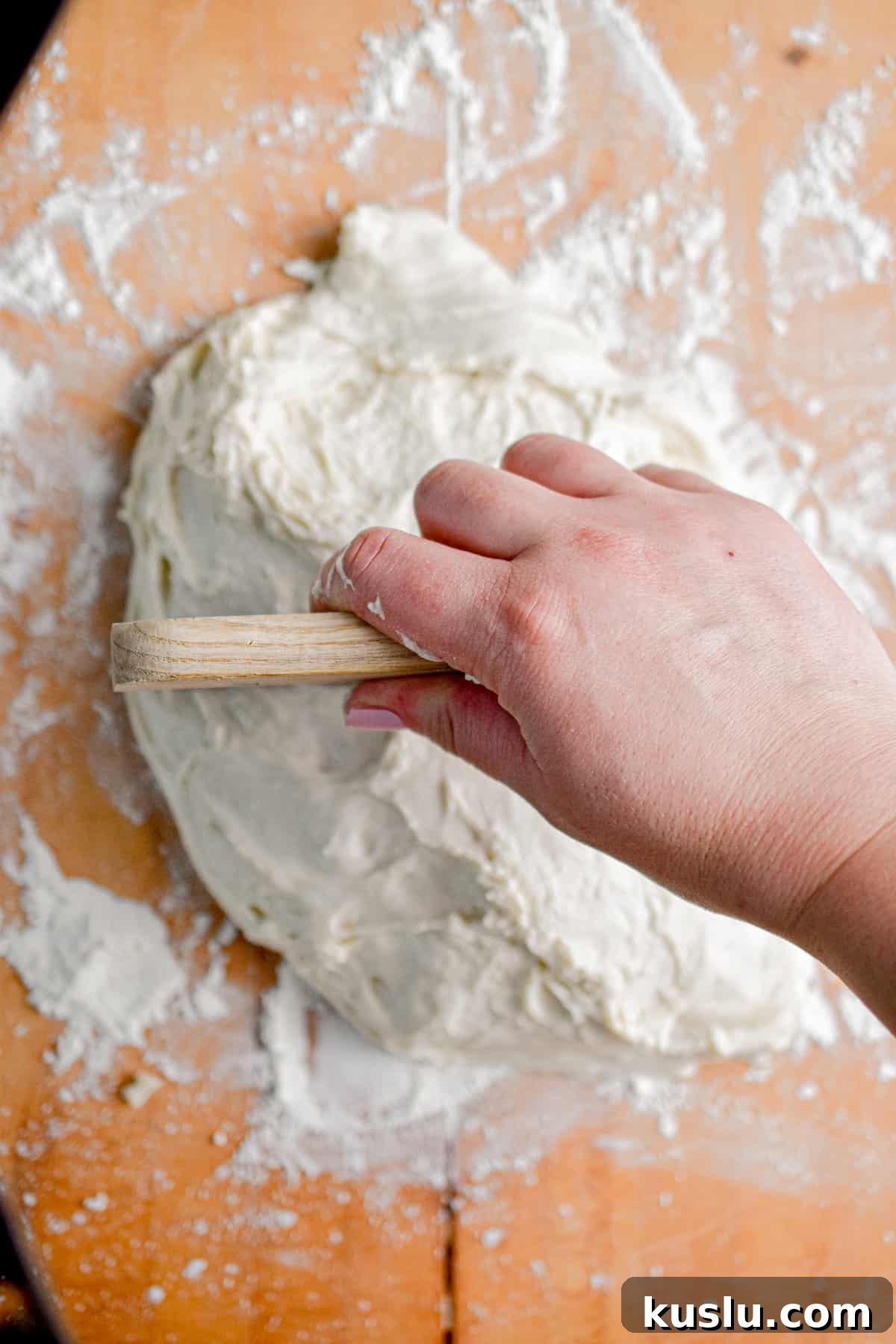
Step 3: Turn the risen dough onto a lightly floured surface, divide it in half, and shape into two balls. Rest them for 15 minutes.
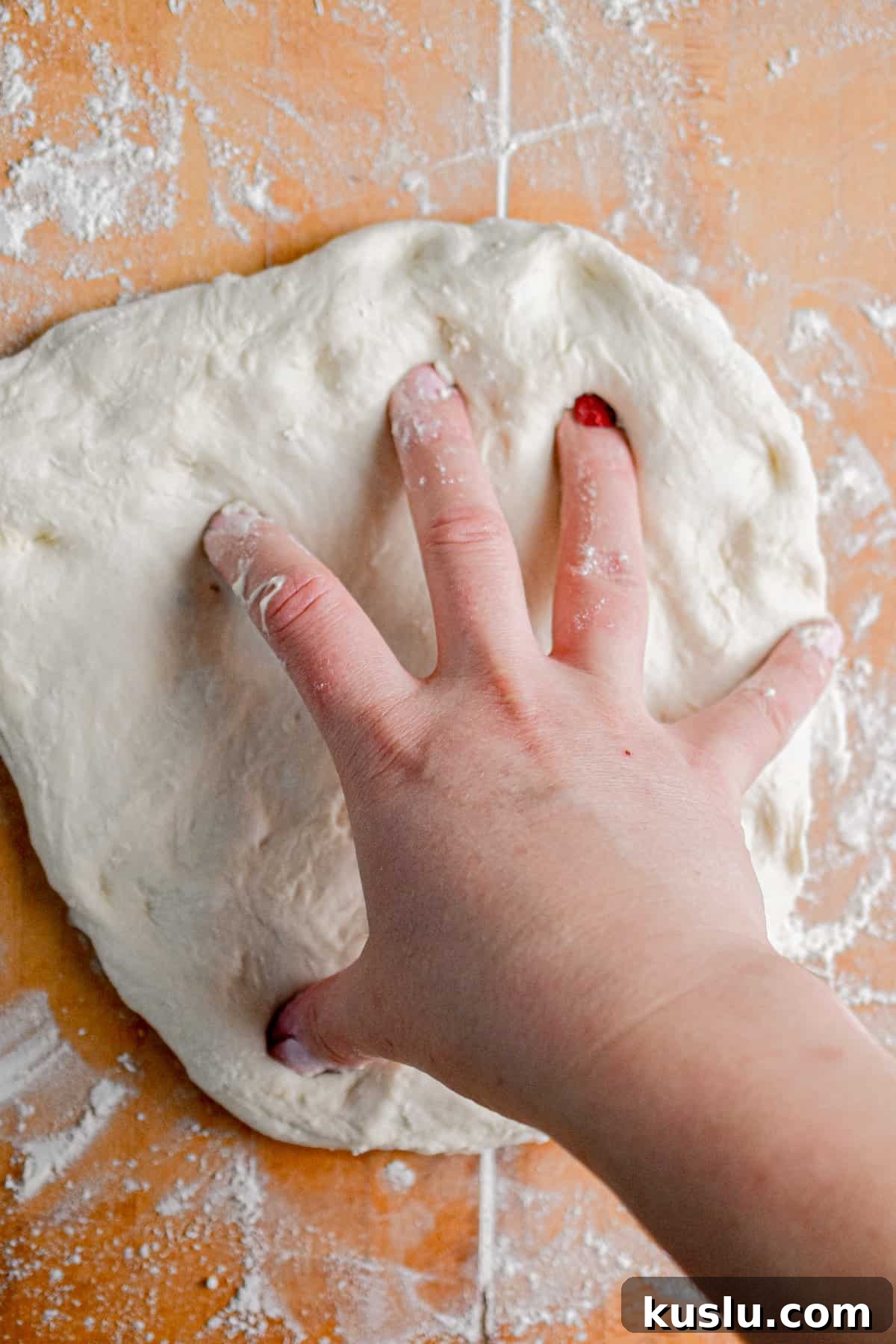
Step 4: Working with one ball at a time, gently stretch the dough into a pizza shape by hand and place it on your baking surface—cast iron skillet, pizza pan, or stone.
Lynn’s Tip!
To prevent sticking, dust the peel or pan with semolina or fine cornmeal, or lightly grease the baking pan with olive oil.
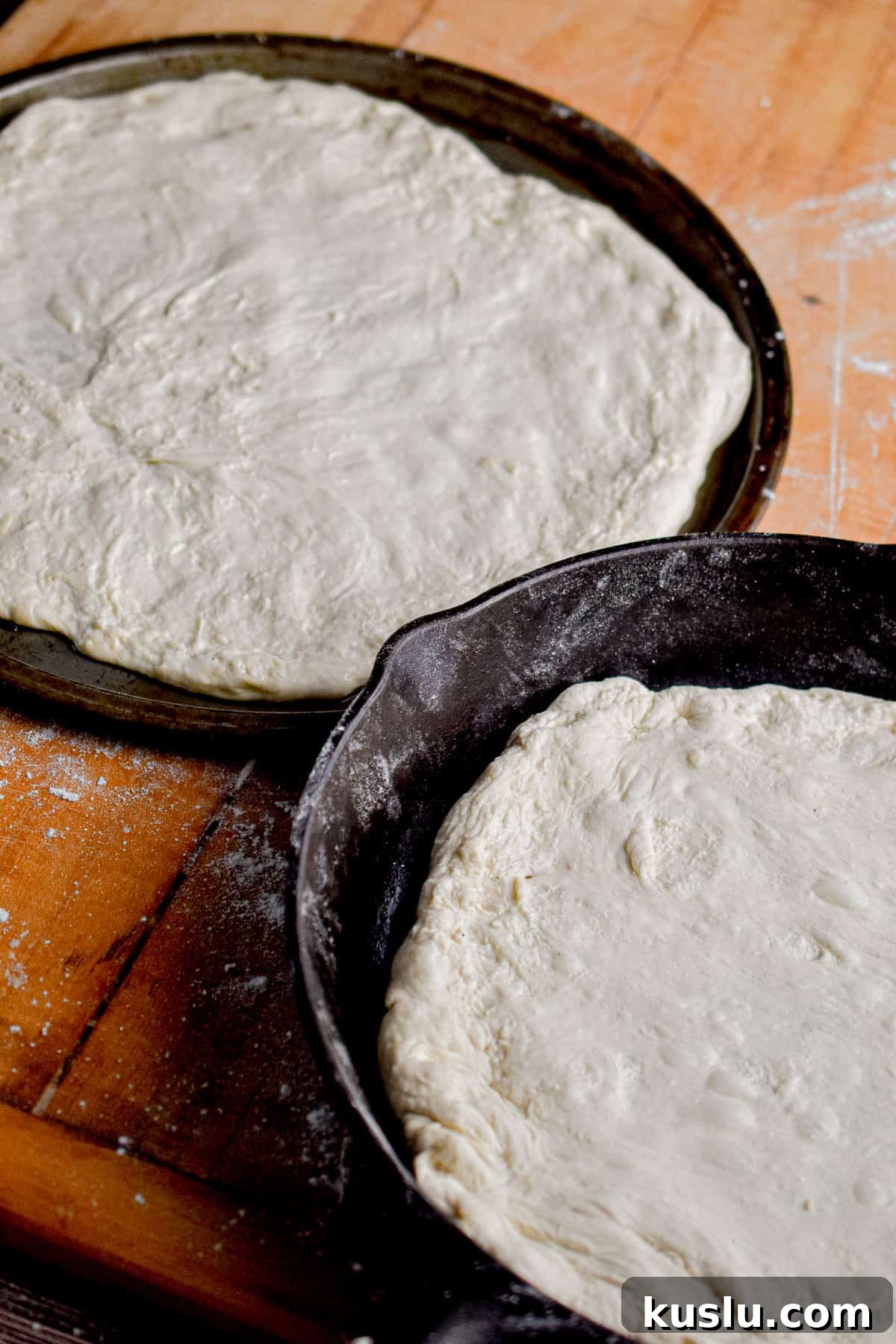
Step 5: Preheat the oven to 450°F (about 230°C). Place the dough in the cast iron skillet or on the baking surface and par-bake for 10–15 minutes.
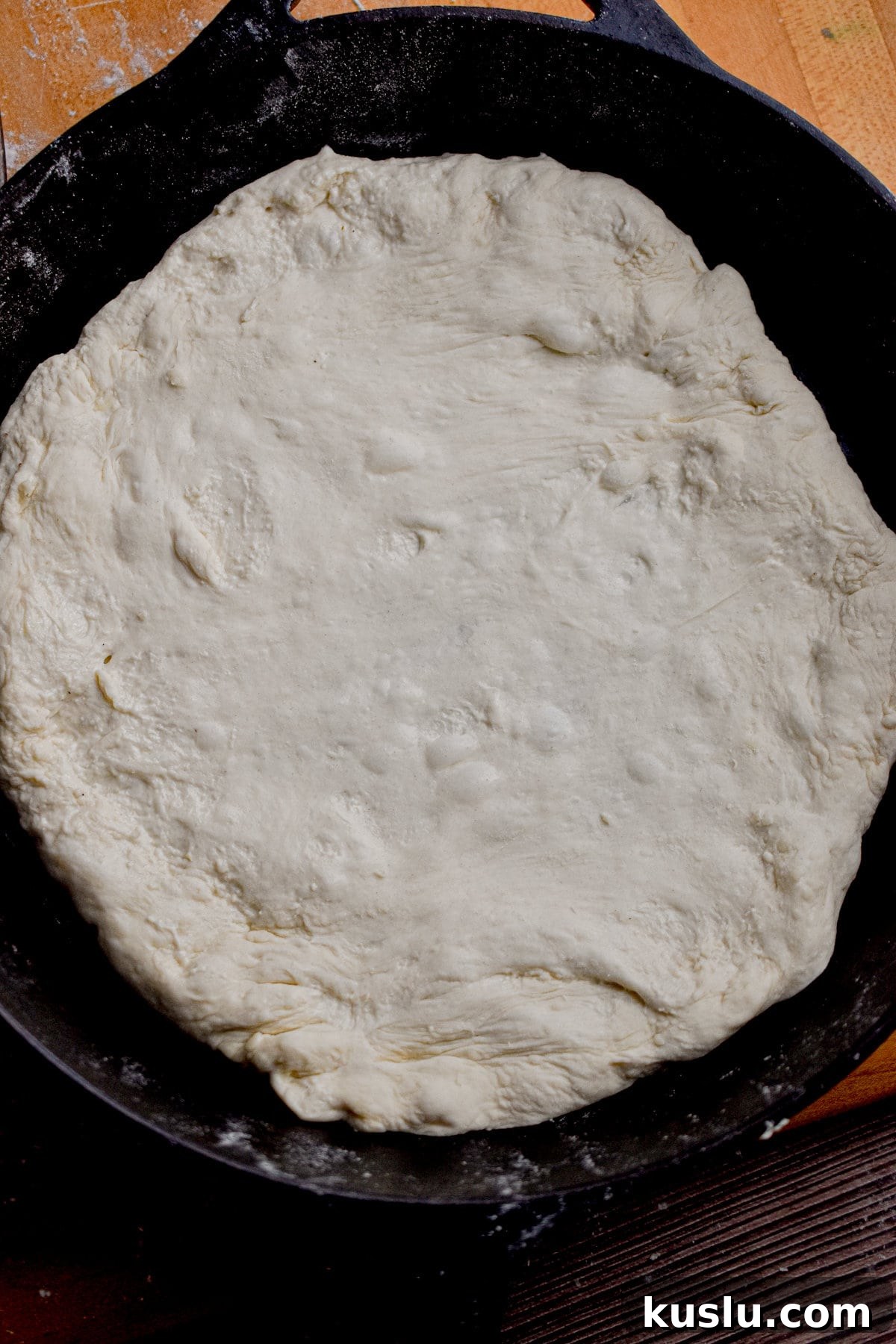
Step 6: Remove the skillet from the oven and add your toppings.
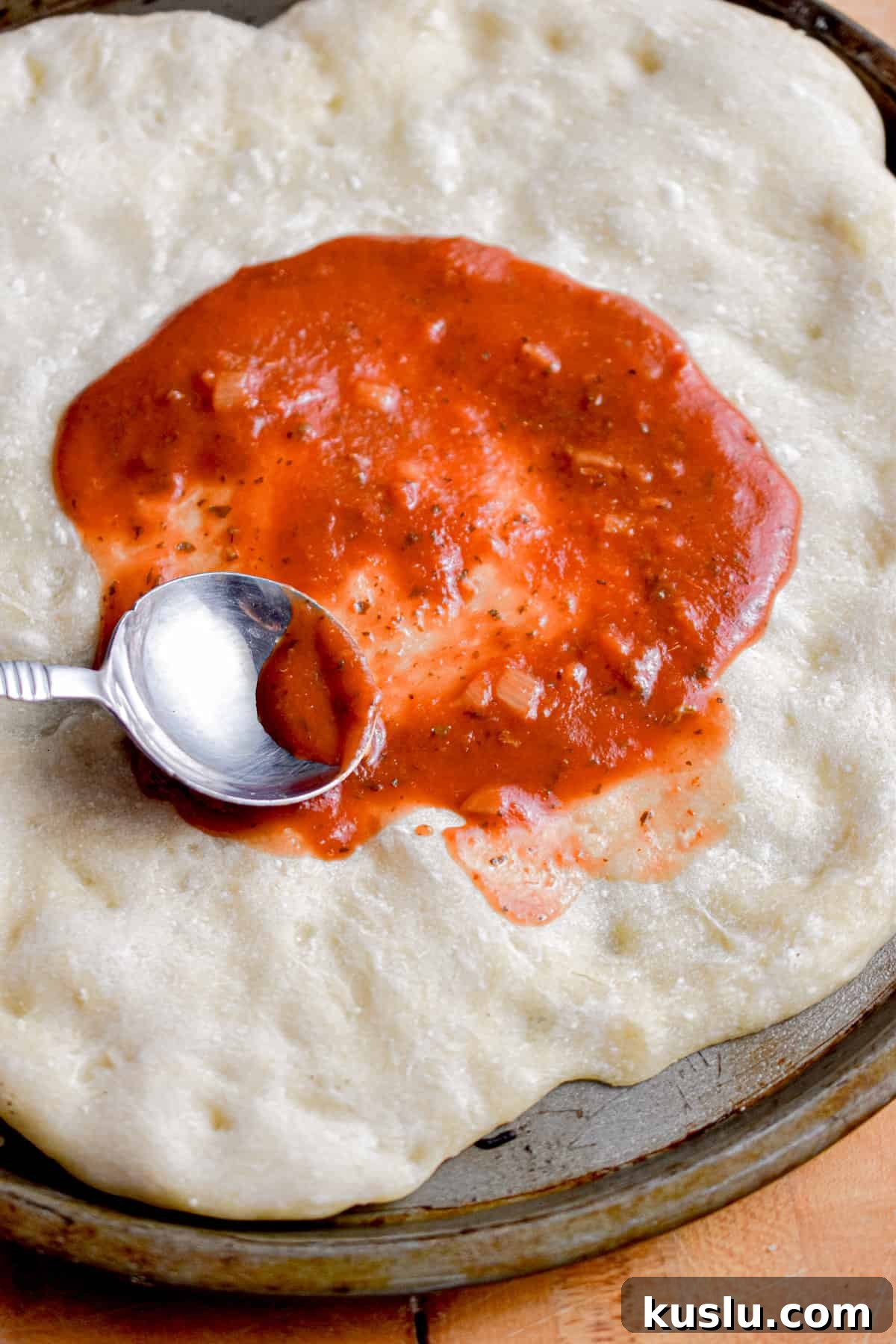
Step 7: Spread sauce evenly over the par-baked crust.
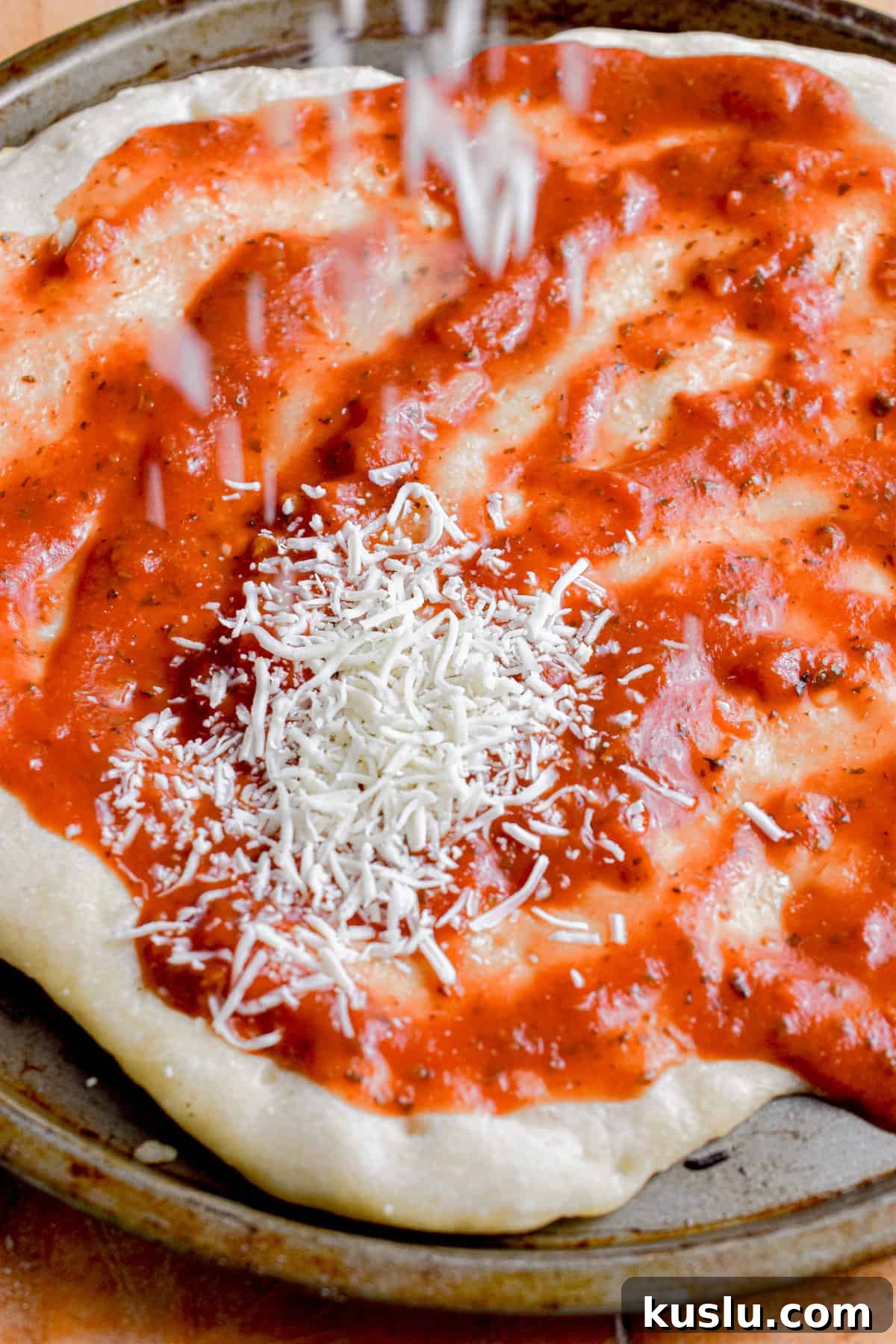
Step 8: Top with mozzarella and any other toppings, then bake another 5–10 minutes until the cheese is bubbly and the edges are golden.
How to Make Sourdough Pan Pizza Ahead of Time
Refrigerating the dough: After bulk fermentation and once the dough has roughly doubled, divide into two balls. Place them on a parchment-lined tray, cover tightly, and refrigerate for up to three days. The longer it chills, the more pronounced the sour flavor and the less dramatic the oven spring compared to a freshly proofed dough.
Freezing the dough: Freeze risen dough balls on a parchment-lined tray until solid, then transfer to freezer bags. You can also par-bake crusts for 10–15 minutes until lightly golden, cool, wrap tightly, and freeze for quick future bakes.
Best Sourdough Pizza Crust Recipe Substitutions & Variations
Change the toppings. This dough supports heavy toppings and even stuffed crust variations if you’re feeling adventurous.
Extend fermentation. For a tangier flavor, retard the dough in the refrigerator for longer—up to 12 hours or more—before shaping.
Add flavor to the dough. Mix in 1/4 cup olive oil, or add garlic powder or Italian seasoning for extra depth.
Boost with yeast if short on time. Add 1 teaspoon of active dry yeast to speed the rise while still enjoying some sourdough flavor.
Sourdough Pizza Cast Iron Tips and Tricks
- Versatile baking options. You can use a pizza oven, grill, pizza stone, cast iron skillet, or a sturdy baking sheet—great pizza doesn’t require specialized gear.
- Use a kitchen scale. Weighing ingredients yields the most consistent results for dough and fermentation.
- Stretch, don’t roll. Hand-stretching preserves the gas bubbles you developed during fermentation; avoid a rolling pin that can deflate the dough.
- Monitor kitchen temperature. Warm kitchens speed proofing while cool kitchens slow it—adjust timing rather than rushing the process.
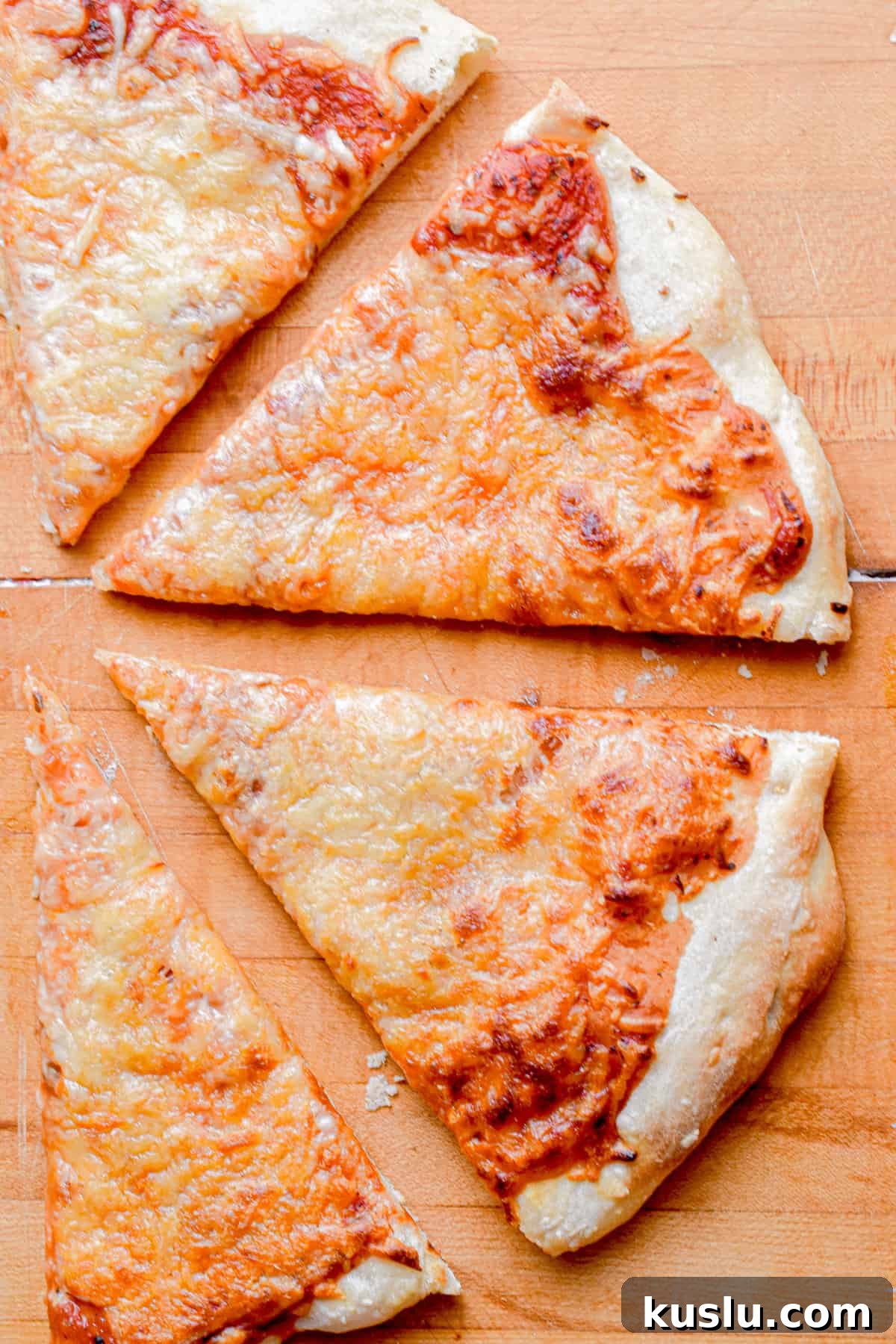
Sample Baker’s Schedule
- 8:00 PM – Mix water, starter, flour, and salt.
- 8:30 PM – First stretch and fold.
- 9:00 PM – Second stretch and fold.
- 8:00 AM – Shape into boules and refrigerate.
- 5:00 PM – Remove dough, shape, par-bake at 450°F for 10–15 minutes, add toppings, and finish baking.
Best Sourdough Pizza Toppings
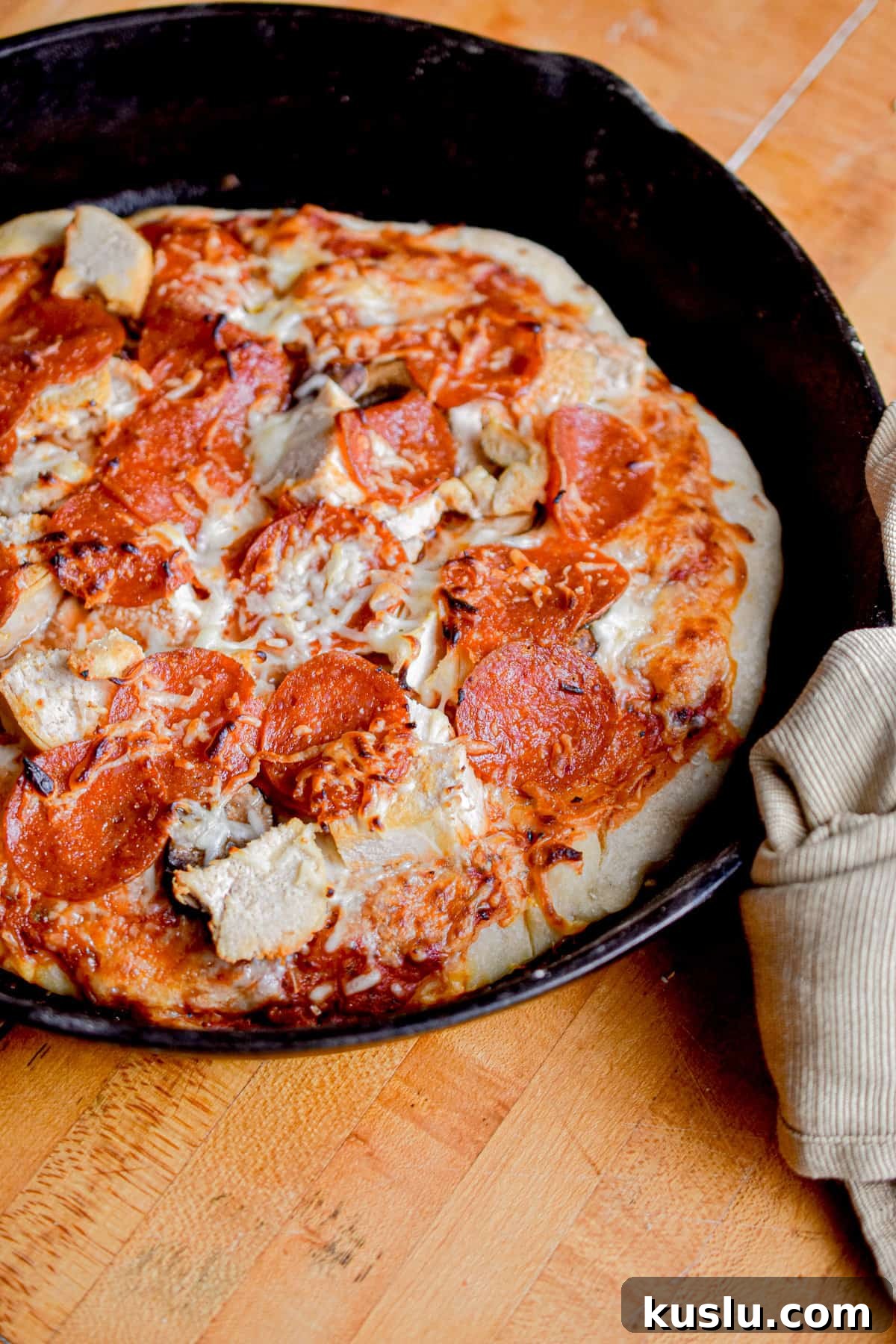
Endless topping possibilities—here are popular choices:
- Homemade marinara sauce
- Bolognese sauce
- Pesto
- Mozzarella
- Pepperoni
- Mushrooms
- Black olives
- Green peppers
- Sliced onions
- Fresh basil, olive oil, and sliced tomatoes for a classic Neapolitan-style finish
How to Store Sourdough Pizza Dough
Store dough in an airtight container or tightly wrapped to prevent drying and over-fermentation. Refrigeration and freezing both work well depending on when you plan to bake.
How long is sourdough pizza dough good for in the fridge?
Stored airtight, dough stays fresh up to 3 days in the refrigerator. Beyond that it may become overly sour and lose some oven spring.
Can you freeze sourdough pizza dough?
Yes. Freezing slows fermentation and preserves dough for later use—either whole dough balls or par-baked crusts.
How to freeze sourdough pizza dough
Lightly oil the dough, wrap tightly in plastic wrap, and place in a freezer bag to prevent freezer burn. Thaw overnight in the refrigerator, then bring to room temperature before shaping and baking.
Sourdough Pizza Crust Recipe FAQs
Yes, but you must use a gluten-free sourdough starter and gluten-free flour blends. Many recipes call for a binder like xanthan gum to improve texture.
Absolutely. An active, bubbly starter provides the leavening needed to make the dough rise.
Use a very hot surface: a pizza oven, grill, pizza stone, baking steel, or even a preheated cast iron skillet will work. The heat retention of the cooking surface is more important than the oven itself.
In a hot oven (475–500°F) a pizza usually bakes in 10–12 minutes depending on crust thickness and toppings. Look for golden edges and bubbling cheese.
More Sourdough Recipes
- Homemade Sourdough Discard Graham Crackers (Better Than Store-Bought)
- Sourdough Pretzels Recipe
- Sourdough Discard Thumbprint Cookies
- Sourdough Hot Cross Buns
Did you love this recipe?
If you tried it and enjoyed the results, consider leaving a review or sharing a photo on social media. Tag your photos to show off your pizza creations!
📖 Recipe

Cast Iron Sourdough Pizza
Print
Pin
Rate
Equipment
-
Mixing Bowls
-
Kitchen Scale
-
Cast Iron Skillet
Ingredients
- 350 g Warm Water
- 115 g Sourdough Starter Active and Bubbly
- 500 g Bread Flour
- 15 g Salt Kosher Salt, not table salt
Instructions
-
In a large mixing bowl, add the warm water and sourdough starter. If the starter floats, it’s active. Mix well to dissolve.
-
Add the flour and salt and mix until a shaggy dough forms. Cover with a damp towel and perform a stretch-and-fold after 30 minutes, then again 30 minutes later.
-
Let the dough rise at room temperature for 8–10 hours, covered with a damp towel.
-
Turn the risen dough onto a lightly floured surface, divide it in half, and shape into two balls. Rest for 15 minutes.
-
Stretch one dough ball at a time into a pizza shape and place it on your baking vessel (cast iron skillet or pizza pan recommended).
-
Preheat the oven to 450°F. Par-bake the crust in the skillet or on the pan for 10–15 minutes.
-
Remove the skillet from the oven and assemble your toppings.
-
Spread sauce evenly over the par-baked crust.
-
Add mozzarella (and other toppings) and bake 5–10 minutes more until cheese is bubbly and the crust is golden.
Notes
- Use a kitchen scale for accurate ingredient measurements.
- Bake on a cast iron skillet, pizza stone, or baking sheet depending on what you have available.
- Prevent sticking with semolina, fine cornmeal, or a light coating of olive oil on the pan.
- Hand-stretch to preserve fermentation bubbles instead of rolling with a pin.
- After rising, the dough can be refrigerated up to 24 hours—bring to room temperature before shaping and baking.
The provided nutrition information is an estimate. The accuracy is not guaranteed.