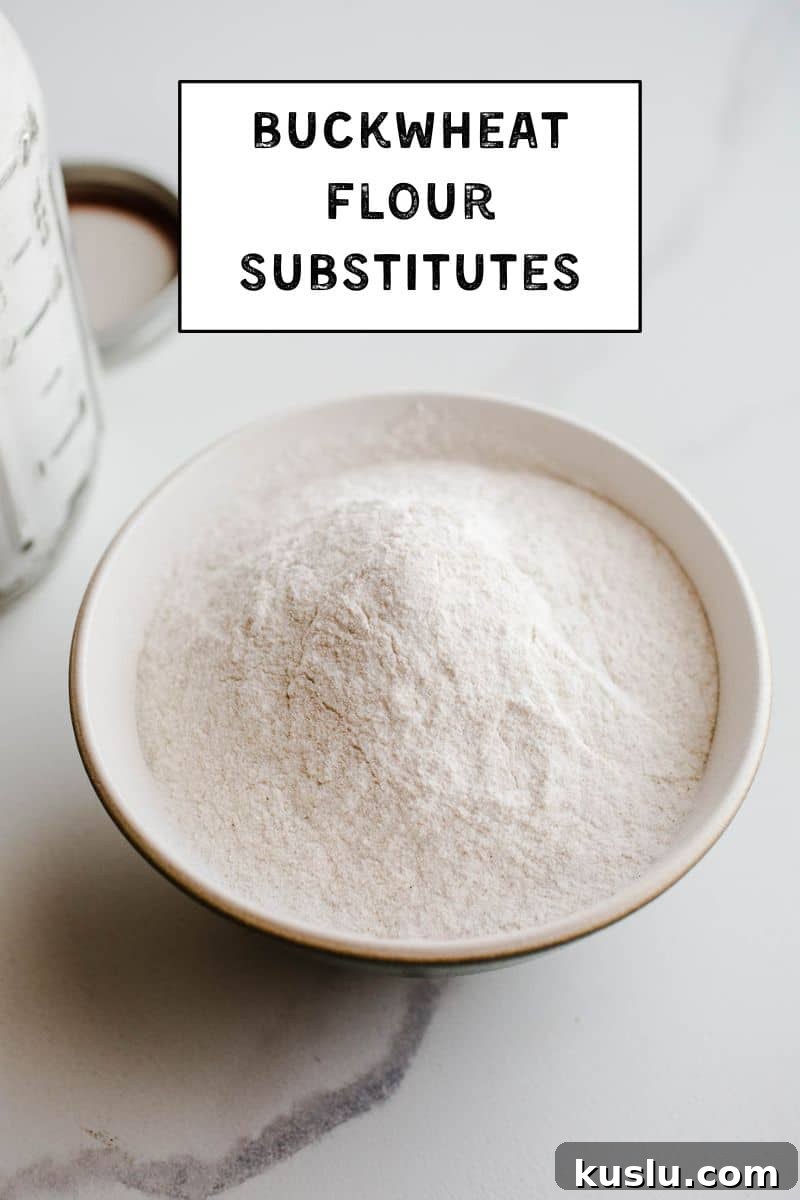
Looking for a buckwheat flour substitute? This guide explains effective alternatives—brown rice flour, quinoa flour, sorghum flour, oat flour, and chickpea flour—and how to use them to achieve similar texture and flavor in a wide range of recipes.
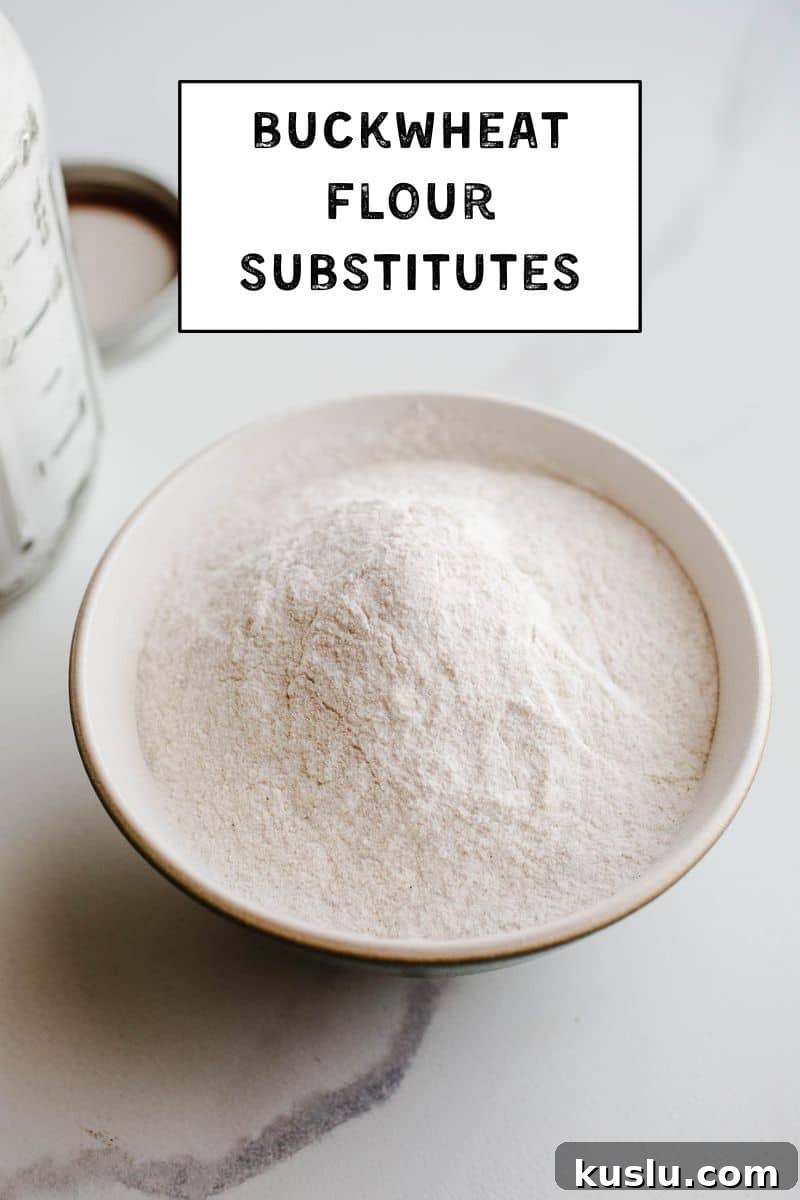
What is buckwheat flour?
Buckwheat flour comes from the triangular seeds of the buckwheat plant (Fagopyrum esculentum). Although it’s not a wheat and technically not a true grain, buckwheat is classified as a pseudo-cereal and is commonly used as a grain substitute in cooking. It has a pronounced nutty flavor and is naturally gluten-free, which makes it a popular choice for people following gluten-free diets.
Buckwheat is available in two main types: light and dark. Light buckwheat flour is milled from hulled seeds and has a finer texture with a milder taste. Dark buckwheat flour is made from whole, unhulled seeds and has a deeper color, higher fiber content, and a stronger, more robust flavor. Each type performs differently in recipes, so choose based on the flavor and texture you want to achieve.
Uses
Buckwheat flour is versatile and works well in both sweet and savory dishes. Common uses include:
- Pancakes and waffles: Buckwheat gives pancakes and waffles a nutty flavor and a slightly denser texture than wheat-based versions.
- Breads and quick breads: It can be used alone or blended with other flours for gluten-free loaves, producing denser breads that pair well with hearty spreads.
- Noodles: Buckwheat is the primary ingredient in traditional soba noodles.
- Crackers: Mixed with other gluten-free flours and a binder, buckwheat makes crisp, flavorful crackers.
- Baked goods: Muffins, scones, cookies, and cakes benefit from buckwheat’s nutty depth—especially when paired with chocolate, fruit, or warm spices.
What is a good substitute for buckwheat flour?
If you don’t have buckwheat on hand, several gluten-free flours can serve as effective alternatives depending on the recipe and the flavor and texture you want. Below are practical substitutes and how to use them.
1. Brown rice flour
Brown rice flour is mild in flavor with a fine texture, making it a versatile substitute for many baked goods, from pancakes to crackers. It generally produces a neutral-tasting result and blends well with other gluten-free flours if extra structure is needed.
Substitution: Use equal weight for weight. For example, replace 1 cup (120 g) of buckwheat flour with 1 cup (120 g) of brown rice flour.
2. Quinoa flour
Quinoa flour has a slightly nutty flavor and adds protein and fiber to recipes. It works well in quick breads, pancakes, and cookies, and can contribute to a more wholesome texture. Because of its stronger flavor, pair quinoa flour with complementary ingredients like chocolate or fruit.
Substitution: Replace by equal weight (1 cup = 120 g of buckwheat = 120 g of quinoa flour).
3. Sorghum flour
Sorghum flour is mild and slightly sweet, with a fine texture that behaves well in many baked goods including muffins, cakes, and breads. It provides good structure and a pleasant, subtle flavor that won’t overpower other ingredients.
Substitution: Use the same weight as buckwheat flour (1 cup = 120 g).
4. Oat flour
Made from ground whole oats, oat flour has a soft texture and mild sweetness. It performs especially well in muffins, cookies, and quick breads. Note: some people with gluten sensitivity may react to oats, so choose certified gluten-free oat flour when needed.
Substitution: Replace buckwheat flour by equal weight (1 cup = 120 g).
5. Chickpea flour
Chickpea flour, ground from raw chickpeas, is excellent in savory dishes. It’s high in protein and fiber and works well for socca, fritters, savory pancakes, and some savory breads. Chickpea flour has a distinct flavor and can be denser, so it’s best used when that flavor profile suits the recipe.
Substitution: Use equal weight initially and adjust liquids if needed, since chickpea flour can absorb more moisture than buckwheat.

Tips
- Binding: Gluten-free flours often need binders such as eggs, psyllium husk, flax egg, or xanthan gum to prevent crumbling. Adjust based on the recipe and desired texture.
- Blends work best: For improved texture and flavor, blend two or more alternative flours (for example, brown rice flour with sorghum or oat flour) and add a small starch like tapioca or potato starch if a lighter crumb is desired.
- Measure by weight: A kitchen scale gives the most consistent results when substituting flours, since cup measures can vary widely.
- Adjust liquid: Some flours absorb more moisture. If a batter or dough seems too dry, add small amounts of liquid until the right consistency is reached; if too wet, add a little more flour or a dry binder.
FAQs
Buckwheat flour is ideal for gluten-free pancakes, waffles, muffins, scones, and quick breads. It’s also used in traditional foods like soba noodles and blinis, and in grain-like preparations such as kasha.
Store buckwheat flour in an airtight container in a cool, dry place to protect it from moisture and odors. For longer shelf life, keep it refrigerated or frozen.
Conclusion
Several gluten-free flours can replace buckwheat flour depending on the recipe and desired flavor. Brown rice, quinoa, sorghum, oat, and chickpea flours each bring unique qualities—mildness, nuttiness, sweetness, or savory depth. For most substitutions, start by replacing buckwheat flour by equal weight, then adjust binders and liquids as needed to match the texture you want. Blending flours and using a scale will yield the most reliable results.