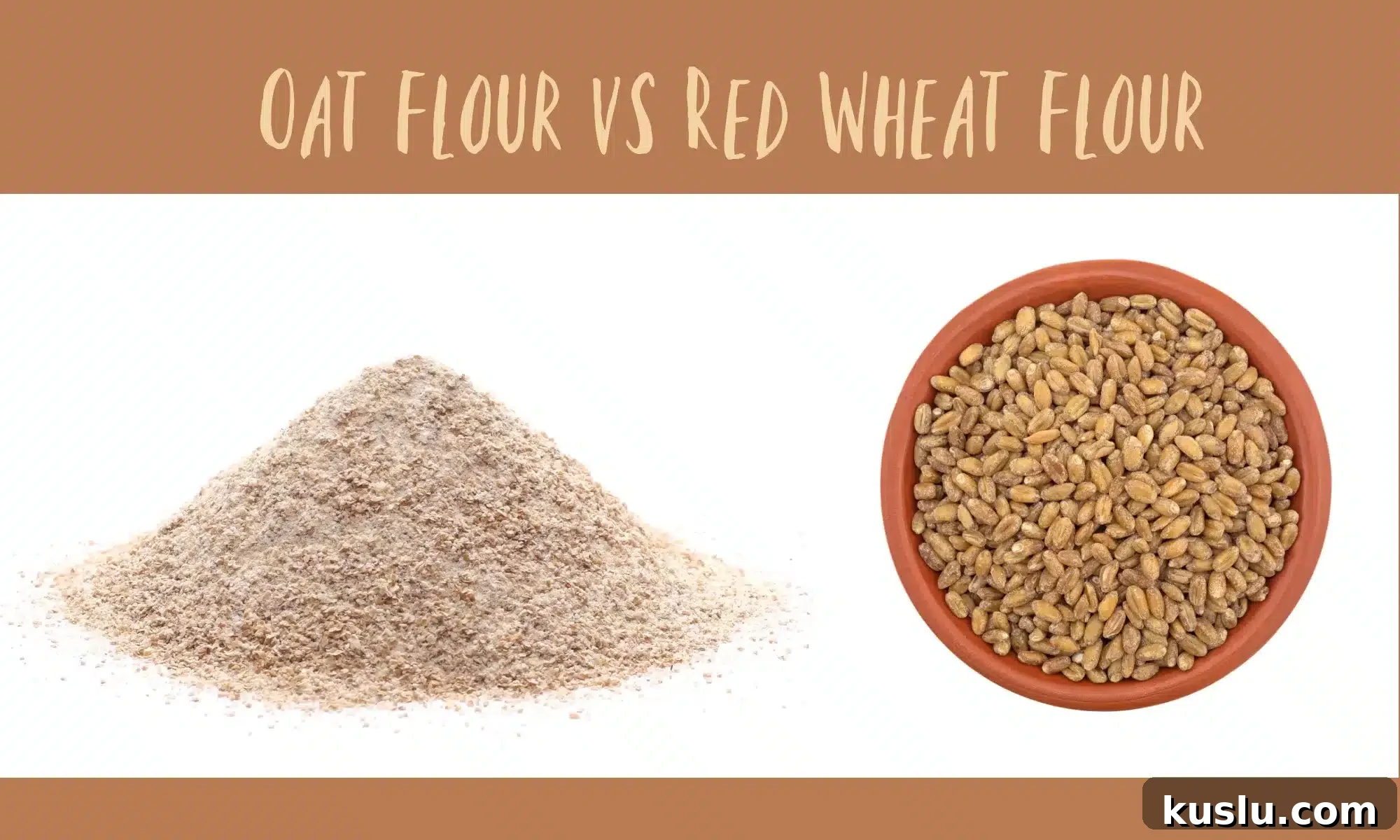
If you enjoy experimenting in the kitchen and trying different flours, this clear comparison of oat flour and red wheat flour will help you choose the best option for your bakes. Below we cover appearance, baking behavior, nutrition, storage, and practical tips so you can use each flour with confidence.
Oat flour is produced by grinding whole oats into a fine powder. It lends a mild, naturally sweet, and nutty flavor to baked goods. Red wheat flour comes from hard red wheat berries and has a richer, reddish-brown color and a heartier taste and texture. Each flour performs differently in recipes and offers distinct nutritional attributes.
Comparing oat flour vs red wheat flour
| Oat Flour | Red Wheat Flour | |
| Substitution ratio vs all-purpose flour | Can replace all-purpose by weight (1:1). By volume, use about 1 1/3 cup oat flour per 1 cup all-purpose. | Can replace all-purpose, but produces denser, darker results. A 50/50 blend with all-purpose or pastry flour often gives better texture. |
| Gluten-free? | Yes, when certified gluten-free* | No |
| Keto-friendly? | No | No |
| Paleo-friendly? | No | No |
| Allergens | Generally none; check cross-contamination warnings | Wheat (contains gluten) |
| Liquid absorbency | High — yields denser, chewier texture unless liquids are increased | Medium — slightly more absorbent than all-purpose; resting batter/dough 30 minutes helps hydrate |
| Pantry shelf life (unopened/sealed) | About 2 months | About 3 months |
| Best for baking… | Pancakes, muffins, quick breads, denser baked goods | Rustic breads, rolls, pizza doughs and other hearty loaves |
*Always check labeling to confirm oat flour was processed in a gluten-free facility if you require strict avoidance of gluten.
Differences between oat flour and red wheat flour
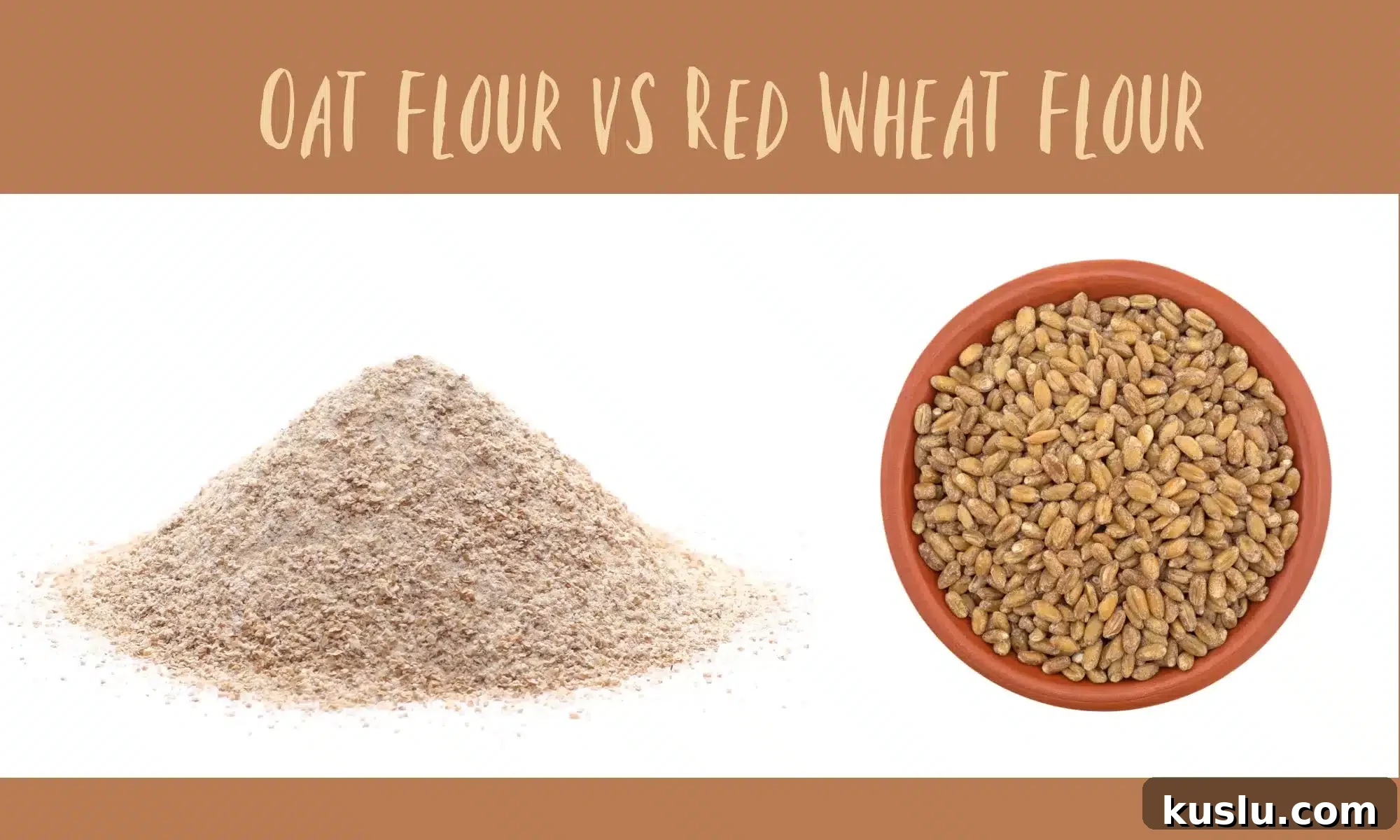
Visually and structurally the two flours are distinct. Oat flour is light beige and fine, while red wheat flour carries a reddish-brown tint and a slightly coarser texture depending on milling. The most important practical difference is gluten: oat flour can be safe for people avoiding gluten when certified, whereas red wheat contains gluten and behaves differently in doughs, providing elasticity and structure.
Neither flour is appropriate for strict keto or paleo diets. If you require gluten-free baking, choose oat flour labeled as certified gluten-free to avoid cross contact with wheat or other gluten-containing grains.
Baking with oat flour vs baking with red wheat flour
Absorption and texture are the main considerations when substituting either flour. Oat flour absorbs more liquid and can make baked goods dense and chewy; counter this by increasing liquids, adding an extra egg, or combining oat flour with lighter flours or starches. Red wheat flour absorbs a medium amount of liquid and benefits from a 20–30 minute rest after mixing so it fully hydrates, which helps prevent dryness and crumbling.
Flavor-wise, oat flour is mildly sweet and nutty, excellent for pancakes, muffins, cookies and quick breads. Red wheat flour offers a deeper, slightly bitter-nutty taste and a rustic color that complements artisan bread, pizza crust and savory pastries. Its higher protein content contributes to better gluten development for chewy, structured loaves.
Ingredients in oat flour vs red wheat flour
Oat flour contains only ground whole oats. Red wheat flour is produced by milling hard red wheat berries. Both are single-ingredient grain flours when sold without additives.
Oat flour + red wheat flour nutritional facts
| Per ¼ cup serving | Oat flour | Red wheat flour |
| Calories | 120 | 140 |
| Carbs | 22 g | 27 g |
| Fiber | 3 g | 5 g |
| Sugar | 0 g | 0 g |
| Fat | 2 g | 0.5 g |
| Protein | 4 g | 6 g |
| Glycemic index score | 44 | 59–84 |
Overall, oat flour and red wheat flour are similar in many nutrients, but oat flour has a lower glycemic index and fewer carbs per serving, while red wheat contains more protein and fiber. Choose oat flour if you prefer lower glycemic response and a softer, sweeter profile. Choose red wheat when protein, fiber and a robust texture are desired.
Oat flour vs red wheat flour storage
Both flours have relatively short pantry shelf lives. Store them in airtight containers in a cool, dark place. Oat flour typically stays fresh for about two months unopened or at room temperature; red wheat flour can remain fresh for around three months. For longer storage, refrigerate or freeze flour to extend shelf life and prevent rancidity.
Oat flour vs red wheat flour: What’s the verdict?
Both oat flour and red wheat flour have clear strengths. Use oat flour for moist, tender quick breads, pancakes, and baked goods that benefit from a mild, sweet flavor and lower glycemic impact. Use red wheat flour for hearty, rustic breads and savory bakes that need more protein, stronger structure, and a robust taste and color. Many bakers find blending these flours or combining them with all-purpose or pastry flour gives the best balance of texture, flavor, and performance.
FAQ
Wheat is a broad term for grains in the Triticum genus. Red wheat refers to varieties with a reddish-brown bran layer, typically offering higher protein and fiber and a nuttier flavor compared with some other wheat types.
No. Oat flour comes from ground oats and can be gluten-free when certified, while wheat flour is milled from wheat berries and contains gluten.
Red wheat typically has strong gluten-forming proteins and can produce doughs with good strength and structure. It is not a gluten-free option.
Red whole wheat is milled from hard red wheat, giving it a stronger, heartier flavor and darker color. White whole wheat is milled from hard white wheat and tends to have a milder, sweeter flavor and lighter color, while still being whole grain.