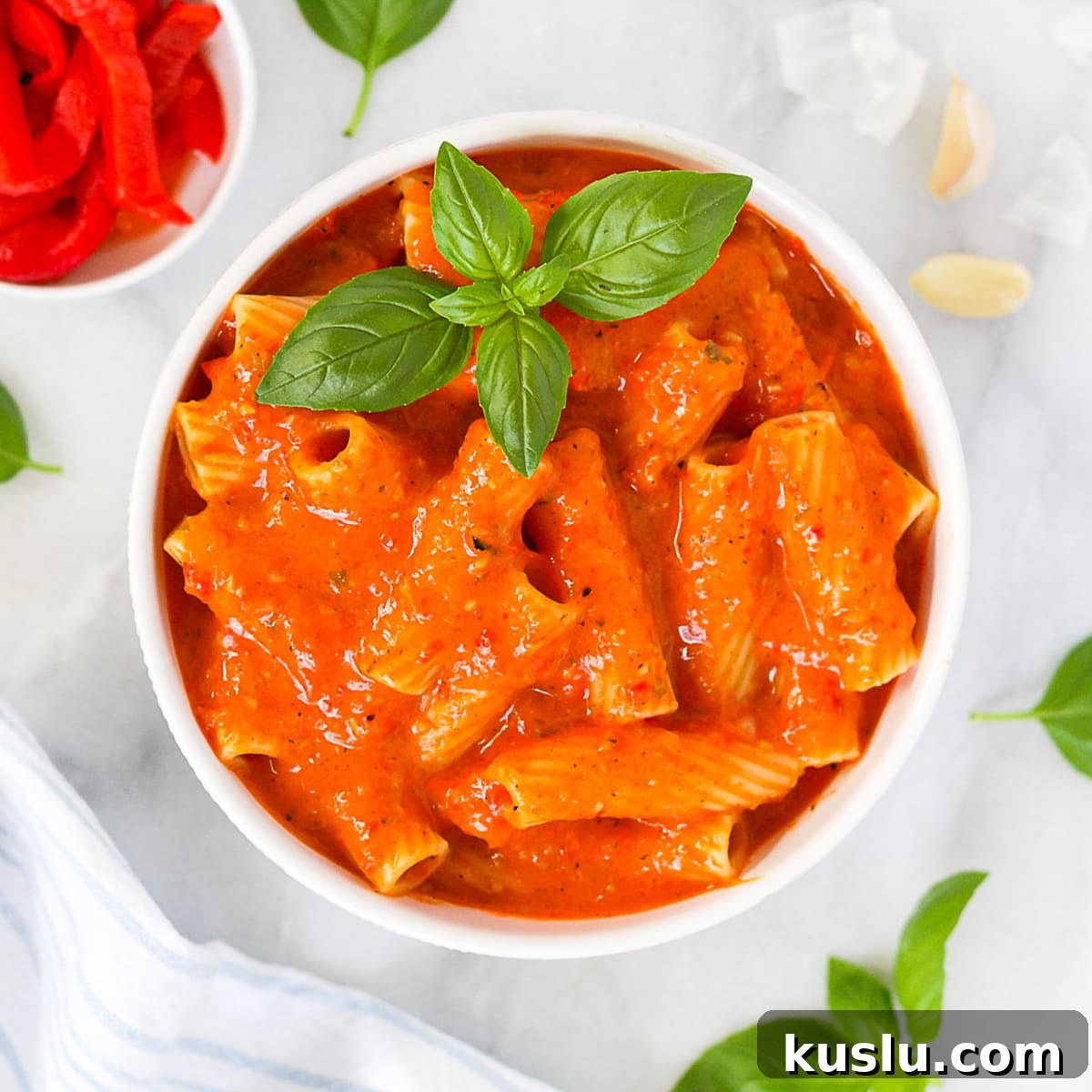
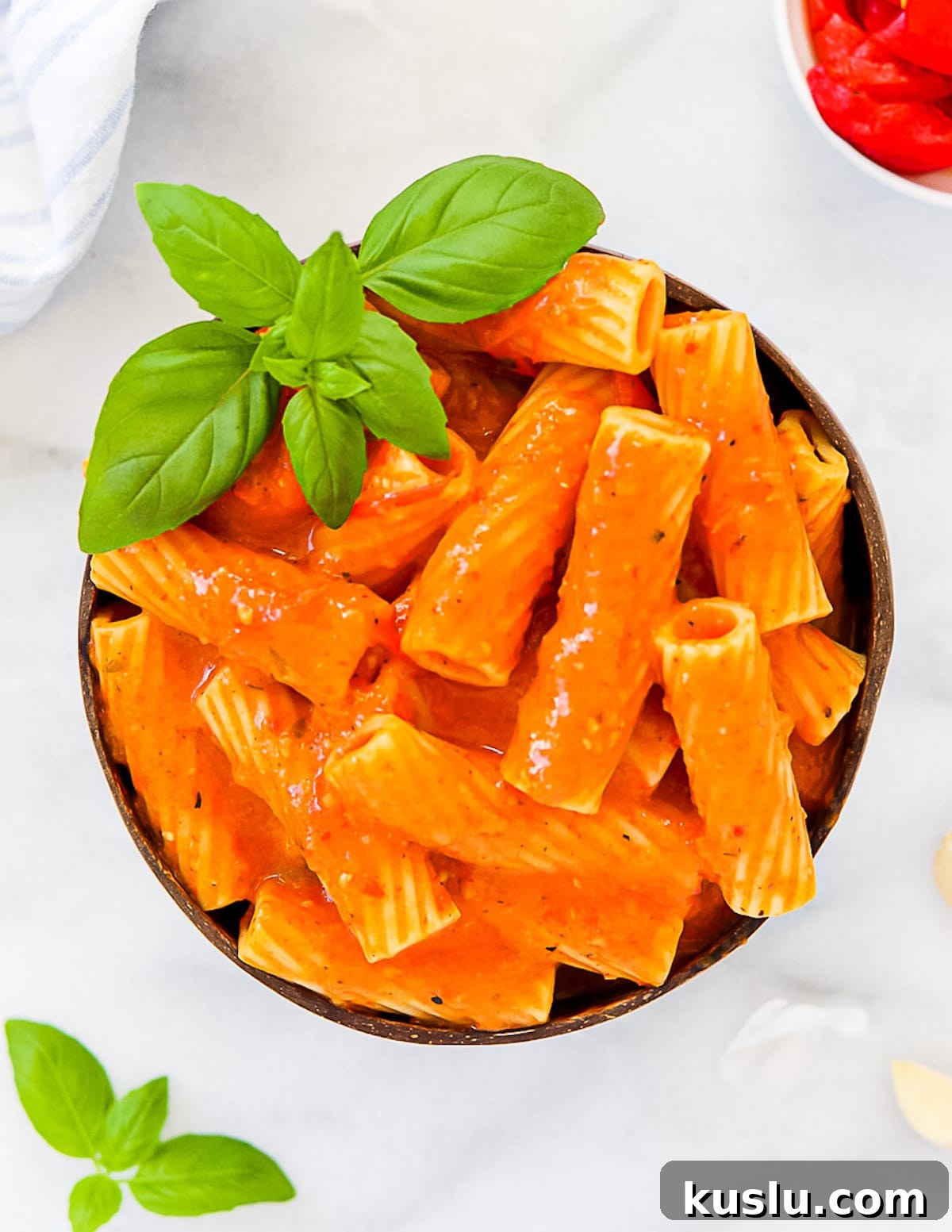
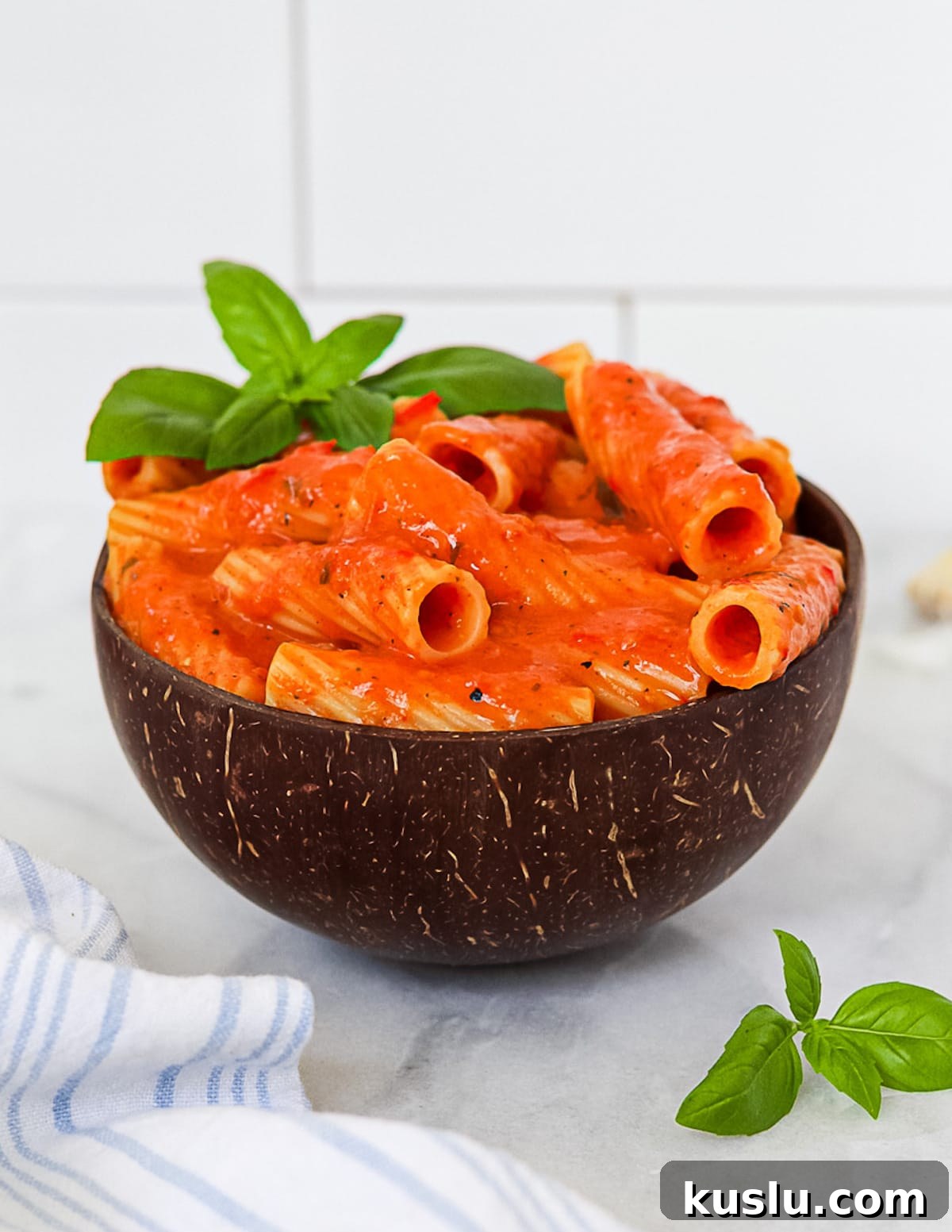
This creamy roasted red pepper pasta sauce is vegan, naturally gluten-free when served with gluten-free pasta, and a crowd-pleasing favorite. Bright, smoky roasted peppers are blended with fresh vegetables and simple pantry seasonings to make a silky, flavorful sauce that pairs beautifully with hearty noodles. It’s quick to prepare, stores well, and is ideal for meal prep or a cozy weeknight dinner.
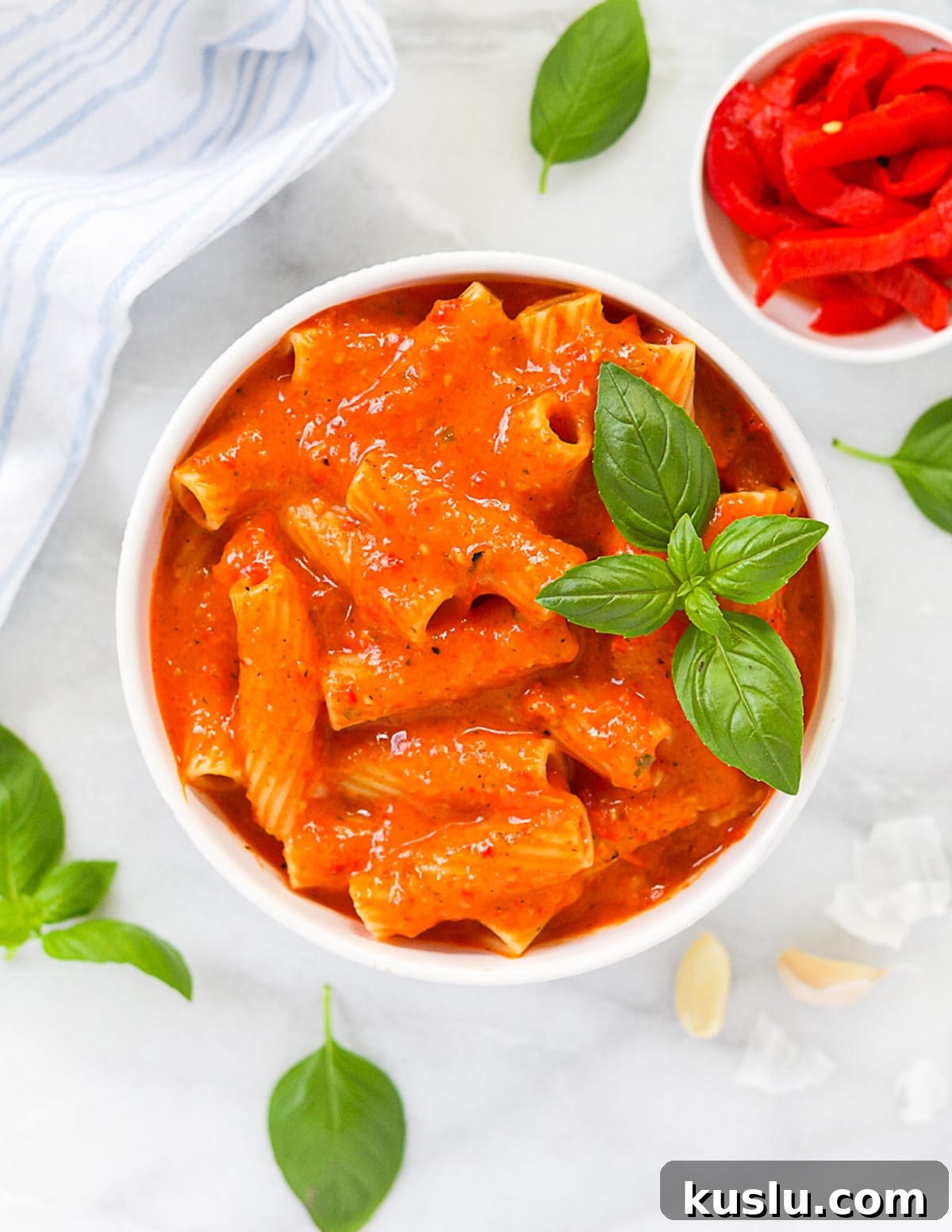
I love cooking with peppers, and this roasted red pepper sauce is one of my go-to recipes when I want something comforting but light. The sauce is plant-based, creamy without dairy, and has a satisfying balance of sweet, savory, and slightly spicy notes. Using roasted red peppers—either store-bought or homemade—cuts down on prep time while still delivering deep, caramelized flavor.
Ingredients
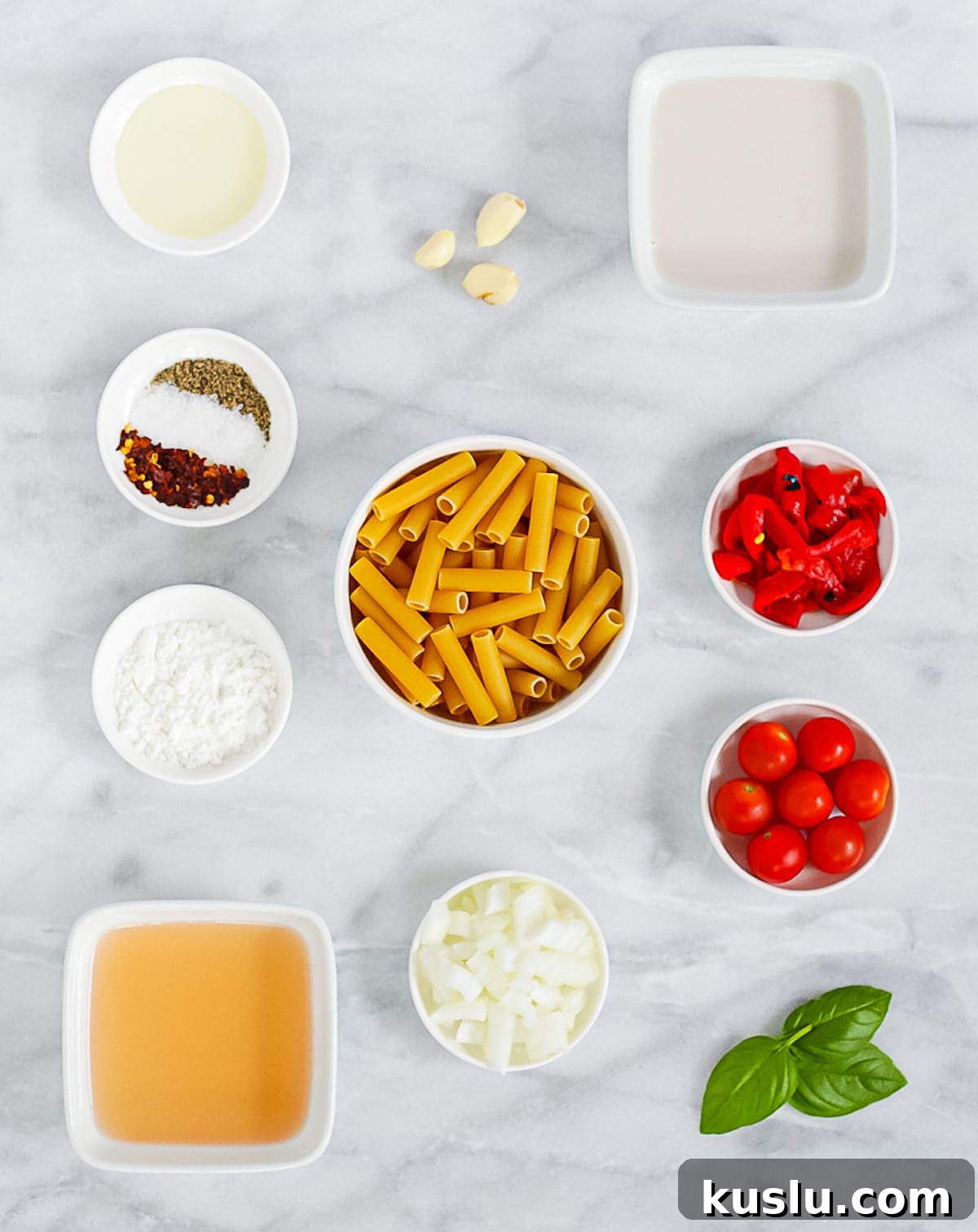
Gather fresh vegetables, pantry staples, and a plant-based milk for a rich texture. Here are the ingredients used in this recipe, with suggested options where appropriate. Quantities and step-by-step directions are provided in the recipe card below.
- Roasted red peppers — use jarred roasted peppers for convenience or roast fresh bell peppers until charred and soft.
- Yellow onion — diced, to build savory depth.
- Tomatoes — diced, to add brightness and balance the peppers.
- Garlic — minced, for savory aroma.
- Olive oil — for sautéing.
- Italian seasoning (or a mix of oregano and thyme), salt, black pepper, and crushed red pepper to taste.
- Vegetable broth — use your preferred low-sodium broth to control saltiness.
- Plant-based milk — cashew, oat, or almond milk all work well; cashew gives the creamiest result.
- Cornstarch — a small amount to gently thicken the sauce.
- Fresh basil — added at the end for a fragrant, fresh finish.
- Pasta of your choice — cook according to package directions. Use a gluten-free pasta to keep the entire dish gluten-free.
Note: For best flavor, use fresh basil rather than dried. If you like a spicier sauce, increase the crushed red pepper; omit it for a milder result.
Instructions
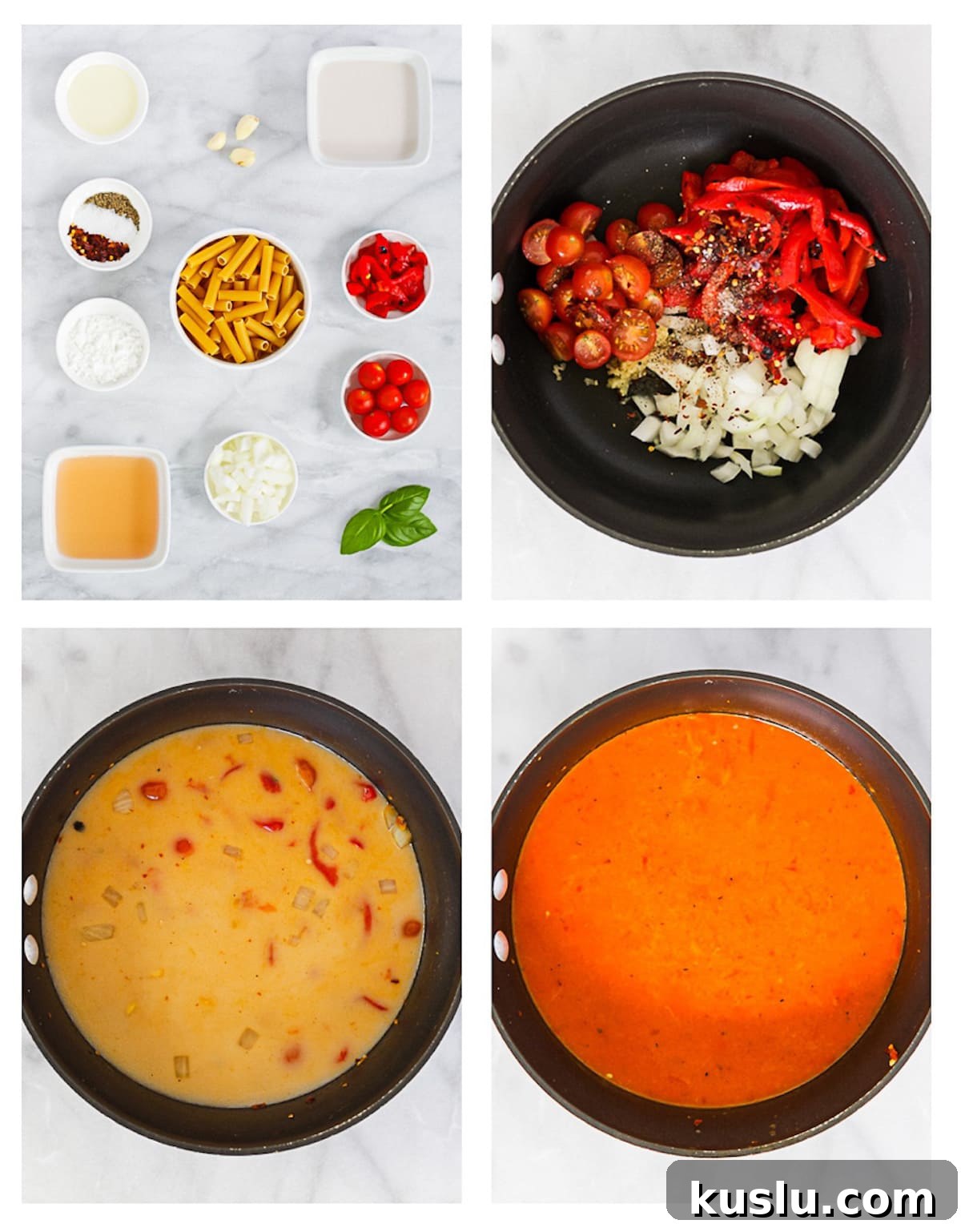
- Bring a large pot of salted water to a boil and cook the pasta according to the package instructions. Reserve a small cup of pasta cooking water if you want to thin the sauce later.
- While the pasta cooks, prepare the vegetables: dice the onion and tomatoes, mince the garlic, and drain or chop the roasted red peppers if using jarred peppers.
- Heat the olive oil in a large skillet or pot over medium heat. Add the diced onion, minced garlic, roasted red peppers, and tomatoes. Sauté for about 5 minutes, stirring occasionally, until the vegetables begin to soften and the onions are translucent.
- Add the cornstarch, vegetable broth, plant-based milk, Italian seasoning, salt, pepper, and crushed red pepper to the pan. Stir to combine so the cornstarch dissolves and the liquid is evenly distributed.
- Use an immersion blender to blend the mixture until smooth and creamy. If you don’t have an immersion blender, allow the mixture to cool slightly and transfer it in batches to a countertop blender. Blend until silky, then return the sauce to the pot.
- Place the blended sauce back on the stove, bring it to a gentle boil, then reduce to a simmer. Cook for about 8–10 minutes, stirring occasionally, until the sauce thickens and the flavors meld.
- Taste and adjust seasoning as needed. Stir in chopped fresh basil just before serving to preserve its bright flavor.
- Toss the sauce with the cooked pasta. If the sauce is too thick, loosen it with a splash of reserved pasta water or additional vegetable broth.
- Serve immediately, garnished with extra basil or a sprinkle of crushed red pepper if desired.
Storage
This roasted red pepper sauce stores well, making it an excellent option for meal prep. Store cooled sauce in an airtight container in the refrigerator for up to 5 days. For longer storage, freeze the sauce in a freezer-safe container for up to 3 months. When freezing, store the sauce separate from cooked pasta; thaw and reheat gently on the stove, then toss with freshly cooked pasta.
Substitutions and additions
There are several easy swaps and ways to customize this sauce:
- Plant-based milk: Substitute cashew milk with almond or oat milk. Cashew or oat milk yield a richer, creamier texture.
- Heat level: Omit crushed red pepper for no heat, or increase it for a spicier sauce.
- Protein additions: Stir in cooked chickpeas, white beans, or roasted tofu for extra protein and texture.
- Greens: Fold in baby spinach or kale during the last few minutes of simmering for added color and nutrients.
- Herbs and aromatics: Swap basil for fresh parsley or a touch of lemon zest for a different flavor profile.
Recipe card
Roasted Red Pepper Sauce
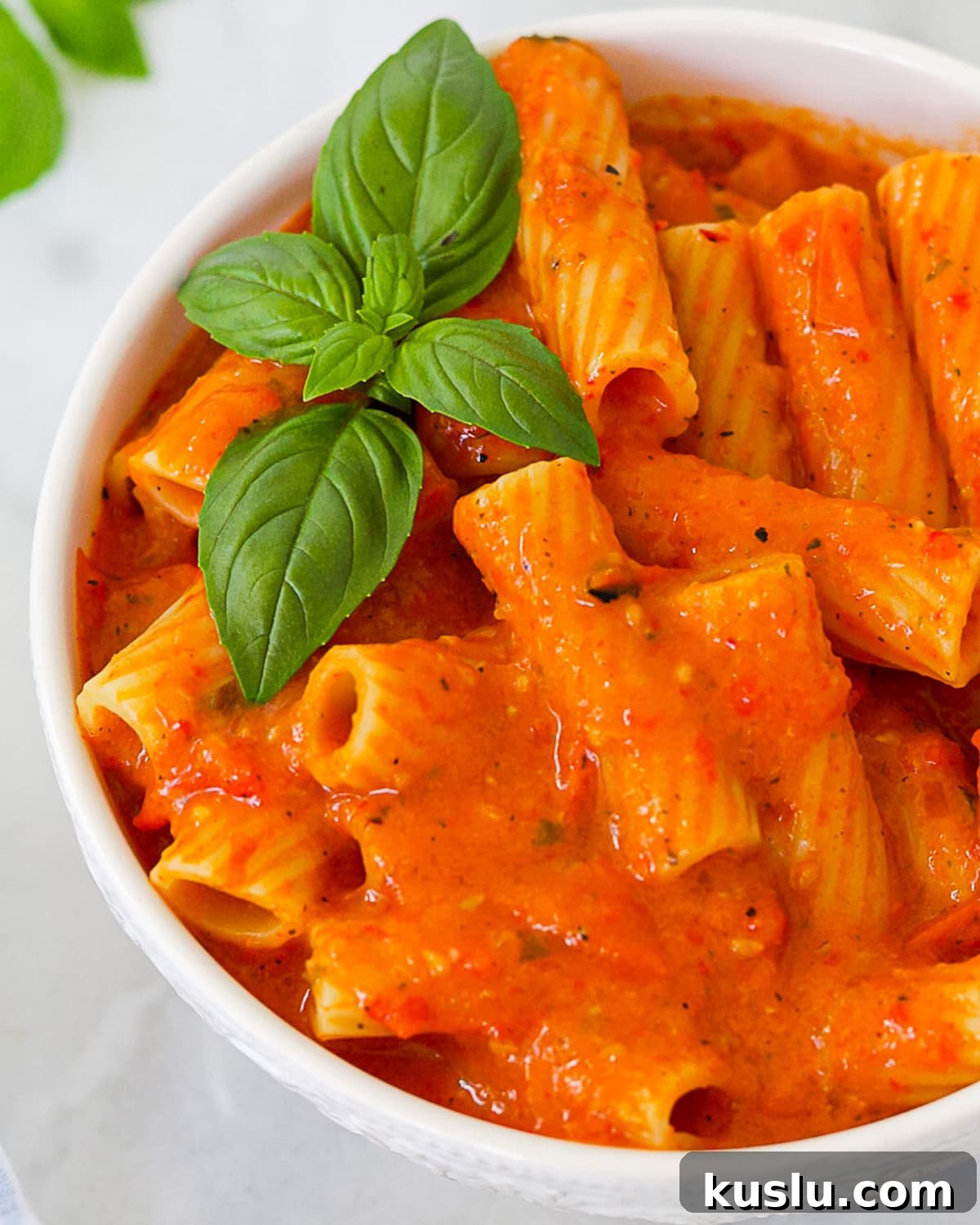
This creamy red pepper pasta sauce serves four and pairs well with rigatoni, penne, or your favorite gluten-free pasta. Prep time: about 10 minutes. Cook time: about 20 minutes. Total time: about 30 minutes.
Ingredients
- ½ pound pasta (use gluten-free if needed)
- 1 tablespoon olive oil
- 1 cup roasted red peppers
- 1 yellow onion, diced
- 1 cup tomatoes, diced
- 3 cloves garlic, minced
- 1 teaspoon Italian seasoning
- ½ teaspoon salt
- ½ teaspoon black pepper
- ¼ teaspoon crushed red pepper (adjust to taste)
- 1 cup vegetable broth
- ½ cup plant-based milk (cashew, oat, or almond)
- 1 tablespoon cornstarch
- ¼ cup fresh basil, chopped
Instructions
- Cook pasta according to package directions and set aside, reserving a little pasta water if desired.
- Sauté onion, garlic, roasted peppers, and tomatoes in olive oil over medium heat for about 5 minutes.
- Add cornstarch, broth, plant-based milk, basil, and seasonings. Blend until smooth with an immersion or countertop blender.
- Bring sauce to a boil, then reduce to a simmer and cook about 10 minutes until thickened.
- Toss with cooked pasta and serve garnished with fresh basil.
Notes
Store sauce in the refrigerator for up to 5 days or freeze for up to 3 months. Do not freeze the sauce together with cooked pasta; combine after reheating.
If you make this roasted red pepper sauce, it’s a simple dish that scales easily—double the batch for leftovers or halve it for a smaller meal. The fresh basil at the end really lifts the sauce, and small adjustments to the spice and milk type let you tailor the texture and heat to your preference.