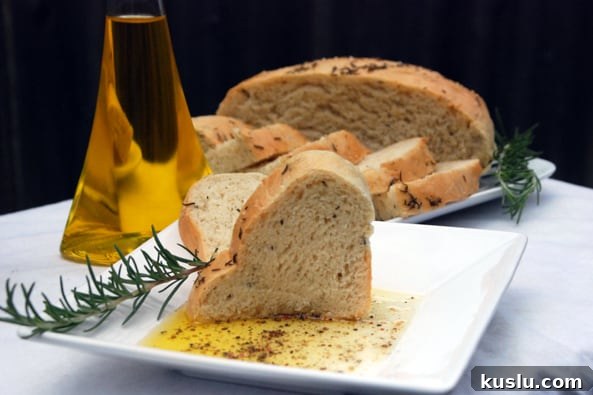
With its fragrant aroma, crisp crust and tender interior, this homemade rosemary bread is a versatile loaf perfect for breakfast, lunch or dinner.
Table of Contents
- A Decadent Rosemary Bread Recipe
- Rosemary Bread Recipe
- Ingredients for rosemary bread
- How to make rosemary artisan bread
- How to serve homemade bread
- Storage
- Frequently Asked Questions
- More Bread Recipes
- Latest Recipes
A Decadent Rosemary Bread Recipe
A family member challenged me to recreate a rosemary bread I loved from a restaurant. I started with a simple French baguette dough and added olive oil, rosemary and Italian seasoning. The result is a loaf with a golden, crispy crust, an open, soft crumb and a savory herbal aroma that fills the kitchen while it bakes.
For best results, weigh ingredients when possible. Using a scale produces a dough with the ideal hydration, meaning you won’t need to dust your countertop with extra flour. I include both metric weights and familiar volume measures in the recipe card, but if you’re using cups you may need slight adjustments depending on your flour and humidity.
This bread is moist and flavorful straight from the oven. A final brush of olive oil or melted butter with a sprinkle of coarse kosher salt and extra rosemary gives the loaves a rustic, restaurant-style finish.
Rosemary Bread
Ingredients
- 1 tsp. salt
- 4 3/4 cups bread flour (or all-purpose)
- 20 g fresh yeast or one packet active dry yeast plus 1 tbsp sugar
- 1/4 cup olive oil
- 1 1/2 cups lukewarm water plus 1 tbsp if using dry yeast
- 1 tsp. Italian seasoning
- 2 tbsp. dried rosemaryplus extra fresh rosemary to top, if desired
Instructions
- Prep: Place an empty stand mixer bowl on a kitchen scale and zero it. Add the salt and zero again, then add 650 g (about 4 3/4 cups) of flour and zero again. Crumble in 20 g fresh yeast (or the equivalent of active dry yeast).
- Weigh liquids: In a separate container weigh 45 g (roughly 1/4 cup) olive oil and 355 g (about 1 1/2 cups) lukewarm water. Pour the liquids into the flour, add the Italian seasoning and 1 tablespoon of dried rosemary.
- Knead: Attach a dough hook and mix on medium speed for about 5 minutes, or until the dough forms a smooth ball. If mixing by hand, knead on a lightly floured surface for about 5 minutes until cohesive and slightly elastic.
- First rise: Place the dough ball on the counter, shape into a smooth round, cover with an inverted bowl or a damp towel and let it rest for about 15 minutes.
- Divide: After the short rest, divide the dough into two pieces of roughly 535 g each. Shape each piece into a round loaf.
- Second rise: Place the loaves on a greased baking sheet or in pans. Press remaining rosemary on top if desired. Cover with a damp towel or plastic wrap and allow the loaves to rise until doubled, about 1 hour.
- Bake: Preheat the oven to 350°F (175°C). Remove the cover and bake the loaves for 30 minutes, until golden brown and hollow-sounding when tapped.
- Finish: Brush the hot loaves with olive oil or melted butter and sprinkle with coarse kosher salt. Let cool slightly before slicing.
- Serve: Slice and serve warm with good-quality olive oil and freshly cracked black pepper, butter, or grated cheese.
Nutrition
Nutrition information is automatically calculated and should be used as an approximation.
Additional Info
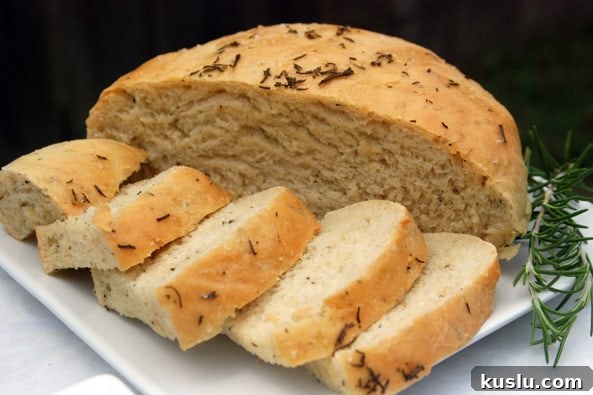
Ingredients for rosemary bread
- Salt
- Bread flour — King Arthur is recommended but all-purpose works in a pinch.
- Fresh yeast — or active dry yeast as an alternative; add a tablespoon of sugar if using dry yeast to help activate it.
- Sugar
- Olive oil
- Water — lukewarm to encourage yeast activity.
- Italian seasoning
- Dried rosemary — fresh rosemary can be used for topping or chopped and lightly dried before adding.
See the recipe card above for exact weights, servings and step-by-step instructions.
How to make rosemary artisan bread
- Prep: Weigh and combine dry ingredients in a mixing bowl: salt, flour and yeast. Using weights ensures consistent dough.
- Weigh liquids: Measure the olive oil and water, then add to the dry mix along with Italian seasoning and a tablespoon of dried rosemary.
- Knead: Mix with a dough hook for about five minutes, until the dough forms a cohesive ball. Alternatively, knead by hand on a clean surface until smooth.
- First rise: Let the shaped dough rest briefly under an inverted bowl for about 15 minutes.
- Divide: Cut dough into two equal loaves and shape into rounds or oblongs as preferred.
- Second rise: Place loaves on a greased sheet or in pans, press additional rosemary on top, cover and let rise until doubled, about 1 hour.
- Bake: Bake in a preheated 350°F oven for 30 minutes, then remove and finish with oil or butter and a sprinkle of kosher salt.
- Serve: Slice warm and enjoy with olive oil and cracked black pepper, butter or grated cheese.
PRO TIP
If you have fresh rosemary, chop it and dry it briefly in a 400°F oven for 5–10 minutes to concentrate the flavor before adding to the dough.
PRO TIP
No stand mixer? Knead by hand on a clean countertop for about five minutes until the dough is smooth and slightly elastic.
PRO TIP
For a decorative finish, score the tops of the loaves with a sharp knife or lame before baking. This also helps control how the bread expands in the oven.
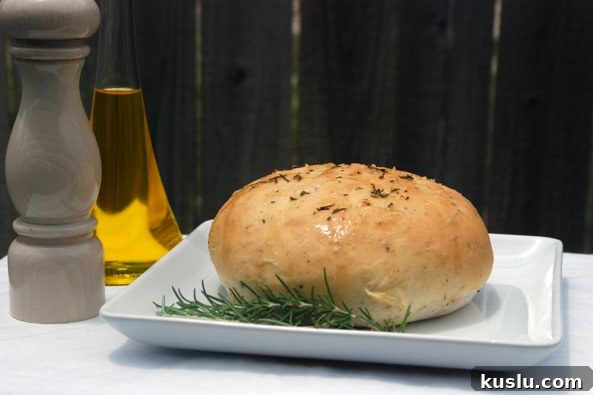
How to serve homemade bread
This rosemary loaf is best served warm. A simple dish of high-quality olive oil with cracked black pepper makes a classic pairing. For richness, offer softened butter and flaky sea salt or a small bowl of grated Parmesan. For a restaurant-style touch, add a splash of aged balsamic vinegar to the oil for dipping.
Storage
Store leftover bread in an airtight container or wrap each loaf tightly in plastic to retain softness. For longer storage, freeze whole loaves or slices; wrap well to prevent freezer burn. Thaw at room temperature and refresh briefly in a warm oven before serving.
Frequently Asked Questions
Rosemary has an earthy, pine-like, slightly peppery flavor that complements savory bakes like bread. It pairs well with olive oil, garlic and hearty cheeses.
Over-kneading can tighten gluten and produce dense bread. Aim for about five minutes of kneading for this recipe; also ensure the dough is allowed to rise until adequately doubled before baking.
More Bread Recipes
- Soft, Easy Yeast Rolls
- Biscoff Bread Pudding with Caramel Pecan Sauce
- Lemon Monkey Bread
Latest Recipes

Ube Stuffed French Toast with King’s Hawaiian Rolls

Purple Ube Waffles
Chocolate Ganache Cake with Truffle Icing